
8 Smart Bookshelf Ideas for Small Spaces to Maximize Your Home in 2025
- oliverjames0609
- 4 days ago
- 14 min read
Living in a small space doesn't mean sacrificing your literary collection or cluttering your home. The real challenge is finding storage that works with your limited footprint, not against it. Forget bulky, traditional bookcases that dominate a room; modern design has evolved to offer sleek, intelligent solutions that maximize every square inch. This guide moves beyond generic advice to explore eight innovative bookshelf ideas for small spaces, transforming overlooked corners and unused walls into functional, stylish displays.
From renter-friendly vertical solutions that draw the eye upward to multifunctional furniture that serves dual purposes, these concepts prove that even the most compact homes can accommodate a growing library. For broader insights into furnishing compact homes effectively, consider consulting a comprehensive buying guide for furniture for small spaces to complement these specific shelving strategies.
Each idea in our list includes actionable tips for installation, styling, and material choices. We'll also explain how to visualize these changes in your own room using tools like Decor8 AI before you commit to a single screw or bracket. This curated collection is designed to give you practical, space-saving bookshelf concepts you can implement immediately to reclaim your floor space and organize your home with confidence.
1. Vertical Wall Shelving
When floor space is at a premium, the most effective strategy is to look up. Vertical wall shelving is one of the best bookshelf ideas for small spaces because it transforms unused vertical real estate into a powerful storage solution. This approach draws the eye upward, creating an illusion of height and openness while keeping your floors clear.
This method involves installing shelves that span from near the floor to as close to the ceiling as practical. It’s a popular choice for studio apartments, narrow hallways, or any room with limited square footage. By building storage vertically, you can house an extensive book collection without sacrificing a single inch of valuable living area.
Implementation and Styling Tips
Achieve a Seamless Look: For a minimalist aesthetic that reduces visual clutter, paint your shelves the same color as the wall. This trick helps the shelving blend in, making the room feel larger. To explore how different paint choices can impact your space, check out these 7 best paint colors for small rooms.
Strategic Weight Distribution: Place heavier items like large art books or storage bins on the lower shelves for stability and safety. Lighter objects, such as paperbacks and small decorative pieces, should go on the upper shelves.
Create Visual Rhythm: While uniform spacing creates a clean, library-like feel, installing shelves at slightly varying heights can add dynamic visual interest. This is perfect for accommodating items of different sizes, from tall vases to small trinkets.
Contain the Clutter: Use decorative baskets or stylish bins on some of the shelves. This is an excellent way to conceal smaller, less organized items like chargers, stationery, or miscellaneous knick-knacks, maintaining a tidy appearance.
Pro Tip: Before drilling, use painter's tape to mark the shelf placements on your wall. This allows you to visualize the layout and make adjustments without committing to permanent holes. It’s a simple step that ensures a perfectly balanced arrangement.
2. Corner Shelving Units
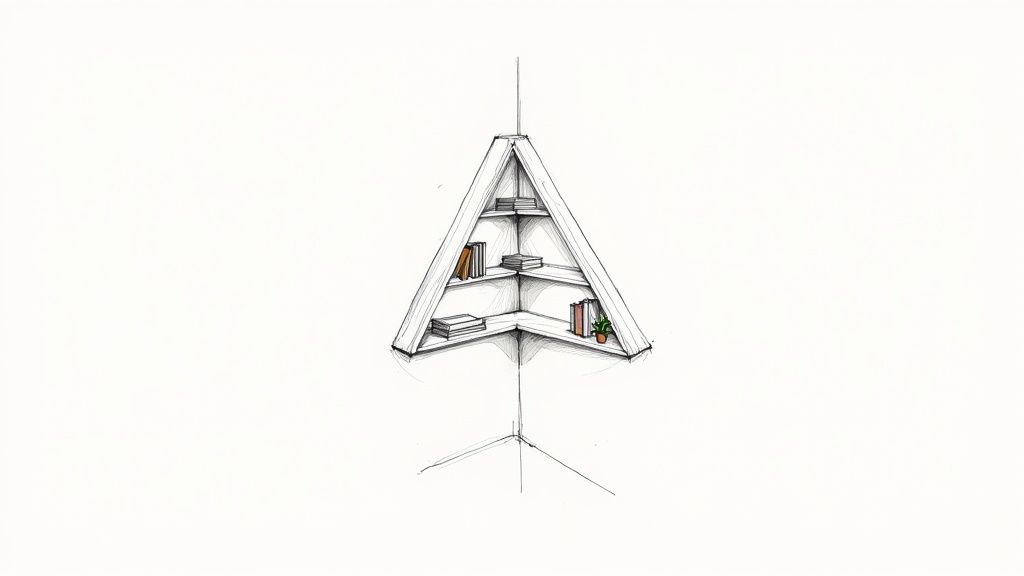
Corners are often the most neglected areas in a room, but they hold immense potential for storage. Corner shelving units are a brilliant bookshelf idea for small spaces because they transform this architectural dead space into a functional and stylish home for your books. They are designed specifically to fit snugly into a 90-degree angle, maximizing every last bit of your layout.
This approach is perfect for small bedrooms, home offices, or living rooms where conventional rectangular bookcases would feel bulky and intrusive. By leveraging an otherwise awkward spot, you can add significant storage capacity without encroaching on valuable traffic paths or central living areas, making the room feel more spacious and thoughtfully organized.
Implementation and Styling Tips
Maximize Accessibility: Consider rotating or "lazy Susan" style corner shelves. These are especially useful for deeper units, as they allow you to easily access items stored in the back without having to remove everything in front.
Illuminate the Nook: Corners can often be dark. Install small, battery-operated puck lights or a slim LED strip under each shelf to illuminate your collection. This not only improves visibility but also turns the corner into an attractive focal point.
Create a Green Corner: Use your corner shelves to create a mini indoor garden. Alternate books with small, low-light plants like pothos or snake plants to add a touch of nature and soften the look of the room.
Play with Shapes: Don't limit yourself to traditional triangular shelves. L-shaped floating shelves that wrap around a corner offer a more modern and open feel, providing a seamless transition between two walls.
Pro Tip: Walls are rarely perfectly square. Before buying or building a corner unit, use a T-square or two rulers to check if your corner is a true 90-degree angle. Measure at multiple heights, as walls can bow, and adjust your plans accordingly for a perfect fit.
3. Over-the-Door Shelving
When every square inch matters, forgotten spaces become prime real estate. Over-the-door shelving is one of the most ingenious bookshelf ideas for small spaces, as it cleverly repurposes the back of a door or the area above the frame into functional storage. This approach adds capacity without consuming any floor or wall space, making it perfect for tiny bedrooms, cramped bathrooms, or pantries.
This solution involves using specially designed shelving units that hook over the top of a door or are mounted directly onto its surface. It’s an ideal, often rental-friendly choice that capitalizes on a typically overlooked vertical plane. You can store a surprising number of paperbacks, toiletries, or kitchen supplies in an area that would otherwise go completely unused.
Implementation and Styling Tips
Prioritize Lighter Loads: These units are not built for heavy hardcovers. Use them for lighter paperbacks, small decorative objects, or other lightweight items to avoid straining the door or its hinges.
Secure Your Collection: To prevent books from toppling every time the door moves, use small tension rods or non-slip shelf liners. This simple addition keeps everything neatly in place and protects your belongings from damage.
Check for Clearance: Before installing, ensure the door can still open and close completely without the shelves hitting the adjacent wall. Measure the clearance carefully to avoid scuffs, scratches, or functionality issues.
Harmonize with the Room: Choose a unit that matches your door’s color or the room’s existing hardware. A white unit on a white door will blend in seamlessly, while a metallic finish can add a touch of modern contrast.
Pro Tip: For a more permanent and sturdy solution above the doorframe, install a single floating shelf. This creates a high-level "book nook" that is perfect for displaying special editions or decorative bookends, drawing the eye upward and adding character.
4. Floating Shelves
Floating shelves offer a sleek, modern solution that embodies minimalism, making them one of the most elegant bookshelf ideas for small spaces. These shelves appear to hover on the wall without any visible brackets or supports, creating a clean, uncluttered look. The magic lies in their concealed hardware, which mounts directly to wall studs, giving the illusion that each shelf is suspended in mid-air.
This design is particularly effective in tiny homes, office nooks, or any contemporary room where maintaining an open, airy feel is crucial. By eliminating bulky supports, floating shelves provide essential storage while taking up minimal visual space, making the room feel larger and more organized. They transform book storage into a form of wall art.
Implementation and Styling Tips
Curate with Intention: Avoid overcrowding. Limit each shelf to a handful of your favorite books, mixing them with small decorative objects or a trailing plant to create a balanced, gallery-like display. This approach prevents the shelves from looking heavy and cluttered.
Focus on Level Installation: The illusion of floating shelves is only effective if they are perfectly level. Use a spirit level during installation to ensure a professional, polished finish. Even a slight tilt can disrupt the clean aesthetic.
Create a Dynamic Arrangement: Install multiple shelves at varying heights or in a staggered pattern to add visual interest and create a more dynamic wall feature. This also allows you to accommodate items of different sizes, from small paperbacks to taller decor pieces.
Respect Weight Limits: Always check the manufacturer's specified weight capacity before loading your shelves. Floating shelves are best for curated displays rather than housing an entire, heavy book collection. Place heavier books closer to the mounting bracket for better support.
Pro Tip: Plan your layout by arranging your books and decor on the floor before installation. This helps you visualize the final composition and ensure each shelf feels balanced and intentionally styled, turning simple storage into a personalized statement piece.
5. Ladder Shelving
Leaning or A-frame ladder shelves offer a stylish, non-permanent storage solution that blends modern aesthetics with practical function. As one of the most flexible bookshelf ideas for small spaces, these freestanding units provide ample vertical storage without requiring any wall mounting. This makes them an ideal choice for renters or anyone hesitant to drill into their walls.
Their open, airy design prevents them from overwhelming a room, unlike traditional bulky bookcases. The graduated shelf depth, wider at the bottom and narrower at the top, adds visual interest and creates a sense of openness. This design is particularly effective in compact living rooms, home offices, or even bathrooms where you need to store items without closing off the space.
Implementation and Styling Tips
Prioritize Stability: Although freestanding, always place heavier items like coffee table books and large decorative objects on the bottom shelves. This anchors the unit and prevents it from becoming top-heavy and unstable.
Mix Books with Decor: Use the structure to create a curated display. Intersperse your books with small potted plants, framed photos, and unique trinkets. This breaks up the visual weight of the books and injects personality into your decor.
Create a Cohesive Look: Arrange books by color or size for a visually organized and intentional appearance. A color-blocked arrangement can turn your collection into a striking design feature that elevates the entire room.
Utilize Baskets and Bins: Small, stylish baskets are perfect for containing clutter on the deeper, lower shelves. Use them to store magazines, electronics, or other miscellaneous items, keeping the overall look clean and tidy. This approach is highly effective when designing a multi-purpose room where organization is key.
Pro Tip: For added safety in households with pets or children, or in high-traffic areas, consider securing the top of the ladder shelf to the wall with a small, discreet anti-tip furniture strap. It’s a simple, minimally invasive step that adds significant stability.
6. Nook and Alcove Shelving
Architectural quirks like nooks, alcoves, and under-stair areas are often seen as awkward, but they represent a golden opportunity for storage. Nook and alcove shelving is a brilliant bookshelf idea for small spaces because it utilizes these pre-existing recesses, turning otherwise unusable spots into elegant, integrated storage. This approach creates a custom, built-in look that feels intentional and high-end.
Instead of adding bulky furniture that juts out into the room, this method seamlessly incorporates shelving into the very fabric of your home. It’s perfect for spaces with unusual layouts, such as attic rooms with sloped ceilings or older apartments with recessed walls. By claiming these forgotten corners, you gain significant storage without sacrificing any functional living space.
Implementation and Styling Tips
Create a Reading Retreat: Enhance your new bookshelf nook by adding a comfortable cushion, a soft throw blanket, and a small directional light. This transforms a simple storage area into a cozy escape. For more ideas on how to perfect your cozy corner, see our guide on creating a cozy reading nook.
Embrace Adjustability: Opt for an adjustable shelving system, like those with tracks and brackets. This allows you to reconfigure the shelf heights as your collection grows or changes, accommodating everything from small paperbacks to tall art books with ease.
Add Inviting Ambiance: Install soft, warm lighting within the nook itself. LED strip lights tucked under the shelves or a small, battery-operated puck light can highlight your collection and make the space feel more welcoming and less like a dark corner.
Match Your Moldings: For a truly professional, built-in appearance, paint the shelves and any surrounding trim to match the existing moldings in the room. This small detail helps the new shelving look like it has always been part of the home's architecture.
Pro Tip: Before committing to a custom build, use cardboard cutouts to mock up the shelves in the space. This helps you visualize the depth and spacing, ensuring the final result is both functional and aesthetically pleasing.
7. Vertical Bookcase with Storage Baskets
Combining open shelving with closed storage is a brilliant strategy for small spaces, and a vertical bookcase paired with storage baskets perfectly executes this idea. This hybrid approach uses tall, narrow shelving units to maximize vertical space while incorporating baskets or bins to conceal clutter. The result is a storage solution that is both highly functional and aesthetically pleasing.
This method is incredibly versatile, working well in living rooms, home offices, and even children's rooms. By mixing open shelves for displaying treasured books and decor with baskets for hiding less sightly items, you create a balanced look that feels organized, not overwhelming. It's one of the most effective bookshelf ideas for small spaces because it addresses both storage and style simultaneously.
Implementation and Styling Tips
Create Visual Harmony: Choose baskets that complement your room's decor. Woven seagrass or rattan baskets add a warm, natural texture, while sleek fabric or metal bins offer a more modern feel. Using the same style of basket throughout creates a cohesive and intentional look.
Balance Open and Closed Storage: Avoid filling every single shelf with a basket. Strive for a balanced composition by leaving some shelves open for books and decorative objects. This prevents the bookcase from looking too heavy or boxy and adds visual breathing room.
Label for Functionality: For items you access often, use stylish, discreet labels on your baskets. This simple step turns a decorative feature into a highly efficient organizational system, saving you from having to pull out every basket to find what you need.
Mix and Match Sizes: Use different-sized baskets to accommodate various items. Larger bins are great for blankets or toys, while smaller ones can hold electronics, stationery, or craft supplies. Ensure each basket fits snugly on the shelf to maintain a tidy profile. To learn more about achieving this kind of balanced look, explore these tips for styling a beautiful and functional bookshelf display.
Pro Tip: When choosing baskets, consider their color. Light-colored or transparent baskets can help maintain a sense of openness in a small room, while darker baskets can create a bold, grounding contrast.
8. Bed Frame with Built-in Shelving
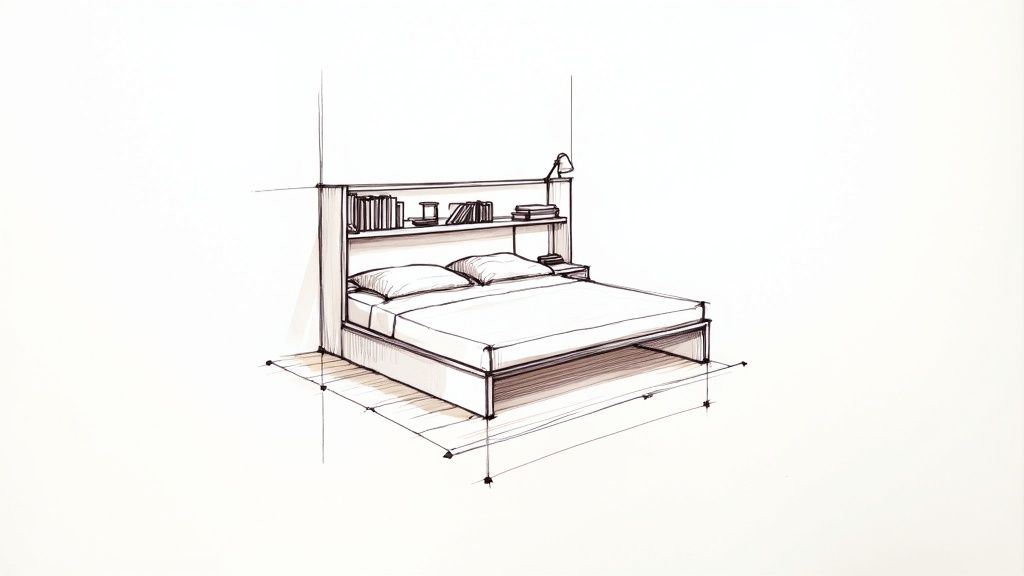
Combining furniture is a genius strategy for maximizing functionality, and a bed frame with integrated shelving is a prime example. This approach consolidates your sleeping area and book storage into one footprint, eliminating the need for separate nightstands or bookcases. It's one of the smartest bookshelf ideas for small spaces, particularly for compact bedrooms where every square foot counts.
These innovative designs often feature shelving in the headboard, along the sides, or even in drawers underneath the frame. This multi-functional piece of furniture not only saves space but also keeps your favorite books within arm's reach for late-night reading, creating a cozy and efficient personal sanctuary.
Implementation and Styling Tips
Headboard Heroes: Use headboard shelves for your current reading list, an alarm clock, and a small plant. This keeps essential items accessible and turns the headboard into a functional display. By adding a clip-on light, you can instantly transform your bed into the perfect reading nook. Learn more about creating the perfect reading nook with interior design tips.
Organize by Category: Designate different zones for different items. Keep nightly reads in the headboard, store less-frequently accessed books or bulkier items in under-bed storage, and use side shelves for decorative pieces.
Contain Small Items: Open cubbies can look cluttered if not managed well. Use small, attractive baskets or fabric bins to corral items like charging cables, journals, or remote controls, maintaining a clean and organized appearance.
Balance Books and Decor: Avoid filling every single shelf with books. Mix in small framed photos, candles, or other personal trinkets to break up the visual density and add personality to your bedroom.
Pro Tip: When choosing a bed with built-in storage, consider the depth of the shelves. Ensure they are deep enough to hold your books without them overhanging, which can look messy and become a potential hazard.
8 Small-Space Bookshelf Ideas Compared
Option | Implementation Complexity 🔄 | Resource & Cost ⚡ | Expected Outcomes 📊 | Ideal Use Cases 💡 | Key Advantages ⭐ |
|---|---|---|---|---|---|
Vertical Wall Shelving | Medium–High: permanent mounting, requires stud anchoring 🔄 | Moderate: materials + hardware; cheaper than custom built-ins ⚡ | Maximizes vertical capacity; high storage density 📊 ⭐⭐⭐⭐ | Studios, narrow hallways, bedrooms where walls can be altered 💡 | Large capacity; frees floor space; visual focal point ⭐⭐⭐ |
Corner Shelving Units | Low–Medium: fitting and leveling in uneven corners 🔄 | Low–Moderate: freestanding or wall-mounted options ⚡ | Reclaims dead corner space; moderate capacity 📊 ⭐⭐⭐ | Dorms, small offices, kitchen nooks, awkward corners 💡 | Uses wasted space; less intrusive; easy access ⭐⭐ |
Over-the-Door Shelving | Low: often tool-free or minimal install 🔄 | Low: inexpensive, widely available ⚡ | Adds compact, out-of-the-way storage; limited weight capacity 📊 ⭐⭐ | Closets, bathrooms, pantries, rentals with limited modifications 💡 | No floor/wall usage; removable; affordable ⭐⭐ |
Floating Shelves | Medium–High: concealed brackets, stud mounting for safety 🔄 | Moderate–High: quality materials and hardware increase cost ⚡ | Clean, modern look with moderate storage; curated displays 📊 ⭐⭐⭐ | Modern apartments, display walls, design-forward small spaces 💡 | Minimalist aesthetic; flexible placement; elevates decor ⭐⭐⭐ |
Ladder Shelving | Low: freestanding, no wall damage 🔄 | Low–Moderate: ready-made units affordable ⚡ | Portable storage with decorative appeal; limited heavy load 📊 ⭐⭐ | Renters, living rooms, temporary setups, styled displays 💡 | Renter-friendly; movable; decorative ⭐⭐ |
Nook and Alcove Shelving | High: custom measurement and professional install 🔄 | High: custom carpentry or semi-custom kits ⚡ | Seamless built-in storage; high functional and resale impact 📊 ⭐⭐⭐⭐ | Under-stairs, recessed walls, window nooks in owned homes 💡 | Integrated appearance; maximizes irregular spaces; adds value ⭐⭐⭐⭐ |
Vertical Bookcase with Storage Baskets | Low: simple assembly and styling 🔄 | Low: affordable bookcase + baskets ⚡ | Organized mix of open and hidden storage; reduces visual clutter 📊 ⭐⭐⭐ | Children's rooms, studios, entryways, multipurpose spaces 💡 | Combines containment with vertical storage; flexible organization ⭐⭐⭐ |
Bed Frame with Built-in Shelving | Medium–High: integrated furniture design, may need assembly 🔄 | High: specialty or custom furniture cost ⚡ | Multifunctional footprint reduction; bedside storage within reach 📊 ⭐⭐⭐ | Bedrooms, studios, tiny apartments seeking combined furniture 💡 | Merges sleeping and storage; saves space; convenient access ⭐⭐⭐ |
Bringing Your Vision to Life
You now have a comprehensive toolkit of bookshelf ideas for small spaces, moving far beyond the traditional, bulky bookcase that dominates a room. We've explored how to transform overlooked areas into functional, stylish storage, proving that limited square footage doesn't mean limited potential. The key is to shift your perspective from horizontal to vertical, from floor-based to wall-mounted, and from purely functional to creatively integrated.
From the slim profile of vertical wall shelving to the clever utility of over-the-door units, each solution is designed to reclaim unused space. We’ve seen how corner shelves can activate awkward angles, floating shelves can create an airy, minimalist display, and built-in options around beds or in alcoves can offer a truly custom fit. The common thread is strategic thinking: assessing your room not for its limitations, but for its hidden opportunities.
Your Action Plan for a Clutter-Free Space
The journey from inspiration to implementation requires a clear, confident plan. Before you commit to a specific design, take a moment to solidify your vision and ensure a successful outcome.
Measure Twice, Choose Once: Revisit your chosen space with a measuring tape. Confirm the dimensions for your preferred shelving solution, whether it's a slender ladder shelf or a custom-built nook unit. Accuracy at this stage prevents costly mistakes and ensures a perfect fit.
Visualize the Impact: The most powerful step is to see your idea in action before making any purchases. Use a design tool like Decor8 AI to upload a photo of your room and virtually place different bookshelves. This allows you to experiment with styles, colors, and arrangements, ensuring the final piece enhances your decor rather than overwhelming it. This risk-free visualization is crucial for making confident decisions in a small room where every element matters.
Execute with Precision: Once you've selected your ideal bookshelf, the final step is assembly. To ensure the stability and longevity of your chosen shelving unit, proper assembly is crucial. If you're not confident in your DIY skills, or simply want to guarantee a professional, secure installation, consider getting help with assembling your new bookshelf. A well-built shelf is a safe shelf.
By embracing these creative bookshelf ideas for small spaces, you are not just adding storage; you are thoughtfully curating your environment. You are making a conscious choice to design a home that is organized, personal, and highly functional. This strategic approach empowers you to create a sanctuary that feels spacious, stylish, and uniquely yours, proving that great design isn't about the size of the space, but the brilliance of the ideas within it.
Ready to see how these bookshelf ideas will look in your actual room? Take the guesswork out of your design process with Decor8 AI. Upload a photo of your small space and instantly visualize different shelving styles, helping you choose the perfect solution with total confidence. Try Decor8 AI today and bring your vision to life.