
Decorating a Small Apartment: 8 Expert Tips to Maximize Space
- oliverjames0609
- 2 days ago
- 17 min read
Decorating a small apartment presents a unique challenge: how do you infuse personality and functionality into a limited footprint without it feeling cramped or cluttered? The answer isn't simply about owning less; it's about owning smarter and designing with intention. Many guides offer generic advice like "buy smaller furniture," but a truly transformative design comes from a multifaceted strategy that addresses both the physical and perceptual dimensions of your space. This involves mastering vertical real estate, manipulating light and color to create an illusion of openness, and selecting furniture that works as hard as you do.
This comprehensive guide moves beyond the obvious to explore eight actionable, in-depth strategies for maximizing your home. We will cover everything from practical storage solutions and clever furniture choices to the psychological impact of layout and lighting. You will learn how to create distinct zones in an open-plan studio, leverage reflective surfaces to amplify natural light, and use textiles to add warmth and character without overwhelming the room. These are not just tips; they are foundational principles for successful small-space living.
Furthermore, we'll introduce a modern approach to planning your project. Visualizing changes before committing your time and budget is key to a successful outcome. We will explain how powerful tools like Decor8 AI can help you virtually test layouts, experiment with different color palettes, and see how new furniture will fit in your actual room. This process removes the guesswork, ensuring every choice you make is a confident one. Get ready to turn your compact apartment into a stylish, functional, and spacious-feeling sanctuary.
1. Maximize Vertical Space with Wall Storage
In any small apartment, the most underutilized asset is often the wall space. When square footage is at a premium, thinking vertically is not just a clever trick; it's a fundamental strategy for creating a functional and uncluttered home. By drawing the eye upward, vertical storage solutions create an illusion of height and spaciousness while freeing up invaluable floor space. This approach is a cornerstone of successfully decorating a small apartment, transforming blank walls into powerful organizational tools.

This method is particularly effective in studio apartments, micro-apartments, and any room that serves multiple purposes, like a living room that doubles as a home office. It’s about more than just hanging a few shelves; it’s a mindset shift from horizontal to vertical living.
How to Implement Vertical Storage
Getting started with vertical storage is straightforward and adaptable to any budget or style. The goal is to move items off the floor and onto the walls in an organized, aesthetically pleasing manner.
Floating Shelves: These minimalist shelves, popularized by brands like IKEA, are perfect for displaying books, plants, and decorative objects without the bulk of a traditional bookcase. Install them in a living room above a sofa or in a kitchen for spices and essentials.
Wall-Mounted Desks: For those with a small home office nook, a wall-mounted desk that folds away when not in use is a game-changer. It provides a dedicated workspace without permanently occupying floor space.
Pegboards: A versatile solution for home offices, kitchens, or craft areas. Pegboards allow you to customize your storage with hooks, small shelves, and baskets, keeping tools and supplies organized and within easy reach.
Tall, Narrow Bookshelves: If you prefer freestanding furniture, choose pieces that are tall and slender. These draw the eye up and maximize storage capacity on a minimal footprint. For more inspiration, explore these smart bookshelf ideas for small spaces.
Pro Tips for a Polished Look
To ensure your vertical storage enhances your decor rather than cluttering it, follow a few key principles. First, balance open and closed storage; use floating shelves for curated displays and wall-mounted cabinets to hide less attractive items. Second, maintain negative space by not overloading shelves, which prevents a cramped feel. Finally, use matching containers and baskets to create a cohesive, intentional look that reduces visual noise.
2. Use Light Colors and Strategic Lighting
The perception of space is heavily influenced by color and light. In a small apartment, using a light color palette combined with strategic lighting is one of the most effective ways to create an illusion of spaciousness and airiness. Light, neutral colors like white, soft gray, and pastels act as a reflective surface, bouncing natural and artificial light around the room. This simple trick makes walls visually recede, making the space feel larger and more open than it actually is.
This strategy is fundamental to design philosophies that excel in small-space living, such as Scandinavian and Japanese minimalism. By prioritizing a bright, uncluttered canvas, you lay the groundwork for a home that feels calm and expansive, making it a crucial step in decorating a small apartment effectively.
How to Implement Light and Color
Combining a light color scheme with a multi-layered lighting plan eliminates dark corners and adds depth to a room. The goal is to make the space feel uniformly bright and welcoming, day or night.
Choose a Light, Neutral Base: Paint your walls in shades of white, cream, or very light gray. This creates a seamless backdrop that enhances the sense of space. Keep ceilings bright white to draw the eye upward.
Layer Your Lighting: Relying on a single overhead light can create harsh shadows. Instead, layer your lighting with three types: ambient (the main source, like a ceiling fixture), task (focused light for activities, like a desk lamp), and accent (to highlight decor, like a picture light).
Maximize Natural Light: Swap heavy drapes for light-colored, sheer curtains. This allows sunlight to filter through, illuminating the space while maintaining privacy. Keeping window sills clear also helps maximize the light entering the room.
Use Mirrors Strategically: Place a large mirror opposite a window to reflect light and the view, instantly making the room feel bigger and brighter. A collection of smaller mirrors can also create a stylish, light-reflecting feature wall.
Pro Tips for a Polished Look
To prevent a light color palette from feeling cold or sterile, introduce warmth and personality through texture and accents. First, incorporate varied textures like a plush rug, a chunky knit throw, or linen pillows to add depth and coziness. Second, use warm-toned metals like brass or bronze for light fixtures and hardware to add a touch of sophisticated warmth. Finally, for more guidance on selecting the perfect hue, explore these 7 best paint colors for small rooms.
3. Invest in Multi-Functional Furniture
In a small apartment, every single piece of furniture must earn its keep. This is where multi-functional furniture becomes an essential component of a smart decorating strategy. These hardworking pieces serve two or more purposes, drastically reducing the number of items you need and freeing up precious floor space. From a coffee table that rises to become a dining table to a bed that hides a desk, this approach allows a single room to adapt to various activities throughout the day.
This strategy is the backbone of efficient small-space living, especially in studios or one-bedroom layouts where the living area must also function as a dining room, office, and guest room. By choosing smart, convertible pieces, you can maintain a clean, uncluttered look without sacrificing functionality, making your home feel both larger and more capable. To maximize every inch, consider investing in multi-functional furniture and exploring options for furniture specifically designed for small spaces.
How to Implement Multi-Functional Furniture
Integrating this concept is about identifying your daily needs and finding single pieces that can meet several of them. The goal is to choose furniture that works as hard as you do.
Sleeper Sofas: Modern sleeper sofas from brands like Article or CB2 are a far cry from their lumpy predecessors. They offer stylish seating by day and a comfortable bed by night, making them perfect for hosting guests without a dedicated guest room.
Storage Ottomans & Benches: An ottoman that opens up to store blankets, board games, or electronics is a classic small-space solution. Placed at the foot of a bed or used as a coffee table, it provides seating, storage, and a surface all in one.
Extendable Dining Tables: A table that can seat two for daily meals but expand to accommodate six for a dinner party is a game-changer. This prevents a large, bulky table from dominating your living space.
Murphy Beds with Desks: The ultimate space-saver for a studio apartment, a Murphy bed system often includes an integrated desk or shelving. When the bed is folded away, you have a fully functional home office. For a deeper dive, explore the future of AI-driven, shape-shifting furniture for flexible living spaces.
Pro Tips for a Polished Look
To make sure your multi-functional pieces contribute to a cohesive design, focus on aesthetics and quality. First, prioritize quality for high-use items like a sleeper sofa; since it serves two key functions, durability is paramount. Second, look for clean lines and a lighter visual weight; bulky, heavy-looking furniture can make a small room feel cramped, even if it's multi-functional. Finally, choose pieces that align with your lifestyle to ensure you get maximum value from your investment.
4. Create Visual Boundaries with Area Rugs and Layout
In open-concept small apartments, particularly studios, the lack of physical walls can make the space feel like one undefined, chaotic room. Area rugs and strategic furniture layouts are your most powerful tools for creating visual separation and establishing distinct functional zones. This technique, known as "zoning," carves out separate areas for living, sleeping, and working, making the apartment feel more organized, intentional, and significantly larger than it is.
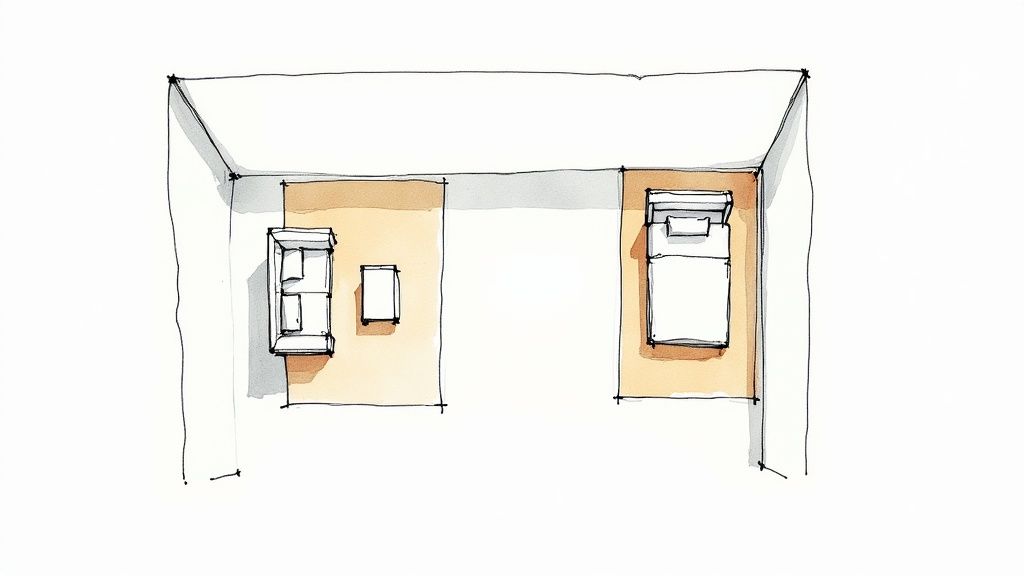
This method is essential when decorating a small apartment because it brings order and purpose to your layout without adding physical barriers that would block light and make the space feel cramped. It’s a design principle that adds both function and sophisticated style, championed by leading designers and publications for its effectiveness in small-scale living.
How to Implement Zoning with Rugs and Furniture
The goal is to use furnishings to signal a shift in function from one part of the room to another. A well-placed rug acts as a foundation, anchoring the furniture and clearly defining the perimeter of a zone.
Define the Living Area: Place a rug in your main seating area. Position your sofa so at least its front two legs are on the rug. Arrange armchairs and a coffee table entirely on the rug to create a cohesive, contained living "room."
Create a Dining Nook: Even if you only have a small bistro table, placing it on a distinct rug, perhaps a circular one, instantly designates it as a dining zone. Ensure the rug is large enough so that the chairs remain on it even when pulled out.
Establish a Workspace: A small rug under your desk and chair can separate your home office from your relaxation space, which is crucial for work-life balance in a studio apartment.
Anchor the Bedroom Zone: In a studio, a rug placed under the bottom two-thirds of the bed creates a soft, defined sleeping area that feels separate from the rest of the space. To effectively define areas and add warmth to your small apartment, understanding the intricacies of different rug types, such as the difference of a hand-knotted rug, can significantly impact your layout.
Pro Tips for a Polished Look
To maximize the impact of this technique, choose rugs with complementary colors but distinct patterns to differentiate zones without clashing. Ensure there's a clear pathway between your "zones" to maintain flow. Finally, don't be afraid to layer rugs; placing a smaller, textured rug over a larger, neutral one can add depth and personality to a key area like your living room.
5. Incorporate Mirrors and Reflective Surfaces
Mirrors and reflective surfaces are among the most powerful tools in an interior designer's arsenal for decorating a small apartment. They work by amplifying both natural and artificial light, creating an illusion of depth that makes any room feel significantly larger, brighter, and more open. Strategically placed mirrors can visually double the size of a space, bounce light into dark corners, and add a touch of glamour and sophistication. This technique is a classic for a reason; it's a simple yet highly effective way to transform a cramped area into an airy retreat.

This method is particularly impactful in narrow hallways, small bedrooms, or living areas that lack abundant natural light. Beyond traditional wall mirrors, the principle extends to furniture and accents with reflective qualities, such as glass, metallics, and high-gloss finishes.
How to Implement Mirrors and Reflective Surfaces
Integrating reflective elements into your decor is a versatile strategy that can be adapted to any style, from minimalist to maximalist. The key is to place them thoughtfully to maximize their space-enhancing effects.
Large Floor Mirrors: A full-length mirror leaned against a wall is a renter-friendly option that adds an architectural element while making a room feel taller and deeper. Place one in a bedroom or at the end of a hallway.
Mirrored Closet Doors: In a compact bedroom, replacing standard closet doors with mirrored ones is a brilliant two-for-one solution. It eliminates the need for a separate full-length mirror and makes the entire room feel more expansive.
Mirrored Accent Walls: For a bold, dramatic effect in a studio apartment or a small dining nook, an accent wall covered in mirror tiles can visually double the space. It’s a high-impact choice that adds a luxurious feel.
Reflective Furniture: Incorporate pieces like a glass coffee table, a metallic side table, or a high-gloss media console. These items feel visually lightweight and help light travel through the room, preventing it from feeling crowded.
Pro Tips for a Polished Look
To ensure your use of mirrors is effective and tasteful, consider a few expert tips. First, think about the reflection; position mirrors to reflect something beautiful, like a window with a view, a piece of art, or a chandelier, not a cluttered corner or a blank wall. Second, use mirrors as art by choosing unique shapes or ornate frames that serve as a focal point. Finally, don't overdo it; a few strategically placed reflective surfaces will have a much greater impact than placing mirrors on every available wall, which can feel disorienting.
6. Declutter and Follow Minimalist Principles
In a small apartment, clutter is the biggest enemy of space and style. Adopting minimalist principles is not about living in a stark, empty room; it's a strategic approach to creating visual calm and maximizing every square inch. By intentionally keeping only essential and meaningful items, you free up physical and mental space, allowing your decor to breathe. This philosophy is fundamental to successfully decorating a small apartment, shifting the focus from quantity to quality and creating a serene, organized sanctuary.
This method is especially powerful for those who feel overwhelmed by their belongings or find their small space feels cramped and chaotic. It’s a mindset change that prioritizes function, intention, and peace over possession, transforming how you live in and experience your home.
How to Implement Minimalism
Embracing minimalism is a gradual process of conscious decision-making. The goal is to curate your environment so that it contains only things that add value to your life, whether through function or joy.
The KonMari Method: Popularized by Marie Kondo, this method involves assessing each item you own and asking if it "sparks joy." If it doesn't, you thank it for its service and let it go. This is a profound way to start your decluttering journey.
The One-In, One-Out Rule: To maintain a clutter-free space long-term, adopt this simple rule. For every new item you bring into your apartment, one similar item must leave. This prevents the slow accumulation of stuff.
Digitize Everything Possible: Reduce paper clutter by digitizing important documents, sentimental photos, and old letters. Cloud storage and digital photo frames can preserve memories without taking up physical space.
Designate a Home for Everything: Every single item in your apartment should have a designated storage spot. This simple habit makes tidying up quick and effortless, preventing piles from forming on surfaces.
Pro Tips for a Polished Look
To ensure your minimalist approach feels warm and personal rather than cold, focus on the details. First, invest in quality over quantity; a few well-made, beautiful pieces will have more impact than a room full of cheap clutter. Second, use texture to add warmth, incorporating cozy textiles like wool throws, velvet cushions, and jute rugs to create depth and comfort. Finally, remember that minimalism is personal; for more inspiration on crafting your own version of this style, you can explore the core concepts of a Minimalist interior design style.
7. Add Personality with Artwork and Textiles
While maximizing function is critical when decorating a small apartment, it's the personal touches that truly make a space feel like home. Strategic use of artwork and textiles adds warmth, color, and texture without consuming precious floor space. These elements are powerful tools for expressing your style, whether it's minimalist, bohemian, or eclectic. They can transform a sterile, boxy room into a cozy and inviting sanctuary that reflects your unique personality.
This approach is highly effective for renters or anyone who wants the flexibility to change their decor without a major commitment. Unlike bulky furniture, textiles and art are easy to swap out, allowing you to refresh your apartment's look seasonally or as your tastes evolve. They are the final layer that ties a room together, making it feel complete and thoughtfully curated.
How to Implement Artwork and Textiles
Incorporating these elements is about creating visual interest and comfort. The goal is to layer in color, pattern, and texture in a way that feels intentional rather than cluttered.
Gallery Walls: Create a focal point by grouping several smaller pieces of art, photography, or even personal mementos. Using matching frames can create a cohesive, gallery-like feel, while a mix of styles offers a more eclectic look.
Layered Textiles: On a neutral sofa or bed, layer throw pillows and blankets with different textures. Combine materials like velvet, chunky knit wool, and smooth linen to create a rich, tactile experience that invites you to relax.
Statement Rugs: A well-chosen area rug can define a zone, such as a living area within a studio apartment, and introduce a bold pattern or color to the space. It anchors the furniture and adds a soft, warm element underfoot.
Wall Hangings and Tapestries: For a large, blank wall where a traditional gallery might feel too busy, a single large tapestry or macramé wall hanging can add significant visual impact and a touch of softness.
Pro Tips for a Polished Look
To ensure your decorative accents enhance your small space, focus on cohesion and balance. First, establish a color palette for your textiles and artwork to create a unified look, even if the patterns and styles vary. Second, mix scale by pairing a large piece of art with smaller decorative objects or a bold-patterned rug with subtle, solid-colored pillows. Finally, for those wanting to dive deeper into art selection, understanding how to choose and display pieces is key. For more guidance, explore these insights on using art effectively in interior design.
8. Optimize Natural Light and Windows
Natural light is a small apartment's best friend. It’s a powerful, free resource that can make even the most compact space feel open, airy, and significantly larger. Optimizing your windows and the light they provide is a fundamental strategy in decorating a small apartment, as it enhances mood, reduces the need for artificial lighting, and creates a welcoming atmosphere. This approach moves beyond simple decor and taps into the core architectural elements of your space to maximize its potential.
This technique is especially vital in garden-level apartments or spaces with limited window access. It's a cornerstone of Scandinavian design, which prioritizes maximizing daylight during short winter days, but its principles can be applied universally to make any small home feel more expansive and inviting.
How to Implement Light Optimization
The goal is to invite as much natural light in as possible and then help it travel throughout your space. This involves strategic choices in window treatments, furniture placement, and reflective decor.
Sheer or Translucent Curtains: Swap out heavy, opaque drapes for lightweight fabrics like linen, voile, or sheer cotton. These materials soften the light without blocking it, maintaining privacy while creating a bright, ethereal glow.
Strategic Mirror Placement: This is a classic trick for a reason. Placing a large mirror on the wall directly opposite a window doubles the amount of light and creates an illusion of depth, effectively making the room feel twice as big.
Low-Profile Furniture: Avoid placing tall, bulky furniture like bookcases or high-backed sofas directly in front of windows. Opt for low-profile pieces that sit below the windowsill to ensure an unobstructed flow of light.
Light-Filtering Blinds: If you need more privacy and light control than sheer curtains offer, consider top-down/bottom-up shades or light-filtering cellular blinds. They provide flexibility, allowing you to let light in from the top while keeping the bottom covered.
Pro Tips for a Polished Look
To truly master natural light, think beyond just the windows. First, keep window glass and frames clean; dirty windows can diffuse and reduce incoming light significantly. Second, choose a light color palette for your walls and large furniture pieces, as pale shades like white, cream, and pastels reflect light rather than absorb it. Finally, incorporate metallic and glossy finishes in your decor-think chrome lamps, glass-topped tables, and lacquered trays-to bounce light around the room and add a touch of sparkle.
Small Apartment Decor: 8-Point Comparison
Strategy | Implementation 🔄 | Resources & Cost ⚡ | Expected Outcomes 📊 | Ideal Use Cases 💡 | Key Advantages ⭐ |
|---|---|---|---|---|---|
Maximize Vertical Space with Wall Storage | Medium — requires anchors, drilling, layout planning | Low–Medium — shelves, brackets, tools; budget options available | Frees floor space; increases storage and perceived height | Studios, micro-apartments, small home offices (renters need permission) | Maximizes usable area; keeps items visible and accessible |
Use Light Colors and Strategic Lighting | Low–Medium — painting and layered lighting plan | Low–Medium — paint, light fixtures; scalable by budget | Rooms feel brighter and larger; calmer atmosphere | Small, dim rooms; renters who want low-impact upgrades | Enhances natural light; flexible accenting options |
Invest in Multi-Functional Furniture | Medium–High — measure carefully; may require assembly | Medium–High — higher upfront cost but replaces multiple pieces | Significant floor-space savings; fewer items to manage | Studios, multifunctional rooms, households needing flexibility | Versatile use; integrated storage; lowers long-term clutter |
Create Visual Boundaries with Area Rugs and Layout | Low–Medium — requires measurement and furniture arrangement | Medium — quality rugs can be costly; affordable options exist | Defines zones; improves flow and perceived organization | Open-plan studios, lofts, combined living/sleeping areas | Defines space without walls; adds warmth and comfort |
Incorporate Mirrors and Reflective Surfaces | Low — placement planning and secure mounting | Low–Medium — mirrors and glass accents are generally affordable | Amplifies light and depth; rooms appear larger and brighter | Dark rooms, narrow spaces, small bedrooms and hallways | High visual impact for a small footprint; cost-effective |
Declutter and Follow Minimalist Principles | Medium — ongoing discipline and regular audits | Low — primarily time and organizational tools | Cleaner, calmer, more functional spaces; easier maintenance | Those seeking simplicity, small households, shared living | Reduces complexity and cost; improves usability long-term |
Add Personality with Artwork and Textiles | Low — styling and occasional swaps | Low–Medium — prints, pillows, throws; scalable by budget | Adds warmth and character without major changes | Renters, minimalist bases needing color/texture | Flexible, affordable, and renter-friendly way to personalize |
Optimize Natural Light and Windows | Low–Medium — select treatments and arrange furniture | Low–Medium — curtains, blinds, cleaning; minimal cost | Brighter spaces, better mood and energy efficiency | Apartments with usable windows; daytime-occupied homes | Enhances natural light and views; reduces artificial lighting needs |
Bringing It All Together: Your Blueprint for a Better Small Space
Transforming a compact apartment from a source of frustration into a sanctuary of style and function is not about magic; it's about a strategic, thoughtful approach. Throughout this guide, we've explored the core principles of decorating a small apartment, moving beyond generic advice to provide a detailed blueprint you can implement immediately. The journey from cluttered and cramped to open and organized is built on a foundation of intentional choices.
Your small space is not a limitation but a canvas for creativity. The constraints of limited square footage force you to become a more resourceful, innovative decorator. Every piece of furniture, every color choice, and every storage solution must earn its place. This deliberate process is what ultimately creates a home that is not just aesthetically pleasing but deeply personal and highly efficient.
The Core Pillars of Small Space Success
Let's distill the essential takeaways from our exploration. Decorating a small apartment successfully hinges on mastering four key areas:
Perception and Light: The battle for space is often won in the mind. By using light colors, strategic lighting, large mirrors, and optimized natural light, you manipulate perception to make the room feel significantly larger and more airy than its physical dimensions suggest. This isn't just about painting walls white; it's about layering light sources and using reflective surfaces to bounce that light into every corner.
Functionality and Efficiency: Every inch counts. Multi-functional furniture like ottoman beds and convertible dining tables are your most valuable assets. Paired with a robust vertical storage strategy, you can dramatically increase your apartment's capacity without sacrificing floor space. The goal is to create a home where every item serves a purpose, and often, more than one.
Definition and Flow: A small, open-plan apartment can feel chaotic without clear visual cues. This is where zoning comes into play. Using area rugs to define a living area, or arranging furniture to create a distinct entryway, gives your home a sense of order and purpose. You are creating "rooms" without walls, guiding the eye and establishing a natural, intuitive flow.
Personality and Polish: A functional space should never be a sterile one. The final, crucial layer involves infusing your personality through carefully chosen artwork, textiles, and decor. This is where you transition a well-designed space into a true home. Following minimalist principles ensures these personal touches stand out and enhance the space rather than cluttering it.
Your Actionable Path Forward
The path to a beautifully decorated small apartment begins with a single, decisive step. Don't feel pressured to implement every idea at once. Instead, identify your biggest pain point. Is it clutter? Start with a decluttering weekend and a plan for vertical storage. Does the room feel dark and gloomy? Begin by reassessing your lighting and painting a test swatch of a lighter color.
Key Insight: The most impactful changes often come from a series of small, well-executed adjustments rather than a single, expensive overhaul. Progress, not perfection, is the goal.
The true value in mastering these concepts extends far beyond aesthetics. A well-organized, beautiful home has a profound impact on your daily life. It reduces stress, improves focus, and provides a genuine refuge from the outside world. By taking control of your environment, you are investing in your own well-being. The principles of intentionality and resourcefulness you apply to decorating a small apartment are valuable life skills that translate to many other areas. You are not just designing a room; you are designing a better, more organized life.
Ready to stop guessing and start visualizing? Take the actionable strategies from this article and see them come to life in your own apartment instantly. With Decor8 AI, you can upload a photo of your space and use AI to experiment with new paint colors, virtually stage different furniture layouts, and generate stunning before-and-after concepts in seconds. Plan your perfect small apartment makeover with confidence by visiting Decor8 AI and start designing today.