
How to organize a small bedroom: Smart Tips for Tiny Spaces
- oliverjames0609
- 3 days ago
- 16 min read
Tackling a small bedroom can feel like an impossible puzzle, but I've found that having a solid game plan makes all the difference. The best approach I've seen is what I call the 4-D Method: a simple but powerful strategy that breaks the process down into manageable chunks. You'll Define what the room needs to do, Declutter with purpose, Design a smarter layout, and finally Deploy the right storage. It's a framework that brings immediate order to the chaos.
Your Action Plan for a Clutter-Free Small Bedroom
That feeling of being boxed in is real, especially with city living spaces getting smaller and smaller. This isn't just in your head—it's a massive trend. The market for furniture designed for small spaces was already worth $23.4 billion in 2023 and is expected to balloon to $41.2 billion by 2032.
Why the surge? Urbanization is a huge driver. Projections show that by 2050, over 68% of us will be living in cities, where apartments under 500 square feet are becoming the norm. You can dig into more details on small space furniture trends in this market report.
This reality check makes mastering small bedroom organization a crucial skill. It’s not about just being neat; it's about making every single inch of your room work for you. To really succeed, you need a plan that goes way beyond buying a few more storage bins.
The 4-D Organization Framework
Every successful small-space makeover I've been a part of follows a clear, repeatable process. It’s all about getting to the root of the clutter and layout problems before you start buying things or moving furniture around. This is about making smart, intentional choices from the get-go.
This simple diagram shows how the whole process flows, from the initial brainstorming to the final setup.
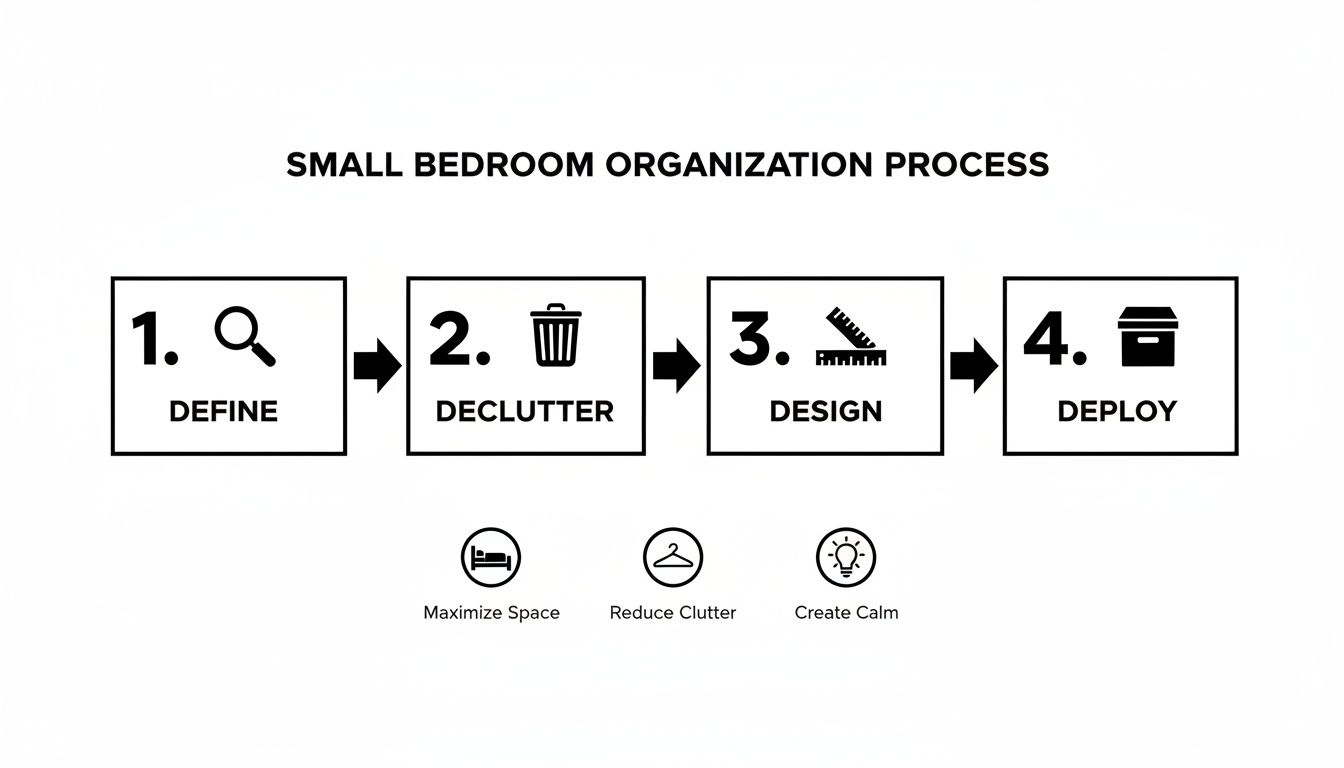
You can see how each step naturally leads to the next, which is key. It stops you from wasting time, money, and energy on solutions that just don't fit your space or how you actually live.
Key Takeaway: By defining your room's main purpose first, you create a filter for every other decision. If you decide the goal is a peaceful sleep sanctuary, that cluttered hobby desk or flashy neon sign suddenly looks out of place.
This structured approach helps you avoid common pitfalls, like buying a bunch of organizers before you've even decluttered or shoving furniture around without a real plan. We’ll walk through each of these phases step-by-step, but here’s a quick look at the framework.
The 4-D Small Bedroom Organization Framework
This table breaks down my core four-step method for reclaiming any small bedroom, giving you a roadmap from initial thoughts to final execution.
Phase | Core Action | Key Objective | Example Tactic |
|---|---|---|---|
Define | Identify the room's primary functions | Create a clear vision for the space | Deciding if the room is just for sleep or also for work. |
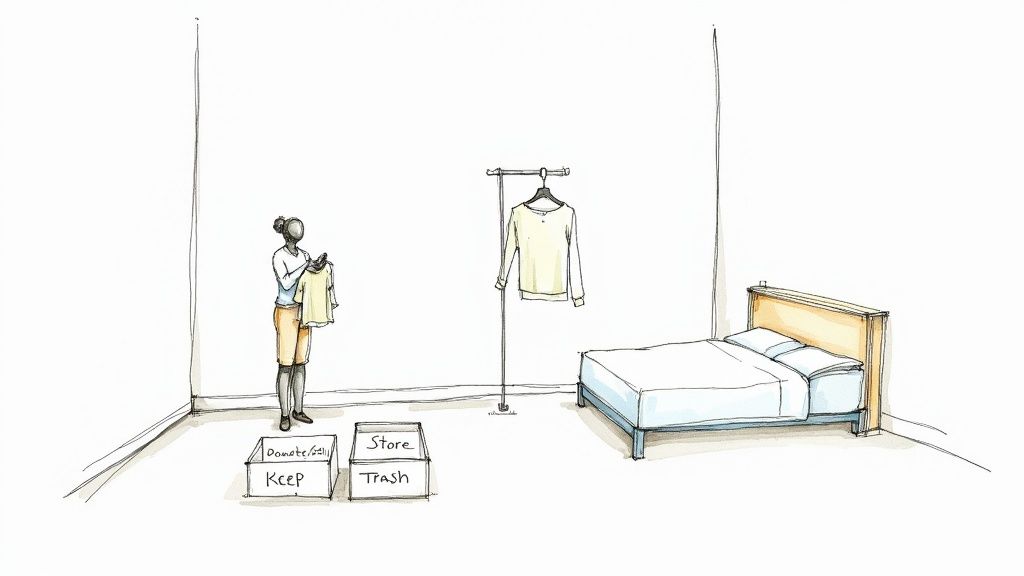
Declutter | Ruthlessly remove what you don't need | Keep only what's essential or loved | Using the "Four-Box Method" (keep, donate, store, trash). |
Design | Plan furniture layout and traffic flow | Maximize floor space and visual openness | Sketching layouts on paper or using a tool like Decor8 AI. |
Deploy | Implement storage and organization systems | Use vertical and hidden storage effectively | Installing floating wall shelves or getting a bed with drawers. |
Following this path ensures every piece of furniture and every storage solution has a purpose, ultimately turning your cramped room into a space you genuinely love.
Decluttering Your Bedroom with Confidence
Before you start sketching layouts or shopping for new furniture, the most critical step is to simply get rid of stuff. It sounds obvious, but most people skip right to buying storage solutions, which usually just means they end up with nicer-looking clutter. The real transformation happens when you intentionally subtract.
This isn't just about tidying up; it's about reclaiming your space and your peace of mind. A cluttered room often leads to a cluttered head. By clearing out what you don’t need, you’re not just making physical room—you're creating a calm, clean slate to work with.
The Four-Box Method: A Practical Start
The sheer thought of decluttering can be overwhelming, which is why I always go back to the Four-Box Method. It's a dead-simple system that takes the emotion and guesswork out of the process. Just grab four boxes or bins and give them these labels:
Keep: These are the things you use, need, and genuinely love. No questions asked, they’re staying.
Donate/Sell: Good stuff, but it no longer has a place in your life. Give it a second chapter somewhere else.
Store: Think seasonal items (like that bulky winter parka in August) or keepsakes you cherish but don't need out all the time.
Trash/Recycle: Anything broken, expired, or just plain worn out. It's time to say goodbye.
This forces a decision for every single item. You can’t just push things into a "maybe" pile. It breaks a massive project down into a series of small, manageable choices.
Conquering Closet Chaos
Let's be honest, the closet is usually ground zero for clutter. When you’re sorting through clothes, ask yourself one powerful question: "If I saw this in a store today, would I buy it?"
This little mental trick cuts right through the "but I might wear it someday" trap. If the answer is a clear no, you know what to do. The same goes for clothes that don't fit. Don't let them take up valuable real estate in your daily-use closet. Store them elsewhere if you must, but your closet should only hold clothes that fit and make you feel great right now.
Curating your closet isn’t just about saving space—it simplifies your life. Imagine starting your day by picking from a wardrobe where you love every single piece. It turns getting dressed from a chore into a pleasure.
Beyond the Wardrobe: Other Clutter Hotspots
Clothes are the main offender, but other areas are magnets for mess. Apply the same ruthless editing to these common clutter zones.
The Nightstand: Is yours a graveyard for old receipts, tangled cords, and half-full water glasses? A nightstand should be a pocket of calm. Pare it down to the absolute essentials: a lamp, the book you're currently reading, and maybe a small tray for your watch or rings.
The Bookshelf: We all love our books, but they take up a ton of space. Take a hard look and decide which ones you’ll actually re-read or reference. For the rest, consider donating them to a local library or passing them on to friends.
This mindset can ripple out into the rest of your home. Once you start, it's amazing how freeing it feels. For example, taking these same ideas into a cramped bathroom can be a total game-changer. If you're curious, check out these bathroom cabinet organization ideas to declutter your space.
Ultimately, decluttering isn't about achieving stark minimalism (unless that's your thing). It's about making sure everything you keep in your room has a purpose and deserves to be there. This thoughtful editing is the real secret to making a small bedroom feel open, functional, and truly yours.
Choosing Furniture That Works Smarter, Not Harder
Now that your room is decluttered, you can get to the fun part: picking out furniture that actively solves your space problems. In a small bedroom, a piece of furniture can't just sit there and look pretty; it has to be a hardworking part of your organization system. This is all about thinking beyond the basics and finding items that can pull double duty.
The furniture industry has definitely caught on. With the global bedroom furniture market expected to reach USD 126.80 billion in 2025, a huge chunk of that growth comes from the demand for space-efficient designs. It's no surprise, especially with more people living in cities. Pieces like lift-top storage beds, which can add 10-15 cubic feet of storage without taking up more floor space, are becoming essentials, not luxuries.
Rethinking the Centerpiece: The Bed
Your bed is the biggest thing in the room, which means it holds the biggest potential for smart storage. Gone are the days of a simple frame with wasted space underneath. A good guide to a double bed with storage is a great starting point for reclaiming a massive amount of floor space.
When it comes to storage beds, there are a few popular options. Here's a quick comparison to help you decide what might work best for you.
Multi-Functional Furniture Comparison
Furniture Type | Average Space Saved | Storage Capacity | Best For |
|---|---|---|---|
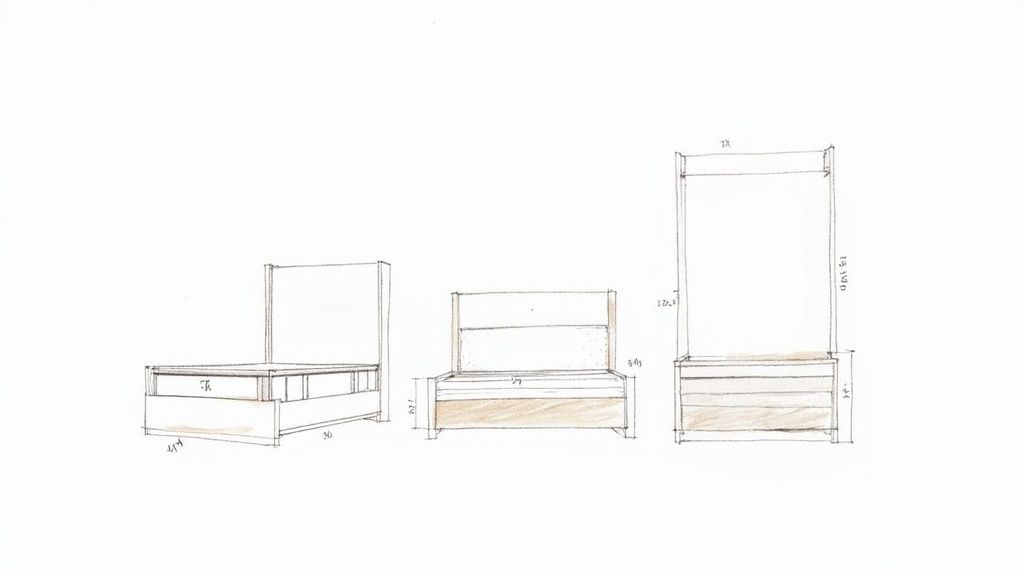
Ottoman Bed (Lift-Up) | 10-15 cubic feet | High | Bulky items you don't need daily, like extra bedding, seasonal clothes, or luggage. |
Platform Bed with Drawers | 6-10 cubic feet | Medium | Frequently used items like shoes, folded clothes, or extra linens, offering structured access. |
Bunk Bed/Loft Bed | Full bed footprint | Varies | Creating a dedicated workspace or lounge area underneath the sleeping space in very small rooms. |
Ultimately, the best choice really comes down to what you need to store. If it’s deep, long-term storage for things you only grab a few times a year, the ottoman style is a clear winner. For items you need to access regularly, the convenience of drawers is hard to beat.
Go Vertical to Reclaim Your Floor
When you can't build out, build up. Using your walls is a foundational rule for organizing a small bedroom. It not only adds critical storage but also draws the eye upward, which can make the whole room feel taller and more spacious.
Look for opportunities to swap traditional, wide furniture for taller, sleeker alternatives:
Ladder Desks: These have a tiny footprint but offer plenty of vertical shelving for books, decor, and supplies. It’s a desk and a bookshelf in one.
Tall, Narrow Bookcases: Instead of a short, wide bookcase that hogs floor space, a tall, slim one gives you the same storage without the bulk.
Floating Nightstands: Mounting a small shelf or a compact nightstand directly to the wall frees up the floor beneath it. This simple trick makes the room feel less cluttered and is a huge help when it's time to vacuum.
Pro Tip: One of the most impactful changes you can make is choosing a wardrobe with sliding doors. A standard hinged door needs clearance to swing open, which can eat up as much as six square feet of usable space. Sliding doors need zero clearance, a total game-changer in a tight spot.
A Checklist for Smart Furniture Shopping
Before you pull the trigger on a new piece of furniture, grab your tape measure and have a clear plan. A little bit of prep work now will save you the massive headache of trying to return something that just doesn’t fit.
Run through this checklist for any potential purchase:
Measure Everything Twice. Get the exact dimensions of your room, paying close attention to where windows and doors are. Then, measure the furniture itself to make sure you’ll have enough clearance to walk around it comfortably.
Does It Serve at Least Two Functions? Look for multi-purpose heroes. Can that bench at the end of the bed also store your extra blankets? Does the headboard have built-in shelves?
Does It Have a Light Visual Weight? Furniture with legs you can see under—think mid-century modern dressers—creates a sense of openness because you can see the floor. Materials like glass or acrylic can also make a room feel less crowded.
Is the Scale Right? Steer clear of heavy, oversized furniture that will swallow the room whole. Choosing pieces that are proportional to the space is what keeps things feeling balanced and airy. This is a key principle if you want to elevate your bedroom design and create a place you truly love.
By focusing on furniture that is both functional and visually light, you’ll build a foundation for a bedroom that feels organized, spacious, and completely intentional.
Maximizing Your Closet and Vertical Real Estate
If you're scratching your head wondering how to organize a small bedroom, your closet is the absolute best place to start. It's often the epicenter of chaos, but with the right approach, it can become your biggest storage weapon. The secret is to stop thinking of it as just a single hanging rod and a high shelf. Instead, picture it as a fully customizable storage system.
First things first, "zone" your closet. Group similar items together—all your work clothes in one spot, casual wear in another, gym gear here, formal outfits there. This simple sorting exercise makes getting ready so much faster and instantly shows you how much space each part of your life actually needs.
Once you’ve got your zones mapped out, you can bring in some game-changing organizers that can literally double your capacity. The closet organizer market is exploding—it was valued at $7.64 billion in 2024—which just goes to show how many people are looking for these exact solutions. Small swaps can make a huge difference. For example, switching to slim velvet hangers can cut down rod space needs by up to 50%. And for those bulky off-season sweaters and duvets? Vacuum-sealing bags can shrink them by an incredible 80%.
Unlocking Your Closet's Full Potential
Thinking vertically inside the closet is a must. Don't let that awkward, empty space between your hanging clothes and the floor go to waste. A small dresser or a set of stackable drawers fits perfectly underneath, giving you a new home for folded t-shirts, shorts, and activewear.
Here are a few of my favorite tools for closet optimization:
Tiered Hanging Shelves: These fabric organizers are brilliant for bulky sweaters and jeans. They instantly create a column of shelves without a single screw.
Over-the-Door Organizers: The back of your closet door is prime real estate! It's the perfect spot for shoes, belts, scarves, and all those other accessories that just create clutter elsewhere.
Shelf Dividers: Tired of those leaning towers of sweaters on your top shelf? These simple dividers just clip on to create neat, manageable cubbies.
Maximizing your closet isn’t about cramming more stuff in. It’s about creating an intuitive system where everything has its own accessible spot. A well-organized closet saves you time and cuts down on that daily "what to wear" stress.
Taking Vertical Storage to the Walls
That same "think up" strategy works wonders for the rest of your bedroom. Your walls are basically blank canvases for storage. Using them lets you reclaim precious floor space, which immediately makes the room feel bigger and less cluttered. Once you start seeing your walls as functional assets, you’ll discover a whole new level of organization.
A great way to get started is with space-saving wall-mounted clothes rails. You can use one to display your favorite pieces, plan out your outfits for the week, or just handle overflow from your main closet. It acts like a mini open-closet, adding both function and a touch of style.
Smart Ways to Use Your Wall Space
Floating shelves are a small bedroom's best friend. Install a series of them high up near the ceiling to store things you don't need every day, like books you've already read, extra linens, or decorative boxes filled with keepsakes. This trick also draws the eye upward, creating an illusion of height. If you're hunting for more ideas, check out these smart bookshelf ideas for small spaces to maximize your home.
Even your bedside setup can go vertical. Ditch the bulky nightstands for sleek, wall-mounted versions or a couple of small floating shelves. This move frees up the floor, making the area around your bed feel much more open and a lot easier to clean. You can even mount your reading light directly to the wall or headboard, getting rid of a clunky lamp that just eats up surface space. When you make your walls work for you, every square inch of your room starts pulling its weight.
Using Design Tricks to Make Your Room Feel Bigger
Once you've nailed your storage and reclaimed your floor space, the final touch in making a small bedroom work is all about perception. A perfectly organized room can still feel tight if your design choices are working against you. This is where a few clever interior design tricks can make a world of difference, creating an illusion of space that makes your room feel surprisingly larger and more breathable.
These aren't huge, expensive renovations. They’re just smart, strategic adjustments that play with light and perspective. It's all about tricking your brain into thinking the room is bigger than it is.
Let There Be Light (and Reflection)
Hands down, the most powerful tool for opening up a small room is light—both natural and artificial. The more light you can get bouncing around your space, the more the walls will seem to recede.
One of the oldest tricks in the book is a well-placed mirror, and it works for a reason. Hanging a large mirror on the wall directly opposite your main window is a total game-changer. It acts like a second window, grabbing all that natural light and throwing it back into the room, brightening up dark corners and adding a real sense of depth.
Don’t just hang any old mirror. Go for a large, simple-framed or even a frameless one for the biggest impact. The goal is an uninterrupted reflection that seamlessly extends the space, not a small, decorative piece that just adds more visual noise.
Beyond mirrors, your paint color is your next best friend. Light, neutral shades are a small room’s secret weapon. Think soft whites, pale grays, or light beiges—they reflect far more light than dark, saturated colors. A monochromatic scheme, where you use different tones of the same light color, is even better. It blurs the lines where surfaces meet, making it hard for the eye to find the room's boundaries. If you need some ideas, check out these best paint colors for small rooms that pros use to create that spacious feel.
Choose Furniture That Breathes
The physical profile of your furniture matters—a lot. Two dressers might offer the exact same storage, but one can make the room feel open and airy while the other feels like a lead weight.
The key is choosing pieces with a "light visual weight." Look for furniture with exposed legs, like a mid-century modern nightstand or a dresser on slender feet. Being able to see the floor continue underneath your furniture creates an uninterrupted sightline, fooling your brain into seeing more open floor space. A solid, boxy piece that sits flat on the floor does the opposite, creating a heavy visual block that screams "cramped."
This same idea applies to materials. Furniture made from see-through or shiny materials like glass, acrylic, or polished metal can almost disappear, giving you function without the bulk. An acrylic console table as a minimalist desk or a glass-topped nightstand are perfect examples. They get the job done without taking up visual real estate.
Master the Art of Illusion
A few finishing touches can tie everything together and seal the deal on your newly spacious-feeling room. How you dress your windows is huge. To make the ceiling feel higher, hang your curtain rod four to six inches above the window frame and extend it three to six inches wider on each side. Then, let the curtains hang all the way to the floor. This simple trick draws the eye up and out, creating a sense of height and width.
Finally, layer your lighting. Don't rely on a single, harsh overhead light, which can cast shadows and make a room feel like a cave. Instead, use a mix of sources to create a balanced, inviting glow.
Ambient: A soft overhead fixture for general light.
Task: A wall-mounted sconce or a slim reading lamp next to your bed.
Accent: A small, warm lamp on a shelf to highlight a favorite corner or a piece of art.
This approach gets rid of dark spots, keeps the eye moving, and gives the room a dynamic, warm ambiance that feels anything but small.
Keeping Your Organized Bedroom That Way for Good
You did it. You decluttered, rearranged, and squeezed every last drop of function out of your small bedroom. It looks amazing. But now comes the real challenge: keeping it that way. Without a few simple, consistent habits, even the most perfectly organized space can slip back into chaos.

The trick is to build small routines that feel completely natural. The goal isn’t to clean constantly, but to integrate tiny actions into your day that keep your peaceful sanctuary from becoming another project.
Build Habits That Actually Stick
Long-term organization isn't about one massive, heroic cleaning session every month. It’s all about the small stuff you do every day. From my experience, two simple rules have a massive impact and stop clutter before it even starts.
The 'One-In, One-Out' Rule: This is my golden rule, especially for tiny closets. Every time a new piece of clothing comes in, an old one has to go out. Whether it's a new pair of jeans or a souvenir t-shirt, this simple exchange keeps your wardrobe from overflowing and makes you think twice about what you buy.
The '5-Minute Tidy' Routine: Every night before bed, set a timer for just five minutes. Use that time for a quick reset. Hang up the jacket on the chair, put the book back on the nightstand, and clear away that stray water glass. It’s a tiny time investment that prevents little messes from snowballing into a weekend-ruining disaster.
A "clutter basket" can be a total game-changer. I keep a nice-looking woven basket in a corner for all the random stuff that collects during the day. Once a week, I spend ten minutes emptying it and putting everything back where it belongs.
Evolve With Your Space
Your life changes, and your style evolves. The system that works perfectly today might not be the right fit a year from now. When you feel things aren't flowing as well or you’re eyeing a new piece of furniture, it helps to see how it’ll look before you pull the trigger.
This is where experimenting with AI tools can be incredibly helpful. You can use a free AI interior design generator to mock up how a different bed placement or a new dresser would affect the room's feel and flow. It’s a zero-commitment way to make sure your organized bedroom continues to adapt with you, staying both functional and beautiful for the long haul.
Common Questions About Small Bedroom Organization
Even with a detailed guide, a few specific questions always seem to come up when you're in the thick of organizing a small bedroom. Let's tackle some of the most common ones I hear.
Where Do I Even Start?
The absolute first thing you should do is declutter. Seriously. Before you buy a single storage bin or even think about moving furniture, you have to get real about what you own.
Pull everything out and sort through it. If you don't use it, need it, or absolutely love it, it's time for it to go. This step alone can feel like a huge weight has been lifted and makes every other part of the process a thousand times easier.
How Can I Add Storage Without It Feeling Crowded?
The trick is to think vertically and look for hidden opportunities. Go up! Wall-mounted shelves placed high on the walls are perfect for books, plants, or decor that you don't need daily access to.
Also, look for furniture that does double duty. A bed frame with built-in drawers is a game-changer. So is an ottoman that opens up to store blankets. By getting furniture and storage off the floor, you create a much more open and airy feel.
My golden rule for small spaces: every piece of furniture has to earn its spot. If something only serves one purpose, ask yourself if a smarter, multi-functional alternative exists.
What Are the Top 3 "Must-Have" Items for a Tiny Bedroom?
If you're on a tight budget or just want the most bang for your buck, these three items deliver massive results:
Under-bed storage containers: They are perfect for stashing away things you don't need year-round, like seasonal clothing or extra linens. Out of sight, out of mind.
Slim, non-slip hangers: You'd be shocked at how much space you can free up just by switching from bulky plastic or wood hangers. You can often fit 20-30% more clothes in the same amount of closet space.
An over-the-door organizer: This is one of the most under-utilized storage spots. It's brilliant for shoes, accessories, or even toiletries, and it takes up zero floor space.
Feeling inspired but not sure how it will all look? Before you move a single thing, you can see your ideas come to life.
With Decor8 AI, you can upload a photo of your current room, play with new layouts, try out different paint colors, and see exactly how that storage bed will fit. It takes all the guesswork out of the process.