
Top 10 Bathroom Tile Types to Consider for Your 2025 Renovation
- oliverjames0609
- Dec 11, 2025
- 18 min read
Planning a bathroom renovation involves countless decisions, but none impact the final look, feel, and functionality more than your choice of tile. The right material not only defines the room's aesthetic but also must withstand the daily demands of a high-moisture, high-traffic environment. With an overwhelming number of bathroom tile types available, moving from inspiration to a confident decision can be challenging. This guide is designed to simplify that process.
We will break down the top ten most popular and practical options, from timeless classics like ceramic and porcelain to luxurious natural stone and contemporary large-format slabs. For each material, you'll find a detailed analysis of its unique characteristics, including durability, water resistance, typical cost, and ideal use cases for floors, walls, and showers. We'll also explore style pairings to help you match your tile to your design vision, whether it's a modern spa retreat or a classic, vintage-inspired space. To gain further insights into selecting the ideal tiles for your bathroom, you can explore another a comprehensive guide to the best bathroom tile types that delves into durability, style, and cost.
This roundup provides the clear, actionable information you need to select the perfect material for your project. We'll also introduce how you can preview any of these tile options directly in your bathroom using Decor8 AI, allowing you to visualize the final result before making a single purchase. Let's dive in and find the perfect foundation for your beautiful and functional bathroom sanctuary.
1. Ceramic Tiles
A timeless and highly popular choice, ceramic tiles are crafted from a mixture of natural clays and minerals, which are then shaped, glazed, and fired in a kiln. This process creates a durable, non-porous surface that is exceptionally well-suited for the high-moisture environment of a bathroom. Their widespread appeal stems from a perfect balance of affordability, durability, and vast design flexibility, making them a cornerstone of bathroom tile types.
Key Characteristics & Benefits
Ceramic tiles are celebrated for their incredible versatility. The glaze applied during manufacturing not only creates a protective, waterproof layer but also serves as the canvas for countless colors, patterns, and finishes. This makes it easy to find a ceramic tile that fits any aesthetic, from a classic, glossy white subway tile in a modern farmhouse bathroom to a richly patterned tile for a Mediterranean-inspired floor.
Water Resistance: When glazed, ceramic tile is impervious to water and humidity, preventing moisture from penetrating the tile body.
Durability: They are tough and resistant to scratches and stains, holding up well to daily foot traffic and wear and tear.
Maintenance: Cleaning is straightforward; a simple sweep and mop with a pH-neutral cleaner is all that's required.
Affordability: Ceramic generally offers one of the most budget-friendly options compared to other bathroom tile materials.
Best Applications & Design Tips
Ceramic's adaptability makes it suitable for almost any bathroom surface, including floors, shower walls, backsplashes, and even countertops. For a sleek, contemporary look, consider large-format ceramic tiles on the floor to minimize grout lines and create a sense of spaciousness. In contrast, smaller mosaic ceramic tiles can be used to craft intricate patterns or add a decorative accent to a shower niche.
Pro Tip: Always choose a glazed ceramic tile for wet areas like shower surrounds. The glaze is the key to its water resistance. For flooring applications, look for tiles with a higher coefficient of friction (COF) rating or a textured surface to ensure slip resistance. Proper installation with waterproof grout and caulk around seams is crucial for a long-lasting, watertight finish.
2. Porcelain Tiles
A step up in density and durability, porcelain tiles are a premium choice among bathroom tile types. They are crafted from a highly refined and purified clay, which is fired at much higher temperatures than ceramic. This intense process results in a tile that is exceptionally dense, less porous, and incredibly strong. Porcelain's superior performance characteristics make it a go-to material for high-traffic areas and wet environments like bathrooms, from luxury hotel spas to modern residential renovations.
Key Characteristics & Benefits
Porcelain’s dense, through-body composition is its defining feature. Unlike ceramic, where the color is often a surface glaze, the color in many porcelain tiles runs all the way through the tile body. This means that if a chip occurs, it is much less noticeable. This inherent toughness and minimal water absorption rate (less than 0.5%) make it one of the most reliable options available for long-lasting bathroom installations.
Water Resistance: With an absorption rate of less than 0.5%, porcelain is considered impervious to water, making it ideal for shower floors, walls, and steam rooms.
Durability: It is harder, denser, and more resistant to scratches, stains, and impacts than ceramic tile, perfect for heavily used family bathrooms.
Maintenance: The non-porous surface is highly resistant to bacteria and is easy to clean with standard household cleaners.
Design Versatility: Advanced manufacturing allows porcelain to convincingly mimic the look of natural stone, wood, and concrete, offering high-end aesthetics without the maintenance.
Best Applications & Design Tips
Porcelain's robust nature makes it suitable for every bathroom surface, including floors, walls, and even exterior applications like an outdoor shower. For a seamless and modern look, consider using large-format rectified porcelain tiles. These tiles are precisely cut, allowing for very thin grout lines that create a nearly uninterrupted surface, enhancing the sense of space in smaller bathrooms.
Pro Tip: Due to its hardness, porcelain is more difficult to cut and install than ceramic, often requiring specialized tools. Professional installation is highly recommended. For shower floors and other wet areas, always select porcelain tiles with a textured or matte finish to provide essential slip resistance and enhance safety.
3. Natural Stone Tiles
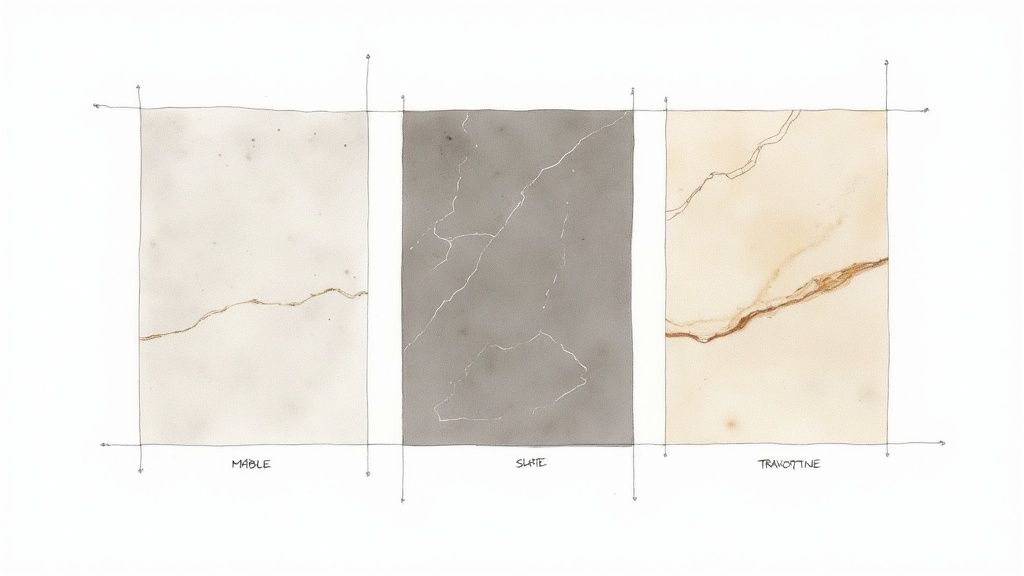
For those seeking unparalleled luxury and timeless beauty, natural stone tiles are a premier choice. Quarried directly from the earth, materials like marble, granite, slate, and travertine offer unique, one-of-a-kind patterns and veining, ensuring that no two bathrooms are ever exactly alike. This inherent uniqueness brings an organic, sophisticated elegance to any space, elevating the bathroom from a purely functional room to a personal sanctuary.
Key Characteristics & Benefits
Each type of natural stone tile brings its own distinct character. Marble is renowned for its elegant veining and luxurious feel, while granite offers exceptional durability and a speckled appearance. Slate provides a rustic, textured surface, and travertine delivers a warm, earthy look. Despite their differences, they all share a connection to the natural world that manufactured materials cannot replicate, adding significant visual depth and property value to a home.
Unique Aesthetics: Every tile is a piece of natural art, with distinct colors, patterns, and textures.
Durability: Many stone types, such as granite and slate, are incredibly hard and long-lasting when properly cared for.
Luxurious Feel: The look and feel of real stone create an immediate sense of high-end quality and sophistication.
Increases Home Value: A well-maintained natural stone bathroom is a major selling point for potential buyers.
Best Applications & Design Tips
Natural stone is perfect for creating a statement on bathroom floors, shower walls, or as a stunning vanity countertop. A marble-clad walk-in shower can evoke the feel of a luxury spa, while a rugged slate floor is ideal for a rustic or industrial-style bathroom. Honed or tumbled finishes offer better slip resistance for flooring compared to polished surfaces, which can be very slippery when wet. Because it is a premium material, natural stone is one of the more expensive bathroom tile types available.
Pro Tip: Natural stone is porous and requires sealing before and after installation, with resealing needed every one to two years. Always use pH-neutral cleaners specifically formulated for stone, as acidic substances (including many common bathroom cleaners) can etch the surface. Promptly wiping up spills is essential to prevent staining and maintain the stone's integrity.
4. Glass Tiles
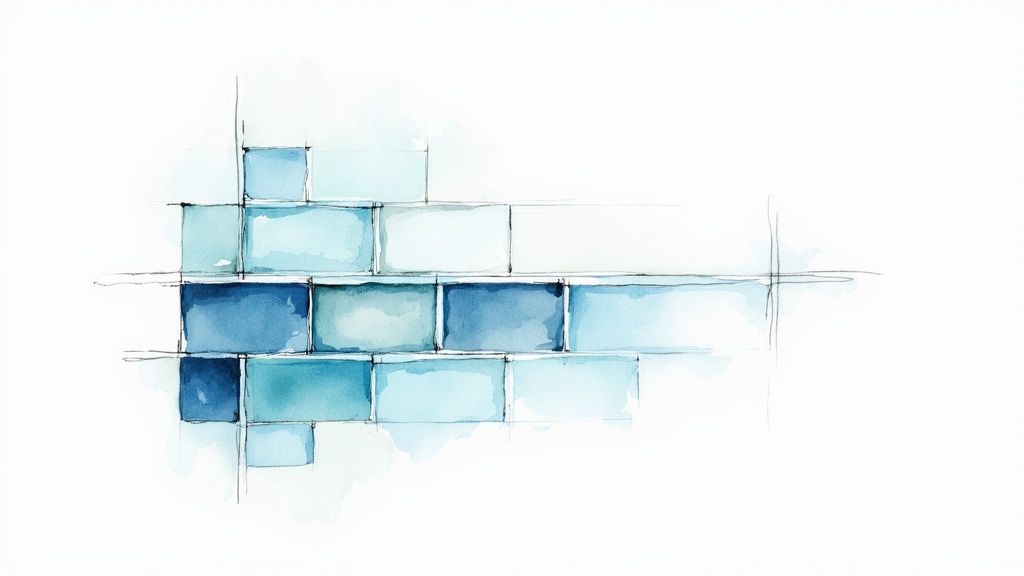
Synonymous with modern luxury and luminosity, glass tiles are crafted from new or recycled glass, shaped, and finished to create a radiant, reflective surface. Their ability to bounce light around a room makes them a standout choice for adding depth, brightness, and a touch of glamour to bathrooms. This unique quality creates an illusion of greater space, making them one of the most visually impactful bathroom tile types for contemporary and spa-inspired designs.
Key Characteristics & Benefits
The primary appeal of glass tiles lies in their luminous and translucent quality. Unlike opaque materials, they allow light to pass through and reflect off them, resulting in a sparkling, jewel-like effect that can make any bathroom feel more open and vibrant. This characteristic makes them perfect for creating stunning visual features, from iridescent mosaic backsplashes to entire accent walls that shimmer. Their non-porous nature also gives them excellent performance in high-moisture areas.
Water Resistance: Glass is completely impervious to water, making it an excellent choice for shower walls and backsplashes.
Aesthetic Appeal: Offers a sleek, high-end look with a huge range of colors, finishes (from glossy to frosted), and shapes.
Maintenance: Exceptionally easy to clean, as its non-porous surface resists mold, mildew, and stains. A simple wipe-down is often sufficient.
Light Reflective: Brightens up dark or small bathrooms by reflecting both natural and artificial light.
Best Applications & Design Tips
Glass tiles excel as decorative elements. They are most popularly used for backsplashes behind vanities or as accent strips and full feature walls within a shower. Their brilliant finish is a perfect match for seaside-inspired bathroom themes on decor8.ai, where their aquatic look enhances the coastal vibe. For a cohesive, modern look, pair shimmering glass tiles with sleek chrome or stainless steel fixtures.
Pro Tip: While beautiful, glossy glass can be very slippery when wet, making it generally unsuitable for bathroom floors. If you want a continuous look, seek out specially designed anti-slip or textured glass floor tiles. For installation, use a white, high-quality adhesive, as the color of the thinset can show through transparent or semi-transparent tiles and alter their appearance.
5. Subway Tiles
A true design classic, subway tiles are rectangular tiles, traditionally 3x6 inches, that earned their name from their iconic use in early 20th-century New York City subway stations. Their enduring appeal lies in a clean, simple, and uniform aesthetic that offers incredible versatility. This timeless quality allows them to fit seamlessly into virtually any bathroom design, from vintage-inspired to ultra-modern, making them one of the most reliable bathroom tile types available.
Key Characteristics & Benefits
The beauty of subway tile is its chameleon-like ability to adapt. While most commonly made from ceramic or porcelain, they are also available in glass, marble, and other natural stones. This variety in material, combined with an expanding range of sizes and colors beyond the classic white, provides endless design possibilities. They deliver a look that feels both historic and fresh, offering a blank canvas that can be customized with different layouts and grout colors.
Timeless Appeal: Their simple, clean lines ensure they never go out of style, protecting your investment in your home's design.
Versatility: They complement a vast array of styles, including modern farmhouse, industrial, minimalist, and traditional aesthetics.
Affordability: The most common ceramic subway tiles are highly budget-friendly, making a stylish renovation accessible.
Customizable: The layout pattern can dramatically change the final look, from a traditional offset brick pattern to a modern stack bond or an elegant herringbone.
Best Applications & Design Tips
Subway tiles are a perfect choice for shower walls, tub surrounds, and backsplashes. Extending them from the floor to the ceiling can create a cohesive and impactful statement, making the room feel taller and more unified. Their straightforward geometry works especially well in creating a serene and uncluttered atmosphere, a key element in minimalist design. For those aiming for a clean aesthetic, you can explore more tips for a serene, minimalist bathroom here.
Pro Tip: Don't underestimate the power of grout. Using a dark or colored grout with classic white subway tiles creates a bold, graphic contrast that highlights the pattern. For a more subtle, seamless look, match the grout color to the tile. In high-moisture areas like showers, consider using epoxy grout for superior stain and mold resistance.
6. Mosaic Tiles
A powerful tool for artistic expression, mosaic tiles are small pieces of tile, typically made from glass, stone, ceramic, or metal, arranged to create a larger pattern or image. While ancient mosaics were painstakingly set by hand, modern versions often come pre-assembled on a mesh backing, dramatically simplifying the installation process. They are perfect for introducing intricate detail, vibrant color, and personalized flair, making them a standout among bathroom tile types for creating focal points.

Key Characteristics & Benefits
The primary benefit of mosaic tiles is their unparalleled decorative potential. From shimmering glass mosaics that reflect light to matte stone mosaics that add organic texture, the design possibilities are virtually endless. This allows homeowners and designers to create everything from simple accent borders to full-scale custom murals, as seen in Mediterranean and Moroccan-inspired designs.
Artistic Versatility: Mosaics can be used to create intricate patterns, gradients, and even pictorial scenes, offering a level of customization not possible with larger tiles.
Adaptability: Their small size allows them to be installed easily on curved or uneven surfaces where larger tiles would be impractical.
High-Impact Accents: Even a small amount of mosaic tile can make a significant visual statement, elevating the entire room's design.
Variety of Materials: Available in a vast range of materials, including glass, marble, slate, and porcelain, allowing for diverse textures and finishes.
Best Applications & Design Tips
Mosaic tiles are most effective when used strategically as accents rather than for full-room coverage, which can overwhelm a space. They are ideal for creating a stunning backsplash above a vanity, adding a decorative band within a shower, or highlighting an architectural feature like a shower niche. When used in a powder room, they can create a jewel-box effect that feels both luxurious and intentional. For a balanced look, pair a detailed mosaic wall with larger, more subdued tiles on the floor.
Pro Tip: Due to the high number of grout lines, sealing is non-negotiable. Use a high-quality, waterproof grout and apply a penetrating sealer to prevent mold, mildew, and staining. For DIY projects, pre-assembled mosaic sheets are highly recommended, but for complex, custom designs, hiring a professional installer ensures a flawless finish.
7. Large Format Tiles
A defining feature of modern and minimalist design, large format tiles are any tiles with at least one edge measuring 12 inches or more. Ranging up to massive slabs, these tiles create a grand, seamless aesthetic that can make a bathroom feel more spacious and luxurious. Their growing popularity among architects and designers like Porcelanosa is driven by their ability to produce a clean, contemporary look with significant practical benefits, making them a sophisticated choice among today's bathroom tile types.
Key Characteristics & Benefits
The primary advantage of large format tiles is the dramatic reduction in grout lines. This not only contributes to a sleek, uninterrupted visual plane but also simplifies maintenance, as there are fewer joints to scrub and keep clean. The sheer size of these tiles, often made from durable porcelain or natural stone, imparts a high-end, spa-like quality to the space, instantly elevating the room’s atmosphere.
Spacious Feel: Fewer grout lines trick the eye into seeing a larger, more open area, a powerful tool in smaller bathrooms.
Modern Aesthetic: Their clean lines and monolithic appearance are a perfect match for contemporary, minimalist, and luxury designs.
Low Maintenance: With less grout to manage, cleaning is faster and the risk of mold or mildew buildup is minimized.
Durability: Typically made from robust materials like porcelain, they are inherently strong and suitable for high-traffic areas.
Best Applications & Design Tips
Large format tiles are exceptionally well-suited for both bathroom floors and walls, especially in shower enclosures where they can create a stunning, continuous surface. Using the same large tile on the floor and extending it up the shower walls is a popular strategy to enhance visual continuity and create a cohesive design. For those looking to fully embrace this style, it’s possible to transform your bathroom with effective interior design strategies that leverage large tiles for maximum impact.
Pro Tip: Installation is critical. The subfloor must be perfectly level and stable to prevent cracking. Due to their weight and size, professional installation is strongly recommended. Always use a medium-bed thin-set mortar designed for heavy tiles and ensure rectified tiles are chosen for the thinnest possible grout lines, further enhancing the seamless effect.
8. Terrazzo Tiles
A luxurious and visually dynamic choice, terrazzo is a composite material created by embedding chips of marble, quartz, granite, or glass into a cementitious or epoxy binder. Once cured, the surface is ground and polished to a smooth, uniform finish, revealing the beautiful speckled pattern of the aggregate. Originally perfected in Venetian palaces, terrazzo tiles bring a unique blend of old-world grandeur and modern artistry to bathroom design, making them a standout among bathroom tile types.
Key Characteristics & Benefits
Terrazzo's most defining feature is its one-of-a-kind appearance; no two tiles are exactly alike. The combination of binder and aggregate offers an almost infinite array of color and texture possibilities. This bespoke quality, coupled with its formidable strength, makes it a premium material for creating statement surfaces that are built to last. It seamlessly bridges the gap between natural stone elegance and engineered resilience.
Exceptional Durability: Terrazzo is incredibly hard-wearing and resistant to chipping and scratching, making it suitable for high-traffic bathroom floors.
Design Versatility: The custom mix of aggregates allows for endless color and pattern combinations to match any design vision.
Sustainability: It can be made with recycled glass and stone chips, making it an eco-friendly option.
Longevity: With proper care, a terrazzo installation can last for decades, often outliving the home itself.
Best Applications & Design Tips
Terrazzo makes a powerful statement on bathroom floors, shower walls, or as a stunning vanity countertop. Its seamless appearance is perfect for modern and minimalist spaces, while its rich history complements more decorative styles. For a truly cohesive look, you can use large-format terrazzo tiles on the floor and extend them partially up a wall to create a chic, continuous surface. Its decorative nature also aligns well with the glamour of Art Deco design; explore how to unleash the glamor of Art Deco in your home interiors for more inspiration.
Pro Tip: Terrazzo can be slippery when polished and wet. For bathroom floors, opt for a honed or matte finish to increase slip resistance. Because it is porous, proper sealing is non-negotiable to prevent stains and water damage. Always work with an installer experienced in terrazzo, as the installation process is more complex than with standard tiles.
9. Pebble Tiles
For those seeking to infuse their bathroom with a natural, spa-like tranquility, pebble tiles offer a uniquely organic solution. These tiles consist of small, smooth river stones or polished pebbles that are carefully arranged and mounted onto a flexible mesh backing. This design brings the raw, textured beauty of the outdoors inside, creating a surface that is as tactile as it is visually appealing, making it a standout choice among bathroom tile types.
Key Characteristics & Benefits
The primary draw of pebble tiles is their ability to create an atmosphere of serene escape. The varied shapes, sizes, and colors of the natural stones produce a mosaic-like effect that feels custom and earthy. This natural variation ensures that no two installations are exactly alike, providing a bespoke finish that mimics a tranquil riverbed or a serene pebble beach, perfect for a Zen or coastal-inspired design.
Natural Slip Resistance: The uneven, textured surface provides excellent grip underfoot, making it an inherently safe choice for wet areas like shower floors.
Unique Aesthetic: They deliver an unmatched organic and high-end spa feel that is difficult to replicate with manufactured materials.
Soothing Texture: The feeling of the smooth stones underfoot can be a relaxing, massage-like experience.
Seamless Appearance: The interlocking mesh sheets are designed to fit together, minimizing visible seams and creating a continuous, uninterrupted surface.
Best Applications & Design Tips
Pebble tiles are most famously used on shower floors, where their anti-slip properties and spa-like vibe are most impactful. They also serve as stunning accent walls, backsplashes, or decorative borders, adding a touch of natural texture that contrasts beautifully with sleeker, large-format tiles. For instance, using pebble tiles on the floor of a shower niche can create a striking design feature.
Pro Tip: Proper installation is key to both beauty and function. A generous amount of grout is needed to fill the deep gaps between stones, creating a more level and easier-to-clean surface. Sealing both the stones and the grout regularly is absolutely essential to prevent water absorption, staining, and mold growth in the porous surfaces. Pair them with a simple, large-format wall tile to let the pebble texture be the star of the show.
10. Handmade/Artisan Tiles
For those seeking a truly unique and soulful aesthetic, handmade tiles offer an unparalleled sense of character and craftsmanship. These tiles are individually crafted by artisans, resulting in subtle variations in color, texture, and size. This inherent imperfection is their greatest strength, creating a surface that is rich with authenticity and a human touch, a world away from mass-produced uniformity.
Key Characteristics & Benefits
Handmade tiles celebrate the beauty of irregularity. Each piece tells a story, featuring unique glaze pooling, slight undulations on the surface, and organic edges that mass-produced tiles cannot replicate. This makes them a focal point in any design, infusing the space with a warm, bespoke quality often found in bohemian, rustic, or Mediterranean farmhouse styles. They transform a simple bathroom into a personalized work of art.
Uniqueness: No two tiles are exactly alike, ensuring a one-of-a-kind installation with distinct character.
Artistic Appeal: They bring an authentic, handcrafted element to the bathroom, supporting traditional craftsmanship and artistry.
Rich Texture & Color: The glazing process on handmade tiles often results in a deeper, more vibrant color and a richer tactile quality.
Versatility: While popular in rustic and eclectic designs, they can also add warmth and contrast to minimalist or modern spaces.
Best Applications & Design Tips
Handmade tiles are perfect for creating stunning feature walls, eye-catching backsplashes, or decorative borders in a shower. Their unique nature makes them a powerful design tool for areas you want to highlight. To balance cost and visual impact, consider mixing them with more uniform, machine-made tiles. For example, use handmade Zellige tiles on a shower wall and a simpler ceramic tile on the floor.
Pro Tip: Embrace the imperfections. The variation is the point, so don't expect perfect symmetry. Due to their irregular sizing, installation requires more skill and a wider grout line to accommodate the differences. Always order a significant overage (15-20%) and be sure to properly seal the tiles, as their porosity can vary based on the clay and glaze used.
10 Bathroom Tile Types: Quick Comparison
Tile Type | Implementation Complexity 🔄 | Resource Requirements ⚡ | Expected Outcomes ⭐📊 | Ideal Use Cases 📊 | Key Advantages ⭐ | Practical Tips 💡 |
|---|---|---|---|---|---|---|
Ceramic Tiles | Moderate — DIY possible with basic tools | Low cost; standard cutters and grout | Good durability; moderate water resistance; 10–20 years | Budget bathrooms, walls, subway-style installs | Affordable; wide design options; easy maintenance | Use glazed ceramic and seal grout; ensure shower slope |
Porcelain Tiles | High — harder to cut; often requires pros | Higher material cost; specialized cutters & pro labor | Very durable; minimal water absorption (<0.5%); 25+ years | Showers, high-traffic floors, luxury renovations | Superior water/stain resistance; long-lasting | Choose matte/textured for safety; hire experienced installer |
Natural Stone Tiles | High — skilled handling and precise install | High material & installation cost; sealing supplies | Luxurious, unique appearance; porous—requires resealing; long-term value | Luxury baths, accent walls, high-end homes | One-of-a-kind veining; increases property value | Seal before/after install; avoid acidic cleaners; reseal annually |
Glass Tiles | Moderate–High — delicate cutting; careful layout | Medium–high cost; special cutters; careful grout selection | Waterproof and reflective; shows water spots; durable if protected | Accent walls, shower surrounds, backsplashes | Reflects light; modern aesthetic; non-porous | Use neutral grout; prefer textured/frosted for floors; avoid full-floor use |
Subway Tiles | Low — straightforward and DIY-friendly | Low cost; widely available; standard tools | Timeless, easy-to-maintain look; variable durability by material | Classic renovations, backsplashes, full wall coverage | Versatile, affordable, easy repair | Use epoxy grout for stain resistance; try varied patterns |
Mosaic Tiles | High — labor-intensive; many grout lines | Medium–high cost; lots of grout; pre-mounted sheets help | High visual impact; more grout maintenance required | Accent walls, borders, custom murals, niches | Highly decorative; hides imperfections; versatile materials | Use waterproof grout; consider pre-assembled sheets; combine with large tiles |
Large Format Tiles | High — requires perfectly level substrate & pros | High cost; special handling and cutting tools | Seamless, modern aesthetic; fewer grout lines; high visual impact | Contemporary bathrooms, hotel/spa walls & floors | Cleaner look; easier cleaning; makes space feel larger | Ensure level substrate; use rectified tiles; hire experienced installers |
Terrazzo Tiles | High — professional installation and polishing | High cost; custom aggregates; sealing & maintenance | Durable, artistic surface; non-porous when sealed; long-lasting | Luxury projects, feature floors, vanities | Customizable appearance; durable; eco options | Use honed finish for slip safety; seal regularly; use as accents |
Pebble Tiles | Moderate — mesh-backed sheets ease install but grout is tricky | Medium cost; sealing and frequent maintenance | Excellent slip resistance; textured, natural look; higher upkeep | Shower floors, spa-like and natural-themed bathrooms | Superior grip; organic aesthetic; pleasant underfoot | Best for shower floors; seal often; clean crevices regularly |
Handmade / Artisan Tiles | High — irregular sizing needs skilled installers | High cost; custom lead times; variable materials | Unique, personalized aesthetic; durability varies by material | Feature walls, bespoke and artisanal projects | One-of-a-kind charm; supports artisans; customizable | Use as accents; embrace imperfections; plan for sizing variation |
Bringing Your Vision to Life: From Tile Selection to Final Result
Navigating the world of bathroom tile types can feel like an overwhelming journey, but you are now equipped with the knowledge to make an informed and confident decision. We've explored the enduring practicality of ceramic and porcelain, the timeless luxury of natural stone, and the vibrant personality of glass and mosaic tiles. From the classic appeal of subway tiles to the seamless look of large-format slabs, the right material is waiting to transform your space.
The key takeaway is that the perfect tile choice is a harmonious blend of three critical factors: your personal aesthetic, your family's lifestyle, and your project's budget. It's not just about what looks good on a showroom floor; it’s about what will stand up to daily steam, splashes, and foot traffic while continuing to bring you joy for years to come.
Your Actionable Next Steps
With this comprehensive guide in hand, it's time to move from inspiration to implementation. Here’s a simple, actionable path forward:
Revisit Your Priorities: Go back through the list and shortlist 2-3 tile types that best align with your primary needs. Are you prioritizing low maintenance (porcelain), a specific look (terrazzo), or a spa-like feel (pebble tile)?
Order Physical Samples: Never underestimate the power of a physical sample. A tile can look drastically different in your bathroom's unique lighting compared to a store. Place samples on the floor and against the wall to see how they interact with your fixtures and natural light throughout the day.
Finalize Your Grout Choice: Grout is not an afterthought; it's a design tool. A contrasting grout color will make your tiles pop and create a graphic pattern, while a matching color will create a more uniform, monolithic look. Consider epoxy grout for high-moisture areas like shower floors for superior stain and water resistance.
Visualize Before You Commit: Before you place a final order, use technology to eliminate any remaining uncertainty. Seeing your chosen tile in your actual space is the ultimate confirmation. This is where tools that allow for virtual staging and design previews become invaluable, bridging the gap between imagination and a tangible plan.
From Tile Choice to a Cohesive Renovation
Choosing the perfect tile is a major milestone, but it's often just one piece of a larger puzzle. A successful bathroom remodel requires careful planning around plumbing, waterproofing, ventilation, and fixture installation to ensure your beautiful new tiles are part of a functional, long-lasting space. Once you've selected your ideal tiles, the next step often involves integrating them into a broader project. For those planning a complete bathroom overhaul, consider this comprehensive expert guide to bathroom renovation in Vancouver for insights on budgeting, timelines, and working with professionals.
Ultimately, mastering the nuances of different bathroom tile types empowers you to create a space that is not only beautiful but also perfectly tailored to you. It's about investing wisely in your home's value and your daily well-being. Your bathroom is more than just a functional room; it's a personal sanctuary, and the tiles you choose lay the foundation for its entire atmosphere.
Ready to see exactly how that Calacatta porcelain or handcrafted zellige tile will look on your walls? Stop guessing and start visualizing with Decor8 AI. Upload a photo of your bathroom, describe your dream tile, and see a photorealistic preview in seconds, allowing you to finalize your choice with 100% confidence. Try Decor8 AI today and bring your perfect bathroom to life.
Comments