
How to Stage a Home to Sell Faster and For More Money
- oliverjames0609
- 1 day ago
- 16 min read
Learning how to stage a home is one of the smartest things you can do to get it sold. We're not just talking about decorating here—this is a pure marketing play designed to get your property sold faster and for more money. The goal is to create an emotional gut-punch, helping buyers walk in and immediately see themselves living there. It's all about decluttering, depersonalizing, and arranging everything just right to make your home’s best features pop.
Why Staging Is The Best Money You'll Spend
It's easy to look at staging as another cost, but that’s the wrong way to think about it. It’s an investment, and frankly, one of the best you can make when selling your house. The whole point is to get buyers to stop seeing your property as just bricks and mortar and start seeing it as their future home. You're creating an emotional tug that a spec sheet just can't match.
So, how does it work? It really boils down to a few core ideas:
Take "You" Out of the House: All those family photos, quirky collections, and personal trinkets? They have to go. By creating a neutral, clean slate, you're giving buyers the mental space to imagine their own lives and memories there, instead of feeling like they're a guest in yours.
Show Off the Good Stuff: A great stager knows how to draw the eye to your home's best assets. That beautiful fireplace, those big sunny windows, the cool architectural details—furniture is arranged to guide the eye right to them. The right layout can also make rooms feel bigger and more functional.
Sell the Dream: Staging isn't just about furniture; it's about selling a lifestyle. You're creating little scenes that help buyers picture themselves hosting a dinner party in the dining room or curling up with a book in that cozy corner.
The Staging Payoff
The stats back this up, big time. A well-staged home doesn't sit on the market for long, and that saves you a ton of cash on mortgage payments, utilities, and all the other costs of holding onto a property.
A recent report from the Real Estate Staging Association (RESA) found that staged homes were on the market for an average of just 12 days. The kicker? They saw an unbelievable 2,334% return on investment. That's not just about looking pretty; it’s a serious financial strategy. You can dig into the numbers yourself in the latest RESA industry report.
"Staging is the art of creating moods. It’s about making the house speak to a broader audience of homebuyers, and in doing so, it drives up the perceived value of the property."
And today, you have more options than ever. Tools like AI Virtual Staging let you digitally furnish an empty room with stunning, photorealistic results. It’s a game-changer for creating killer online listing photos that grab buyers from the first click. This approach gives you a massive bang for your buck, making a powerful first impression without the cost of physical furniture.
If you're trying to decide what's right for you, check out our breakdown in this virtual staging vs traditional staging cost analysis.
Your Pre-Staging Home Preparation Checklist
Let's get one thing straight: staging isn't just about arranging furniture and adding fluffy pillows. The real heavy lifting happens before any of that. You're essentially creating a blank canvas, and the better that canvas is, the more a buyer can see themselves living in the picture you paint for them.
Think about it from a buyer's perspective. They’re walking through, subconsciously creating a list of pros and cons. A leaky faucet, a scuff mark on the wall, a door that sticks—these might seem like tiny details to you, but to them, they’re red flags. Each small issue adds to a mental tally of "work I'll have to do" and "money I'll have to spend." Your job is to get that tally as close to zero as possible.
This initial prep work is the foundation for everything that follows. It's what sets the stage for a quick sale at a great price.
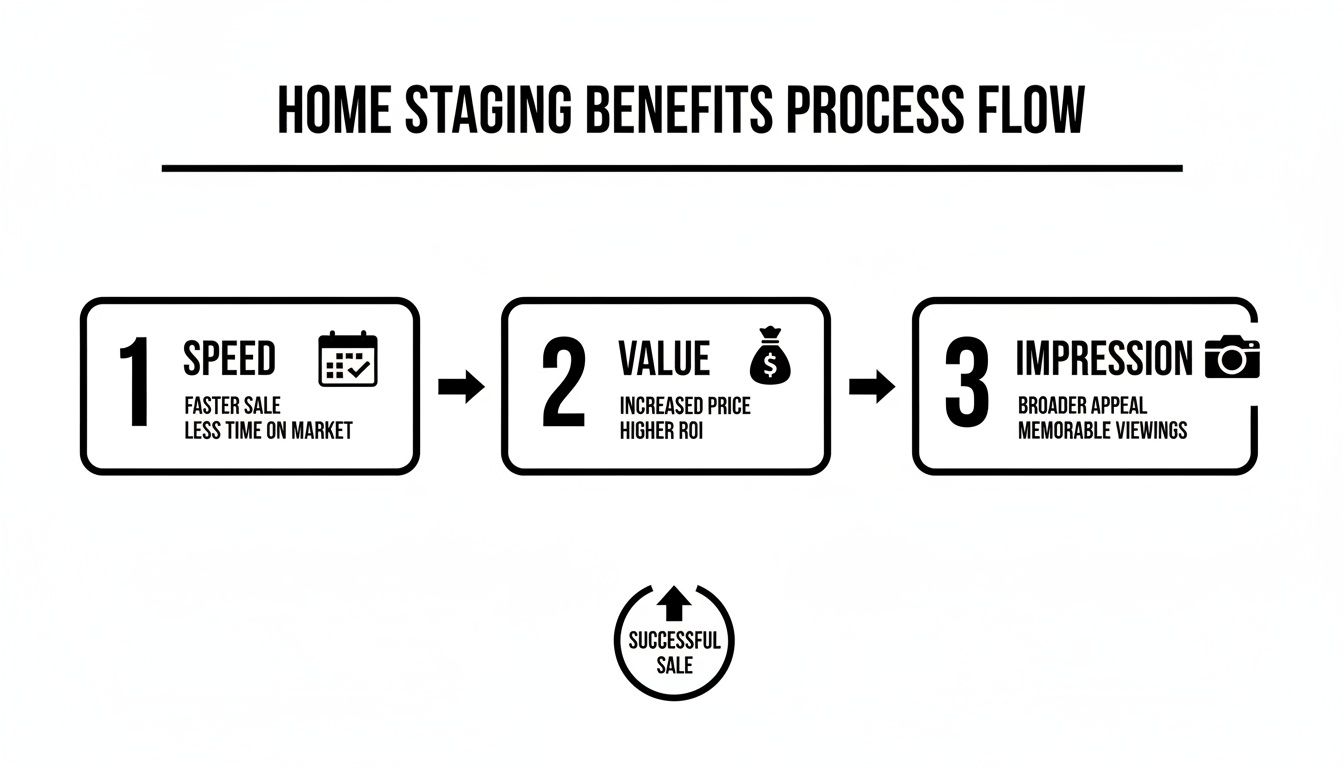
As you can see, getting the prep right directly impacts how buyers perceive the value and how quickly they’re willing to make an offer.
Tackle the Small Repairs That Make a Big Difference
Grab a notepad and walk through your house like you’ve never seen it before. Be ruthless. I tell my clients to channel their most critical in-law. What would they notice? Make a list of every little thing you’ve been putting off.
Here’s a quick hit list to get you started:
Fix leaky faucets and running toilets. That constant drip... drip... drip sounds like money down the drain to a potential buyer.
Patch small holes and cracks in the drywall. Spackle is your best friend here. It’s a cheap, easy fix that erases years of wear and tear.
Tighten loose cabinet pulls and doorknobs. Nothing says "this place is falling apart" faster than a wobbly handle.
Replace burnt-out light bulbs. Every single light should work. Use matching, bright bulbs to make rooms feel open and inviting.
Address sticky doors or squeaky hinges. A little WD-40 goes a long way. You want the experience of opening a door to feel smooth, not like a chore.
Remember, the goal isn't a full-blown renovation. It's about eliminating distractions. Every small issue you fix is one less reason for a buyer to hesitate or try to lowball their offer.
The Power of a Fresh Coat of Paint
If you do only one thing on this list, make it this one. Fresh paint has, without a doubt, the highest return on investment of any pre-sale project. It instantly makes a home feel clean, modern, and cared for. Your funky accent wall might express your personality perfectly, but it can be a major turn-off for buyers who can’t see past it.
Your mantra here should be neutral, neutral, neutral. But neutral doesn’t have to mean sterile or boring. We're talking about sophisticated, light hues that make a space feel bigger and brighter.
Go-To Paint Colors with Wide Buyer Appeal:
Classic Gray (Benjamin Moore): This is a beautiful, light gray that works in almost any room without feeling cold or clinical.
Agreeable Gray (Sherwin-Williams): A fan favorite for a reason. It's the perfect "greige" (a mix of gray and beige) that feels warm and goes with everything.
Swiss Coffee (Behr): A soft, creamy off-white that feels warm and inviting, much cozier than a stark, pure white.
Modernize Your Prep with AI
Picking the "right" neutral can still feel like a shot in the dark. How many of us have bought a dozen sample pots only to end up more confused? This is where technology can save you time and money.
Instead of painting messy swatches on your walls, you can use an AI Home Design tool. Just snap a photo of your room, upload it, and you can virtually "paint" the walls in seconds. See exactly how Agreeable Gray looks with your floors or how Swiss Coffee works with the afternoon light.
This simple tech trick takes the guesswork out of the most important prep step. It’s a smart shortcut we cover in our complete real estate staging checklist with AI tools, designed to help you make confident decisions that get your home sold.
Decluttering: Your First Step to a Buyer's Blank Canvas
Once you've handled the basic prep and repairs, it's time to tackle the stuff inside your home. This is where the real transformation begins. Decluttering isn't just about tidying up; it's a critical psychological step in the selling process. The goal is to depersonalize the space, wiping away your life story so a potential buyer can start imagining their own.
Think about it from their perspective. When a buyer walks in and sees your family photos, your kid's art on the fridge, or closets packed to the gills, it sends a clear message: "This is someone else's home." That creates a mental roadblock, making it nearly impossible for them to form the emotional connection that leads to an offer.
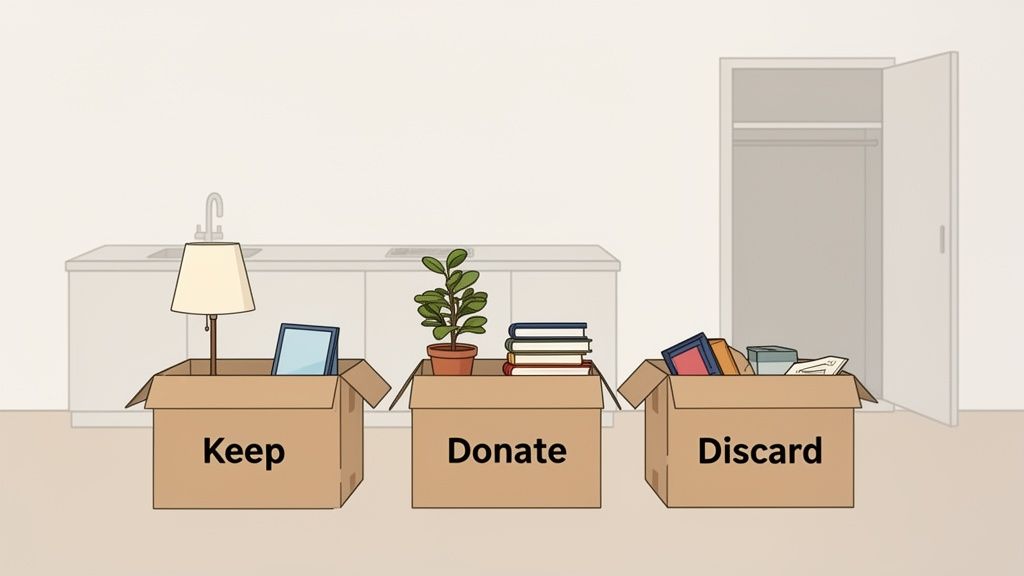
The Three-Box Method: A Sanity-Saving System
Looking at a whole house filled with years of accumulated belongings is enough to make anyone want to give up. The key is to break it down. Don't try to tackle a whole room at once. Instead, use the simple but incredibly effective three-box method.
Grab three large boxes and label them: Keep, Donate, and Discard.
Now, pick one small, manageable area to start—a single drawer, one bookshelf, maybe just the corner of the living room. Go through it item by item and make a quick decision. Don't agonize. The idea is to build momentum.
Keep: These are the things you love and absolutely need in your next home. Box them up, label them clearly, and get them out of sight. You're getting a head start on packing!
Donate: If it’s in good condition but you just don’t use it anymore, let someone else enjoy it.
Discard: Anything that's broken, expired, or just plain junk has to go. For the big stuff, a good junk removal moving guide can be a lifesaver, helping you clear it all out efficiently.
This simple system turns a monumental task into a series of small, achievable wins.
Focus Your Energy for Maximum Impact
With your system in place, it’s time to get strategic. Buyers are subconsciously looking for one thing above all else: space. Your job is to create the feeling that your home has more than enough of it.
Start with the kitchen counters. Clear everything off. Yes, everything. Then, put back only one or two intentional items, like a beautiful bowl of green apples or a high-end coffee maker. The visual impact is immediate—the kitchen looks bigger, cleaner, and more functional.
Don't underestimate the power of this process. The financial payoff for a well-staged, clutter-free home is very real. Recent industry data revealed that properly staged homes sold for an average of $56,000 over the asking price. That's a massive return on the effort of packing a few boxes early.
Get a Glimpse of the Finish Line with AI
Sometimes, the hardest part is just getting started because you can't see the light at the end of the tunnel. It can be tough to truly picture what your cluttered family room will look like as a clean, inviting space.
This is where a little tech can provide a huge motivational boost.
Using an AI Interior Design tool, you can take a quick photo of any room and see what it looks like with all the clutter gone—in seconds. It gives you a clear "after" picture to work toward. Seeing the room’s true potential, free from your personal belongings, can be the exact push you need to start sorting.
This is also fantastic for making tough decisions. Not sure if that oversized armchair is making the room feel small? Let an AI tool show you the space without it. This kind of instant visual feedback helps you make confident, fast choices. You can see for yourself how easy it is to remove clutter from photos with AI and get a preview of your success.
Arranging Furniture to Maximize Space and Flow
Once the clutter is gone, the real magic of staging can happen. The way you arrange your furniture can completely change the feel of a room, making it seem larger, brighter, and worlds more welcoming. This isn't just about finding a spot for your stuff; it's about creating a path that guides a buyer through your home, helping them emotionally connect with the space.
A thoughtfully arranged room tells a story without you ever saying a word. This is where you entertain guests; this is where you unwind after a long day. Let's talk about how to get it right.
Create Breathing Room By Pulling Furniture From Walls
One of the most common mistakes I see is furniture pushed up tight against every wall. It feels like the logical thing to do—open up the middle of the room to make it look bigger, right? Surprisingly, this "waiting room" vibe often has the opposite effect, making a space feel stiff and even smaller.
Here's a simple trick that works wonders: create "floating" conversation areas. Just by pulling your sofa and chairs a few inches away from the walls, you introduce breathing room. That small gap creates an illusion of depth and makes the whole room feel more open and professionally designed.
Try it in your living room. Group the sofa and a couple of armchairs around a central coffee table. This defines the space and invites buyers to imagine themselves sitting down for a chat—that's the exact connection you want them to make.
Establish Clear Zones in Open-Concept Layouts
Everyone loves an open-concept layout, but they can be a challenge to stage. Without clear definitions, a big, open room can feel more like a warehouse than a cozy home, leaving buyers confused about how they'd actually live in the space. Your goal is to show them exactly how it works.
Use area rugs and furniture groupings to carve out visual "rooms" within the larger footprint.
Living Zone: Anchor this space with a large rug. Placing the sofa and chairs on the rug creates a clear living room feel.
Dining Zone: A rug under the dining table works the same magic, separating it from the living area. A simple centerpiece on the table hammers home its purpose.
Reading Nook: Even a small, empty corner has potential. Pop in a comfy armchair, a little side table, and a floor lamp to create a dedicated spot for relaxing with a book.
Defining these zones helps buyers immediately grasp the flow and function of the home, letting them see its true potential instead of feeling overwhelmed. If you need more inspiration, check out these 10 smart room layout ideas to maximize your space.
Highlight Key Features and Improve Traffic Flow
Every room has a star player—or at least, it should. It might be a beautiful fireplace, a big window with a killer view, or some cool built-in bookshelves. When you arrange your furniture, orient the main pieces toward that feature. You want to draw the buyer's eye right to it.
If you have a fireplace, arrange the seating to face it. If the view is the main event, make sure no furniture blocks that window. Highlighting your home's best assets this way makes a huge impact.
At the same time, you have to think about how people will actually walk through the room. Buyers shouldn't have to zig-zag around your furniture.
Make sure you leave clear, direct pathways from one door to another. A good rule of thumb is to allow at least 30-36 inches for main walkways. It makes the whole house feel more open and easy to live in.
Experiment with Layouts Using AI
Let's be honest: moving heavy furniture is a workout nobody wants. You can spend a whole afternoon shoving a sofa around, only to realize you liked it better where it started. This is where a little tech can save you a ton of time and a sore back.
An AI Room Design tool lets you play virtual interior designer. You just upload a photo of your room—even if it's empty or messy—and test-drive dozens of layouts in a matter of seconds.
See how a sectional looks compared to a classic sofa and two chairs.
Try out different rug sizes to find the one that anchors the space perfectly.
Find the best spot for the bed to make a small bedroom feel spacious.
This gives you a photorealistic preview of the best possible arrangement without having to lift a thing. You can make your final decision with confidence, knowing the layout is optimized to wow buyers the second they step inside.
Adding the Final Polish: Lighting and Styling
You've done the heavy lifting. The repairs are done, the clutter is gone, and the furniture is perfectly placed. Now comes the fun part—the final layer that really makes a house feel like a home. This is where you swap your personality for one that buyers can't help but fall in love with.
Lighting and styling are the details that create those "wow" moments. A buyer might not notice the specific arrangement on the coffee table, but they'll absolutely remember the feeling of walking into a warm, inviting living room. These small, intentional choices are what take your staging from good to truly memorable.
Let There Be (Layered) Light
Lighting is probably the most underrated tool in a stager's arsenal. A single, harsh overhead light can make even the most beautiful room feel cold and unwelcoming. The secret is to layer your lighting to create warmth, depth, and a cozy atmosphere that beckons people in.
Think of it in three layers:
Ambient: This is your main light source—the recessed lights or central chandelier. The key here is consistency. Make sure all bulbs are a warm white and match in color temperature for a soft, even glow.
Task: These are the functional lights. Think lamps on end tables, under-cabinet lighting in the kitchen, or a floor lamp tucked into a reading nook. They make spaces feel purposeful and lived-in.
Accent: This is your spotlight. Use accent lighting to highlight the good stuff, like a piece of art or the beautiful tile on a fireplace. It draws the eye and adds a little touch of drama.
Your pre-showing ritual should be simple: turn on every single light. A bright home feels bigger, cleaner, and happier. It’s an instant mood-booster for potential buyers.
The Simple Art of Styling
Styling isn't about filling a space with knick-knacks. It's about adding a few carefully chosen, impersonal accessories that hint at a great lifestyle. You're aiming for a clean, almost boutique-hotel vibe—comfortable and luxurious, but neutral enough for anyone to picture themselves living there.
One of the easiest pro tricks is the Rule of Three. For whatever reason, our brains love seeing things grouped in threes. It just looks balanced and complete.
On a coffee table, try this: a stack of a couple of nice hardcover books (that's one), a small potted succulent (two), and a decorative candle on a coaster (three). It's a simple formula that looks professionally styled every time.
Use this trick everywhere. In the bathroom, place a tray with a nice soap dispenser, a small vase, and a neatly rolled white hand towel. It’s not about adding clutter; it’s about adding intentional, uncluttered beauty.
Breathe Life into Every Room
Two things can instantly make a space feel more alive: plants and mirrors. Fresh greenery (or very convincing faux plants) adds a splash of color and makes a home feel fresh and well-cared-for. A small orchid on a bedside table or a bowl of green apples on the kitchen island can make a world of difference.
Mirrors are pure magic. They are the ultimate problem-solvers for dark or small spaces.
Hang a large mirror across from a window. It will grab all that natural light and bounce it right back into the room, making it feel twice as bright.
Lean a tall floor mirror against the wall in a tight hallway or a shadowy corner to create an instant illusion of more space.
These two additions are simple, relatively inexpensive, and can fix common staging issues in minutes.
Need a Little Inspiration?
Stuck on what to put on the mantelpiece or which throw pillows to buy? You don't have to figure it all out on your own. Sometimes you just need a second opinion to get the creative juices flowing.
This is where an AI Home Décor tool can be a huge help. Think of it as your on-demand design assistant. You can upload a photo of your room and ask for specific ideas, like "What should I put on these floating shelves?" or "Suggest a color palette for the sofa pillows." It’s a great way to get fresh ideas and fine-tune those all-important final touches that help buyers connect with the home emotionally.
Mastering Curb Appeal and Digital First Impressions
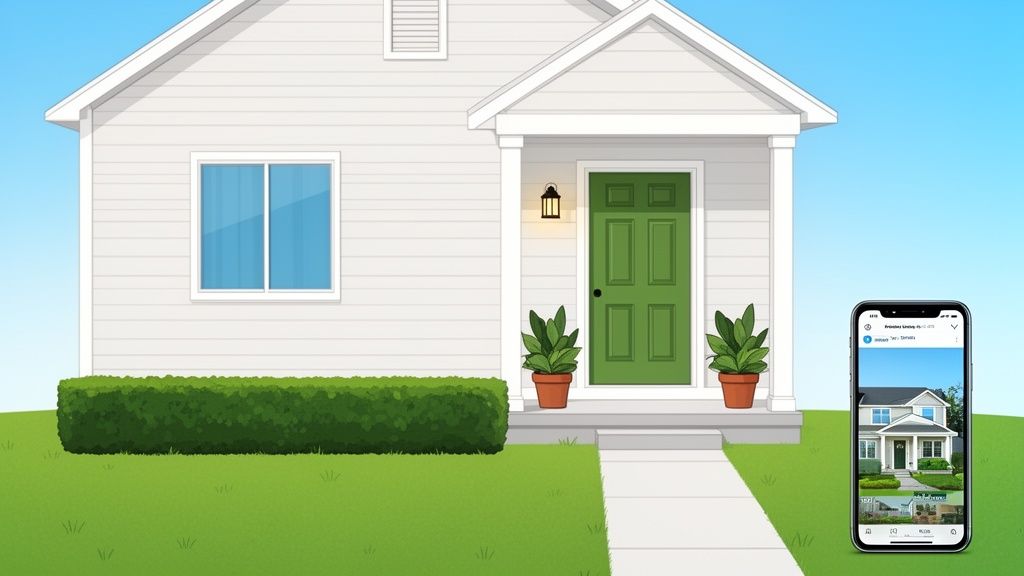
Let’s be honest: your home's first showing doesn't happen when a buyer walks through the door. It happens on a tiny screen while they're scrolling through dozens, if not hundreds, of other listings.
Most buyers will decide in just a few seconds if your home is worth a visit, all based on that first photo. This makes your home's exterior and its online photos the most critical part of your entire marketing plan. A messy yard or peeling paint is an invitation to get swiped away.
Think of your curb appeal as your digital handshake. It needs to be strong and inviting.
Creating a Welcoming First Impression
Boosting your home's exterior doesn't have to break the bank. The goal is to create a clean, welcoming entryway that screams "this home is well-cared-for." These simple, high-impact tasks are non-negotiable.
Power Wash Everything: Rent a power washer and hit the siding, driveway, and front walkway. You’ll be shocked at the difference it makes, taking years of grime off in a few hours.
Refresh the Front Door: A fresh coat of paint on the front door is one of the cheapest, highest-impact upgrades you can make. A classic black or a deep navy adds instant sophistication.
Update Fixtures: Get rid of those dated house numbers, the dented mailbox, and the rusty light fixtures. These small details can instantly modernize your home's entire look.
Add Life with Greenery: A couple of large planters with seasonal flowers on either side of the door makes the entrance feel intentional and styled. It’s an easy win.
A pristine exterior sets the tone for the entire showing. When buyers pull up to a home that looks sharp and clean from the outside, they walk in with a positive mindset, ready to be impressed.
Winning the Online Photography Game
Once the outside looks great, you need photos that do it justice. Dark, blurry, or crooked pictures will sink your listing before it ever has a chance. Your listing photos are your single most important marketing tool.
This is especially true for vacant homes, where empty rooms can look small and cold online. Technology is your secret weapon here. AI Virtual Staging can digitally furnish an empty space with stylish, photorealistic furniture, helping buyers visualize the room's true potential. It turns a boring, empty box into an appealing home.
AI-powered photo enhancements can also be a game-changer. These tools can instantly swap a dreary, overcast sky for a perfect blue one or create a stunning twilight shot that makes your listing pop. If you want to dive deeper, you can learn all about twilight real estate photography with AI. These enhancements produce magazine-quality images that stop the scroll and dramatically increase showing requests.
Common Questions About Staging a Home to Sell
Even with a solid plan, you're bound to have some questions pop up as you get into the thick of staging. It's totally normal. Let's tackle some of the most common ones I hear from sellers.
How Much Does Home Staging Really Cost?
Staging costs can swing pretty wildly, but it really boils down to how much you want to do yourself versus hiring out. Think of it as an investment, not an expense, with the goal of a faster sale at a better price.
On average, you can expect to budget somewhere between 0.5% and 1% of your home's asking price.
Here’s a quick breakdown of your options:
The DIY Route: This is your most wallet-friendly path. You can often make a huge impact for under $500 by grabbing some fresh paint, new cleaning supplies, and a few strategic decor pieces from places like HomeGoods or Target.
Hiring a Pro: If you're dealing with a vacant home or just want an expert eye, a professional stager is the way to go. They'll bring in all the furniture, art, and accessories. Expect to pay anywhere from $2,000 to $7,000+ for the initial setup and a one-to-three-month rental period.
AI Virtual Staging: This is a fantastic middle ground, especially for empty properties. You can digitally furnish photos of your rooms for the online listing. It costs about $25-$100 per image and gives you a polished, high-end look online where buyers first see your home.
Should I Bother Staging a Vacant Home?
Yes, a thousand times yes! It might seem counterintuitive, but empty rooms often feel smaller and colder to buyers. It's tough for people to walk into a blank space and figure out if their king-sized bed or sectional sofa will actually fit.
Staging, whether you do it with real furniture or virtually, gives every room a purpose. It helps buyers connect emotionally. You’re not just selling four walls; you’re selling a lifestyle.
An empty house makes buyers do all the work. A staged house tells a story and lets them imagine their own life unfolding there.
What Are the Most Important Rooms to Stage?
If you're on a tight budget, don't feel like you have to stage every single corner. Focus your energy and money on the rooms that pack the biggest punch and influence a buyer’s decision the most.
Here’s the order I always recommend:
Living Room: This is the heart of the home where buyers picture themselves relaxing and hosting friends.
Primary Bedroom: It needs to feel like a peaceful, private sanctuary.
Kitchen: Buyers want to see a clean, bright, and functional space for cooking and gathering.
Dining Room: Help them envision hosting their first holiday dinner right there.
And don't forget the outside! That first impression is everything. For some great ideas beyond just mowing the lawn, check out these tips to enhance your home's curb appeal. You can even use tools like AI Interior Design to play around with different paint colors or landscaping concepts before you spend a dime.
Ready to transform your listing photos and attract more buyers? Decor8 AI offers instant, photorealistic virtual staging and AI-powered photo enhancements to make your property shine online. Start for free and see the difference today!
Comments