
10 Breathtaking Coastal Kitchen Designs to Inspire You in 2026
- oliverjames0609
- 4 hours ago
- 17 min read
Dreaming of a kitchen that feels like a permanent beach vacation? Coastal kitchen designs capture the serene, airy essence of seaside living, transforming the heart of your home into a bright and inviting retreat. This style is defined by light colors, natural textures, and a breezy atmosphere that washes away the stress of the day.
Creating that perfect coastal look involves more than just painting walls blue. It’s about thoughtfully combining elements like shiplap textures, natural stone countertops, and curated lighting to build a space that is both beautiful and functional. Understanding the fundamentals is a great first step; if you're new to this aesthetic, you might want to explore the general principles of coastal design style to ensure your vision is cohesive before diving into kitchen-specific details.
Whether you're planning a full renovation or a simple refresh, the right inspiration is key. In this guide, we'll explore 10 distinct and actionable coastal kitchen ideas, covering everything from color palettes to hardware. We'll also show you how powerful tools like AI Interior Design can help you visualize every change, from cabinet colors to backsplash tiles, before you even pick up a paintbrush, ensuring your vision comes to life exactly as you imagined.
1. Nautical White & Blue Color Palette
The Nautical White & Blue color palette is a cornerstone of classic coastal kitchen designs, creating an atmosphere that is both serene and sophisticated. This timeless combination pairs crisp white cabinetry with varying shades of blue, from soft, misty hues to deep navy accents. The result is a bright, airy space that channels the calming essence of the sea and sky, making it a perfect choice for anyone looking to bring a fresh, open feel to their home.
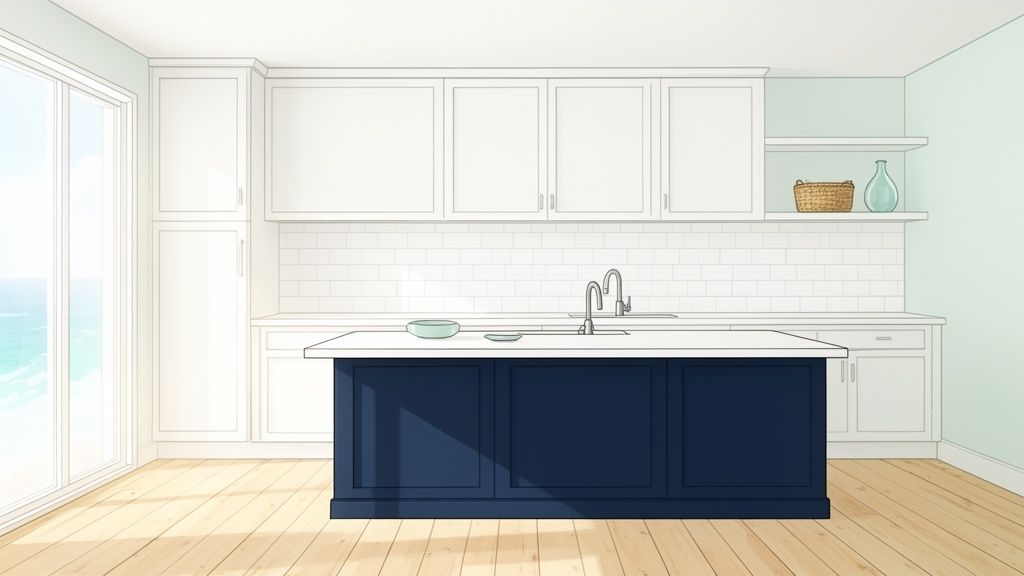
This design is often seen in high-end coastal properties from the Hamptons to Martha's Vineyard, where its clean lines and tranquil colors complement waterfront views. It works by establishing white as a dominant, light-reflecting base and using blue strategically to add depth and character, whether on a kitchen island, a backsplash, or through decor.
How to Implement This Look:
To achieve this style, focus on layering colors and textures carefully.
Cabinetry and Walls: Start with white or off-white cabinets to maximize light. If you're exploring different shades, you can find expert advice on how to choose kitchen cabinet colors like an expert. For an accent wall or island, consider a soft blue like Benjamin Moore’s Healing Aloe or a deeper Gentle Tide.
Add Warmth and Texture: Prevent the cool palette from feeling sterile by introducing warm elements. Brass or gold hardware and light fixtures add a touch of elegance, while natural textures like woven bar stools, linen curtains, and wooden cutting boards provide organic warmth.
Backsplash Focus: The backsplash is a key opportunity for a pop of color. Classic white subway tile keeps things traditional, while a blue glass or ceramic tile can become a stunning focal point.
AI Design Tip: Unsure about a bold blue accent? Use an AI Room Design tool like Decor8 AI to instantly visualize different paint colors or backsplash styles in your own kitchen. This allows you to experiment with confidence before making any permanent changes.
2. Shiplap & Beadboard Accent Walls
Shiplap and beadboard are defining elements of authentic coastal kitchen designs, adding texture and character that evoke traditional seaside cottages. These wooden planks, whether the horizontal lines of shiplap or the vertical grooves of beadboard, introduce architectural interest without overwhelming the space. They are frequently used on kitchen islands, as a backsplash, on an accent wall, or even across the ceiling to create a cozy, handcrafted feel.
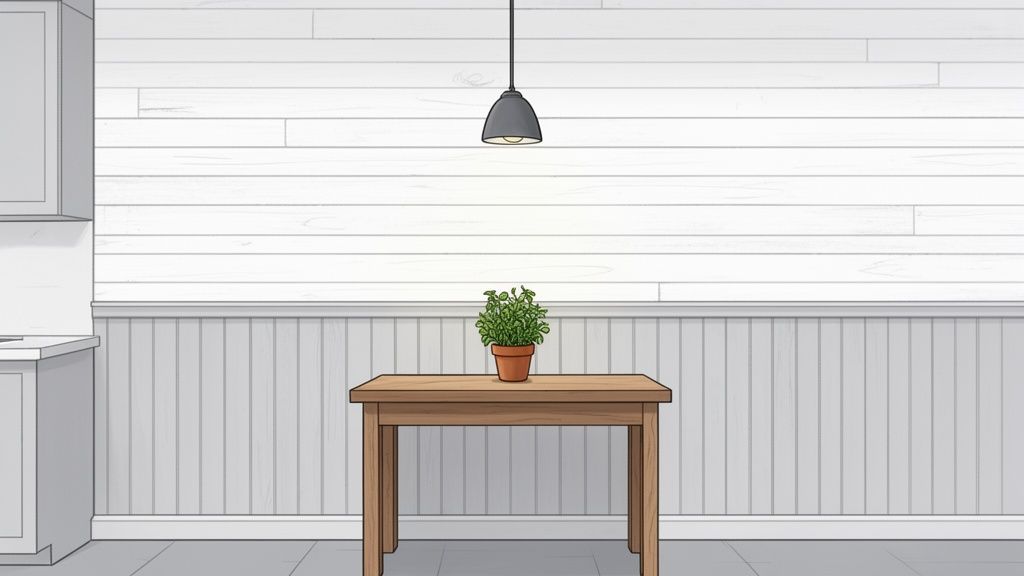
This look was famously popularized by Chip and Joanna Gaines on HGTV's Fixer Upper, bringing farmhouse-coastal charm into the mainstream. It works by creating subtle shadow lines that add depth to walls, breaking up flat surfaces and contributing to a layered, thoughtfully designed interior. Often painted a crisp white, these details enhance the bright, airy quality central to coastal style.
How to Implement This Look:
To achieve this style, focus on strategic placement and the right finish.
Placement and Balance: Use shiplap or beadboard to highlight a specific feature, like the area behind open shelving or the base of a peninsula. To maintain a light and open feel, avoid covering every wall. While beadboard is versatile, you can explore more applications in this guide to beadboard paneling transformations.
Color and Finish: Classic white paint is the go-to for a clean, coastal look. For a softer, more modern take, consider a light gray like Sherwin-Williams' Repose Gray. Always use a moisture-resistant primer and paint in a kitchen environment to ensure durability.
Material Choice: Real wood planks offer the most authentic look, but MDF (medium-density fiberboard) versions are a cost-effective and stable alternative, especially for DIY installations.
AI Design Tip: Deciding where to install paneling can be tough. Use an AI Room Design tool to instantly see how shiplap looks on your kitchen island versus an accent wall. This allows you to compare placements and colors digitally before you start cutting any boards.
3. Natural Stone & Marble Countertops
Natural stone countertops, particularly those made from marble, granite, or limestone, infuse coastal kitchen designs with a sense of organic luxury and timeless beauty. These materials bring the raw, authentic textures of nature indoors, with unique veining and patterns that echo the movement of sand and waves. The result is a sophisticated and grounded space that feels both high-end and deeply connected to the coastal environment.
This design element is a hallmark of upscale coastal properties, from Mediterranean-inspired homes in California to luxury estates in the Hamptons. It works by creating a stunning focal point that is both functional and artistic. White or light-gray veined marble is especially popular, as its bright surface reflects light and complements the soft, airy color palettes typical of coastal aesthetics.
How to Implement This Look:
To integrate natural stone effectively, focus on material selection and complementary elements.
Choose Your Stone: White Carrara or Calacatta marble are classic choices for their soft, elegant veining. For a more durable option that offers a similar look, consider quartzite, which is harder and less porous. Always request samples to see how they look in your kitchen's natural light.
Balance with Natural Textures: Pair stone countertops with other organic materials to create a cohesive design. Light wood open shelving or cabinetry highlights the stone's natural beauty, while woven pendant lights and rattan bar stools add textural warmth and a relaxed beachy feel.
Complementary Backsplash: Let the countertop be the star by choosing a simple backsplash, like a classic white subway tile or a slab of the same marble for a seamless, high-impact look.
AI Design Tip: Visualizing a full slab of marble in your space can be difficult. Use an AI Room Design tool like Decor8 AI to upload a photo of your kitchen and instantly see how different marble or quartzite countertops will look with your existing cabinets and flooring. This helps you select the perfect pattern with confidence.
4. Open Shelving & Display Styling
Open shelving is a hallmark of modern coastal kitchen designs, creating a breezy, gallery-like feel that perfectly suits a relaxed, seaside aesthetic. This approach replaces traditional upper cabinets with exposed shelves, showcasing curated collections of dishware, glassware, and decor. It enhances the sense of space and light, making the kitchen feel more open and accessible while turning everyday items into stylish displays.
This trend is prominent in modern beach houses from Malibu to the minimalist coastal homes of Australia, where the focus is on clean lines and functional beauty. The key is styling with intention, balancing practicality with visual appeal to create a space that feels both personal and uncluttered. It’s an ideal choice for those who want to add character and display their favorite pieces.
How to Implement This Look:
To achieve this style, focus on thoughtful curation and strategic placement.
Curate a Coastal Collection: Style your shelves with pieces that evoke a coastal vibe. Think crisp white plates, sea-blue glassware, woven baskets for texture, and stacks of your favorite cookbooks. This turns functional storage into a decorative feature.
Balance and Breathing Room: The most important rule for open shelving is to avoid clutter. Aim to keep shelves 40-50% empty to create visual breathing room. This negative space is just as important as the items you display, preventing the look from becoming chaotic.
Incorporate Natural Elements: Add small potted plants, sprigs of greenery, or framed coastal art between dishware stacks. These organic touches add life and reinforce the connection to nature, which is central to coastal kitchen designs. You can find more inspiration in these 8 inspiring ways to style a kitchen with open shelves.
AI Design Tip: Removing upper cabinets is a big commitment. Use an AI Room Design tool to upload a photo of your kitchen and virtually test open shelving concepts. This allows you to experiment with different shelf materials, arrangements, and styling options before making any structural changes.
5. Coastal Lighting: Pendant Lights & Fixtures
Thoughtfully selected lighting is crucial in coastal kitchen designs, acting as both functional task lighting and a defining decorative element. Coastal lighting often features natural materials like rope, rattan, woven fibers, and weathered wood, complemented by finishes like aged brass or polished nickel. These fixtures introduce organic texture and an artisanal feel, enhancing the kitchen’s connection to its beachside inspiration.
This design element is famously showcased in the collections of brands like Restoration Hardware and West Elm, where oversized woven pendants or nautical-inspired glass fixtures become the centerpiece of the room. The goal is to choose lighting that not only illuminates the space but also reinforces the relaxed, airy, and natural aesthetic of a coastal home.
How to Implement This Look:
To select the right fixtures, focus on materials, scale, and placement to create a layered and inviting atmosphere.
Choose Natural Materials: Opt for pendants made from rattan, wicker, or seagrass to add instant texture and warmth. Glass pendants, especially those with seeded or bubbled details, mimic the look of sea glass and contribute to a light, airy feel.
Focus on Scale and Placement: Hang a series of two or three large pendants over a kitchen island to create a dramatic focal point. For optimal task lighting, position them 12 to 20 inches above the countertop.
Layer Your Lighting: Combine statement pendants with recessed lighting for general ambiance and under-cabinet lights for tasks. Install dimmer switches on all fixtures to easily transition from bright, functional light to a soft, evening glow.
AI Design Tip: Lighting drastically changes a room's mood from day to night. Use an AI Home Décor tool with a twilight enhancement feature to visualize how your chosen fixtures and bulb temperatures will look in your kitchen at different times of the day.
6. Natural Wood Elements & Mixed Materials
Introducing natural wood elements is a fundamental strategy in coastal kitchen designs, adding warmth and texture to balance the typically bright and airy palette. This approach involves layering materials like reclaimed timber, light oak, or driftwood finishes with stone, metal, and textiles to create a space that feels grounded and connected to nature. Wood can be incorporated through flooring, open shelving, a statement island, or even ceiling beams.
This design principle is heavily featured in upscale coastal homes from the Hamptons to the Pacific Northwest, where the blend of materials reflects the surrounding landscape. The key is to use wood to prevent the space from feeling too stark or cold, providing an organic contrast to crisp white cabinets and cool-toned backsplashes. The result is a kitchen that feels both sophisticated and invitingly casual.
How to Implement This Look:
To achieve a layered, natural look, focus on balancing wood with other materials and finishes.
Choose the Right Tone: Opt for lighter wood tones like white oak, ash, or maple to maintain a breezy feel. Weathered, driftwood-inspired finishes or reclaimed timber add a rustic, authentic touch that enhances the coastal theme.
Create a Focal Point: Use a wood-clad kitchen island or butcher block countertops as a central feature. This anchors the room and introduces a significant textural element without overwhelming the space.
Mix with Other Materials: Pair wood with sleek quartz countertops, polished nickel hardware, and linen upholstery. This mix of materials adds depth and visual interest, preventing the design from feeling one-dimensional. Ensure at least 60% of the kitchen remains white or light-colored to preserve brightness.
Accessorize with Wood: For a less permanent commitment, incorporate wood through smaller details. Think woven rattan bar stools, bamboo window shades, large wooden cutting boards, and open shelving.
AI Design Tip: Not sure which wood stain will complement your cabinetry? Use an AI Home Design tool to test different wood tones for your island, floors, or shelves. This helps you visualize the impact of each finish before you commit.
7. Coastal Backsplash Designs: Subway & Sea Glass Tiles
A thoughtfully chosen backsplash acts as a stunning focal point in coastal kitchen designs, protecting your walls while infusing the space with color and texture. Classic choices range from timeless white subway tiles to shimmering sea glass mosaics, each offering a distinct way to capture the essence of the shore. These materials create visual interest behind the stove and sink, tying the entire design together with an elegant, ocean-inspired touch.
This design element is prominently featured in high-end coastal homes, from Hamptons kitchens with crisp subway tile to Florida beach houses with vibrant turquoise backsplashes. The key is to select a material that complements your cabinetry and countertops, whether you prefer a clean, minimalist look or a more artistic, handcrafted feel. A well-executed backsplash can elevate a simple kitchen into a bespoke coastal retreat.
How to Implement This Look:
To bring this style to life, focus on the interplay between color, pattern, and material.
Choose Your Tile Style: For a timeless and versatile option, classic white subway tile is unbeatable. Pair it with dark grout for a modern, graphic contrast or light grout for a seamless look. For a softer, more ethereal vibe, opt for sea glass tiles in shades of soft blue and green to mimic the ocean’s gentle hues.
Explore Patterns: Don't be afraid to move beyond the traditional brick-lay pattern. Installing subway tiles in a herringbone or chevron pattern adds dynamic visual interest without overwhelming the space. This subtle shift can make a standard tile feel custom and sophisticated.
Test and Sample: Always request tile samples and view them in your kitchen's unique lighting conditions at different times of the day. Colors can appear dramatically different under natural versus artificial light.
AI Design Tip: Choosing a backsplash is a major commitment. Use an AI Room Design tool to virtually test different tile styles, colors, and patterns in your own kitchen. This allows you to visualize how a bold sea glass mosaic or a classic herringbone pattern will look before you order materials.
8. Coastal Kitchen Islands & Bar Seating
The kitchen island is the functional and social heart of coastal kitchen designs, serving as a versatile hub for food prep, storage, and casual dining. Coastal-style islands often stand out as a statement piece, featuring contrasting colors like a navy blue base with a light marble top, or incorporating textural elements such as shiplap siding. They seamlessly blend practicality with relaxed elegance, inviting family and guests to gather.
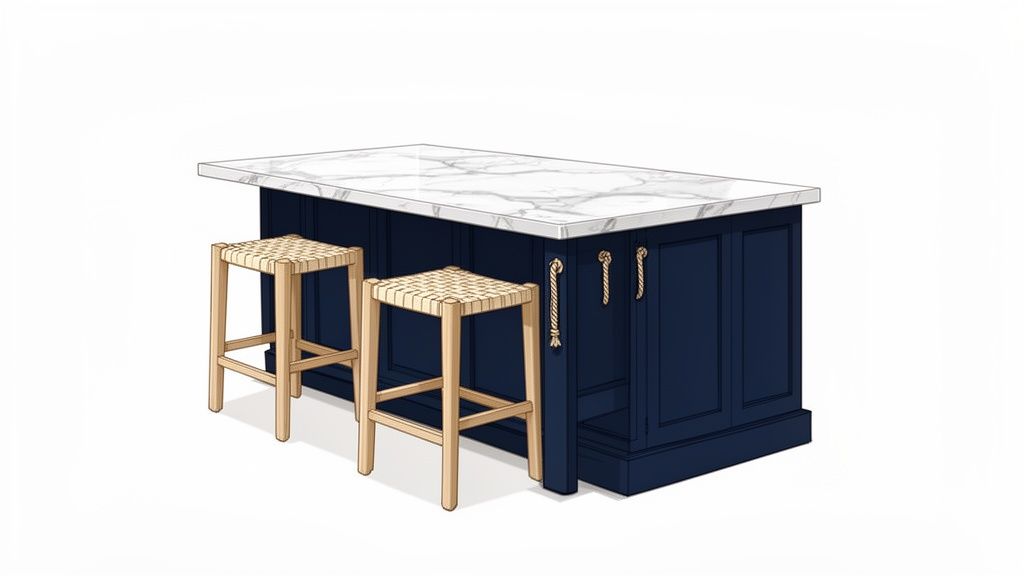
This design element is a staple in high-end coastal homes and HGTV renovations, where a large, well-appointed island anchors the entire room. The key is to make it a focal point that enhances the kitchen's open, airy feel while providing essential utility. The island becomes more than just a workspace; it's a centerpiece for everyday life and entertainment.
How to Implement This Look:
To create a stunning coastal island, focus on materials, color, and seating.
Create Contrast: Paint the island base a contrasting color, like a deep sea blue or a soft sandy beige, to make it pop against white perimeter cabinets. Top it with durable, light-colored materials like quartz, butcher block, or marble to maintain a bright, clean look.
Choose Complementary Seating: Select bar stools that reinforce the coastal theme. Woven rattan, weathered wood, or slipcovered stools add texture and comfort. Plan for enough seating for your needs without overcrowding the space.
Incorporate Functional Details: A beautiful island must also be practical. Integrate features like open shelving for displaying coastal decor, drawers for utensils, or even a wine rack. Behind the island, a complementary backsplash ties the room together. For an easy and cost-effective way to achieve stunning looks, a DIY peel and stick tile backsplash offers a great option.
AI Design Tip: Visualizing a new island can be difficult. Use an AI Room Design tool to test different island colors, countertop materials like waterfall edges, and stool styles in your kitchen's layout. This helps you perfect the design before committing.
9. Vintage & Secondhand Coastal Accents
Incorporating vintage and secondhand pieces is a powerful way to infuse coastal kitchen designs with unique character and a sense of history. This approach moves beyond mass-produced decor, focusing on items that tell a story, like aged pottery, weathered wood furniture, or salvaged coastal memorabilia. The result is a space that feels curated and authentic, reflecting a life well-lived by the sea while also promoting sustainability.
This design philosophy is celebrated by sustainable design advocates and vintage enthusiasts who appreciate the charm of imperfect, time-worn objects. It works by layering these unique finds into a modern coastal setting, creating a rich visual narrative. Think of thrifted coastal artwork from a flea market or antique brass hardware from a salvage yard adding a touch of soul to crisp, new cabinetry.
How to Implement This Look:
To achieve this style, focus on balancing the old with the new for a cohesive, intentional feel.
Source Strategically: Hunt for treasures at local antique shops, estate sales, and online marketplaces like Etsy or Facebook Marketplace. Look for items like vintage apothecary jars, reclaimed wood for open shelving, and unique ceramic dishware.
Balance and Blend: Avoid a cluttered look by following a simple rule: mix 70% new or quality foundation items with 30% vintage accents. This ensures the space feels fresh and curated, not dated. You can learn more about how to master this balance by embracing the charm of vintage interior design.
Inspect and Restore: Before bringing items into a coastal environment, inspect wood for moisture damage and clean and restore pieces appropriately to withstand humidity. A fresh coat of sealant on a wooden piece can protect its integrity.
AI Design Tip: Found a perfect vintage sideboard but unsure how it will fit? Use an AI Room Design tool to upload a photo of the item and virtually place it in your kitchen. This helps you visualize the scale and style before you commit to the purchase.
10. Seaside Botanical & Coastal Decor Details
Small decor details are what elevate coastal kitchen designs from a simple theme to a thoughtfully curated space. Intentional styling with botanical elements, coastal artwork, and natural textures infuses the room with personality and life. This approach focuses on adding layers of detail, like fresh herbs in terracotta pots, framed beach photography, and woven placemats, that together create an authentic seaside atmosphere without feeling cluttered or kitschy.
This finishing touch is heavily featured in publications like Coastal Living and popular home decor collections from brands like Anthropologie Home. The magic is in the mix: it’s about balancing functional items with purely aesthetic ones to tell a story. A simple bowl of lemons, a stack of linen napkins, or a piece of driftwood on a shelf can complete the entire coastal narrative.
How to Implement This Look:
To master these finishing touches, focus on authenticity and texture.
Introduce Natural Elements: Place small potted plants like succulents or a vase of fresh greenery on countertops or open shelves. A small pot of kitchen herbs like basil or mint is both beautiful and functional.
Layer Textures: Combine different materials to add depth. Use woven placemats, linen tea towels, ceramic canisters, and wooden cutting boards. These tactile elements prevent the design from feeling flat. The principles of layering are just as important here as in any other room, which you can explore further in bringing a seaside feel to your space.
Curate Subtle Artwork: Choose one or two pieces of high-quality art, like a serene seascape photograph or a simple watercolor of a shell. Avoid overtly nautical themes like anchors and ship wheels to maintain a sophisticated look.
AI Design Tip: Styling shelves and countertops can be tricky. Use an AI Home Design tool to upload a photo of your kitchen and virtually place different decor items. This helps you perfect the arrangement and balance before you buy a single thing.
10-Point Coastal Kitchen Design Comparison
Design Element | Implementation Complexity 🔄 | Resource Requirements ⚡ | Expected Outcomes 📊 | Ideal Use Cases ⭐ | Key Advantages & Quick Tip 💡 |
|---|---|---|---|---|---|
Nautical White & Blue Color Palette | Low — painting and accents; moderate if replacing cabinetry | Low–Moderate — paint, hardware, small decor | Bright, calming coastal aesthetic; visually expands space | Small kitchens, coastal cottages, quick refresh projects | Timeless, versatile; tip: add warm lighting and layered textures to avoid coldness |
Shiplap & Beadboard Accent Walls | Medium — carpentry or professional install | Moderate–High — materials + labor | Adds texture and architectural interest; focal points | Accent walls, islands, cottage-style homes | Strong visual impact; tip: seal in humid areas and preview placement digitally |
Natural Stone & Marble Countertops | High — fabrication and professional install | High — material, templating, sealing | Luxurious, high-end finish; unique veining and patina | Luxury renovations, high-value listings, formal coastal kitchens | Elevates value and appearance; tip: consider quartzite for durability in busy homes |
Open Shelving & Display Styling | Low–Medium — installation and styling maintenance | Low — shelving materials; ongoing styling effort | Airy, gallery-like feel; easier access to everyday items | Minimalist coastal, small kitchens, showcase dishware | Cost-effective and modern; tip: keep shelves ~40–50% empty and test styling virtually |
Coastal Lighting: Pendant Lights & Fixtures | Low–Medium — mounting and electrical work | Low–Moderate — fixtures, bulbs, dimmers | Defines zones and mood; improves task lighting when planned | Islands, dining nooks, layered ambient/task lighting schemes | High visual return for modest cost; tip: use dimmers and test bulb warmth in-situ |
Natural Wood Elements & Mixed Materials | Medium — sourcing and finishes; possible refinishing | Moderate — wood, sealants, mixed materials | Adds warmth, contrast, and organic character | Islands, shelving, flooring, coastal-modern blends | Creates depth and authenticity; tip: pair with majority light surfaces to retain brightness |
Coastal Backsplash Designs: Subway & Sea Glass Tiles | Medium — tiling skill required | Moderate — tiles, grout, installer | Focal point, durable and cleanable wall surface | Behind stove/sink, accent walls, coastal feature projects | High design flexibility; tip: order samples and test grout color under real lighting |
Coastal Kitchen Islands & Bar Seating | High — cabinetry, plumbing/electrical coordination | High — custom cabinetry, countertops, seating | Central workspace and social hub; big functional gain | Large kitchens, open-plan homes, entertaining-focused layouts | Major functional/value boost; tip: plan seating capacity and utilities before build |
Vintage & Secondhand Coastal Accents | Low — sourcing time varies | Low — cost-effective but time-intensive sourcing | Adds character, uniqueness, and sustainability | Budget-conscious renovations, curated eclectic looks | Affordable authenticity; tip: mix ~70% new with 30% vintage for cohesion and inspect items for damage |
Seaside Botanical & Coastal Decor Details | Low — styling and small purchases | Low — plants, textiles, small decor items | Warm, inviting mood with seasonal flexibility | Final styling, photo-ready kitchens, renters or quick updates | Simple high-impact updates; tip: choose functional decor (herbs, baskets) and rotate seasonally |
Bring Your Coastal Kitchen Vision to Life
Creating a kitchen that captures the essence of the coast is an exercise in thoughtful curation. As we've explored, the journey from a basic concept to a fully realized coastal kitchen involves a series of deliberate choices. It's about more than just painting the walls blue and white; it’s about layering textures, balancing light, and infusing the space with personal touches that evoke a sense of calm and relaxation.
We've covered the foundational elements, from the crisp, classic appeal of a nautical color palette to the rustic charm of shiplap and beadboard. We delved into the importance of materials, highlighting how natural stone countertops and warm wood accents can ground the space, while a shimmering sea glass tile backsplash can add a touch of seaside magic. Each component plays a vital role in building the overall atmosphere.
Your Actionable Blueprint for a Coastal Kitchen
The true power of these coastal kitchen designs lies in their versatility. You are not limited to a single formula. The key is to select the elements that resonate with your personal style and the specific needs of your home.
Here are the most important takeaways to guide your next steps:
Master the Material Mix: Don't be afraid to combine different textures. Pair sleek marble countertops with weathered wood open shelving, or contrast smooth subway tiles with a rugged jute rug. This dynamic interplay is what gives a coastal kitchen its character and depth.
Prioritize Light and Space: Coastal design thrives on an open, airy feeling. Maximize natural light wherever possible, and use strategic lighting fixtures like oversized rattan pendants to create a warm, inviting glow. Open shelving, as we discussed, is another excellent tool for making the room feel larger and less confined.
Focus on the Details: The final layer of your design comes from the accents. Vintage coastal art, carefully chosen botanicals, and unique hardware are not afterthoughts; they are the finishing touches that tell your story and make the space uniquely yours.
From Inspiration to Reality with AI Home Design
Understanding these concepts is the first step, but visualizing them in your own home can be the biggest hurdle. This is where technology can bridge the gap between imagination and implementation. An AI Room Design tool allows you to experiment with these ideas without any commitment or cost, removing the guesswork from your renovation project.
Instead of wondering if a navy blue island will overwhelm your space or if open shelving is the right choice, you can see it for yourself. By using a tool like Decor8 AI, you can upload a photo of your current kitchen and apply different coastal kitchen designs in seconds. This process empowers you to make confident, informed decisions, ensuring the final result is a space you truly love. You can finally create that perfect seaside retreat you've been dreaming of, right in the heart of your home.
Ready to stop dreaming and start designing? Use Decor8 AI to instantly apply these coastal kitchen concepts to a photo of your own space. See your vision come to life in photorealistic detail by visiting Decor8 AI and start your transformation today.
Comments