
A Guide to British Colonial Style and Its Timeless Charm
- oliverjames0609
- Dec 27, 2025
- 14 min read
British Colonial style tells a fascinating story of travel and adaptation. It’s all about timeless elegance, born from a clever mash-up of traditional British furniture and the very real demands of life in the tropics. Picture British expatriates in places like the West Indies, Africa, and Asia, trying to make their formal Georgian and Victorian tastes work in a completely new climate. The result? A look that’s both sophisticated and incredibly relaxed, built on light, airy spaces, rich dark woods, and plenty of natural textures.
What Is British Colonial Style
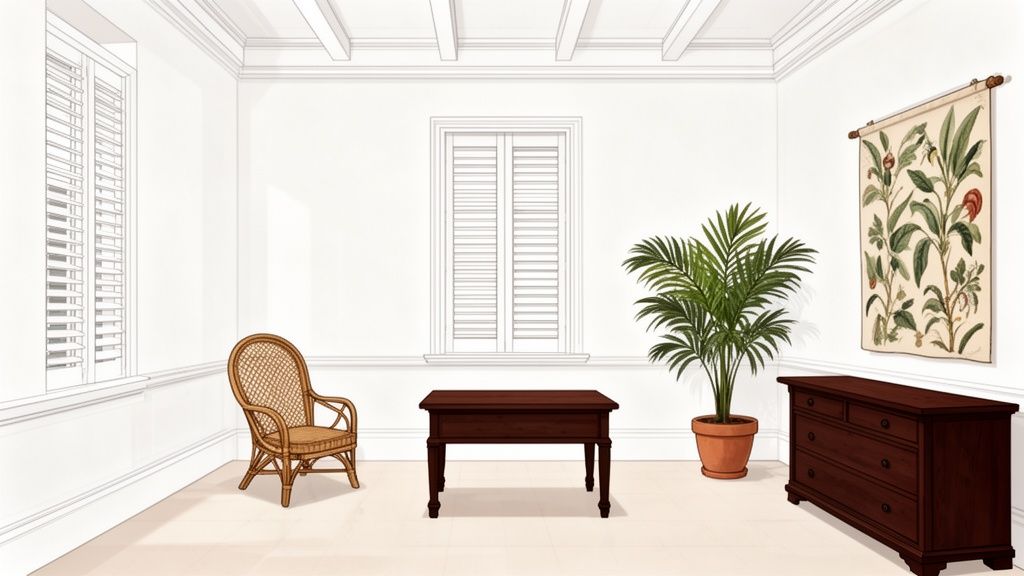
At its core, British Colonial design is a beautiful, practical hybrid. Imagine taking a formal, dark wood Victorian armchair and swapping out the heavy seat for lighter cane or rattan to let the air through on a humid day. That’s the entire philosophy in a nutshell: European formality meets tropical pragmatism. It’s a design style that feels like it has a passport, where comfort and sophistication live together in perfect harmony.
This style wasn’t just a matter of taste; it was born from necessity. For settlers in hot, sticky climates, a home had to be a cool escape. That need drove specific choices in both architecture and decor that we now recognize as the signatures of the style.
The Foundation of a Worldly Aesthetic
The main goal was simple: make interiors feel cool and open. This was done through a few key moves that you still see in modern takes on the style today. As a classic look, British Colonial fits right in with the broader traditional design style, which has always valued elegance and historical roots.
These practical needs created the look:
Maximizing Airflow: High ceilings, huge windows, and sprawling verandas weren't just for looks; they were designed to catch every possible breeze.
Light and Bright Interiors: Walls were usually painted white or other light neutrals. This helped bounce sunlight around the room, making it feel cooler and more spacious.
Climate-Appropriate Materials: Out went the heavy woolens, and in came lightweight linen and cotton. Furniture started featuring woven bits like cane and rattan to make it more breathable.
This style isn't about perfectly matched sets from a showroom; it's about curating a collection that tells a story. It suggests a history, a journey, and a life filled with interesting experiences, all while providing a comfortable, elegant refuge.
A Balance of Opposites
What really makes British Colonial style so striking is its use of contrast. You have the deep, rich tones of mahogany, teak, and ebony furniture popping against bright, neutral walls and floors. This creates a perfect balance—a look that feels grounded but never heavy.
Think about the solid, handsome feel of a campaign chest (originally made for travel, of course) sitting on top of a light, organic sisal rug. That tension is exactly what you're going for. It’s this smart mix of formal and casual, dark and light, that gives British Colonial interiors their unique personality and makes them feel both worldly and wonderfully welcoming.
A Look Back: The Story Behind British Colonial Style
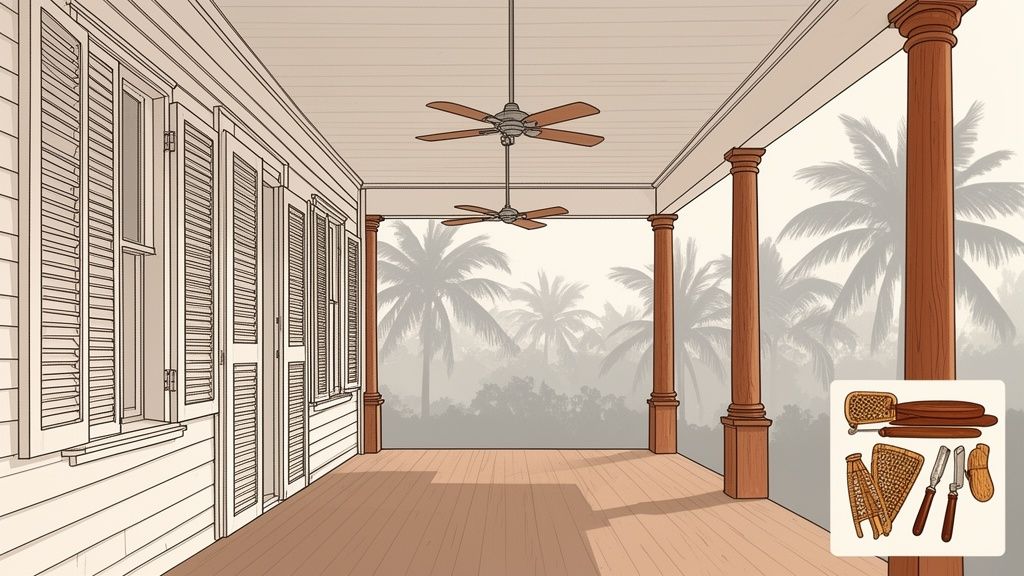
To really get British Colonial style, you have to travel back in time to the 18th and 19th centuries. This isn't an aesthetic that was dreamed up in a London design house. It was born out of pure necessity in hot, humid corners of the globe, from the West Indies to Southeast Asia. It’s the story of what happens when formal, stuffy British tastes meet the relentless reality of tropical life.
Picture this: a British official steps off a ship in the Caribbean, his belongings following behind. Among them are heavy, dark mahogany furniture and a mindset geared toward cozy, enclosed rooms. He'd soon find out that this just wouldn't work. In the sweltering heat, adaptation wasn't a choice—it was a matter of basic comfort.
This constant battle with the climate became the driving force behind the style, shaping everything from the layout of the house to the furniture inside.
Architecture Designed to Breathe
The most obvious changes started with the buildings themselves. The solutions they came up with were not only incredibly effective but have become the signature features of the style we love today.
High Ceilings & Big Windows: It’s a simple concept: hot air rises. So, they built rooms with soaring ceilings to pull the heat up and away. Large, often floor-to-ceiling windows were designed to catch every whisper of a breeze, usually fitted with shutters instead of heavy drapes.
Deep, Shady Verandas: These expansive covered porches were more than just a place to sit. They were a brilliant buffer, shielding the home's interior from the punishing sun and creating a cool, shaded living space for much of the day.
Louvered Shutters: A true icon of the style, these slatted shutters (also called jalousies) were a game-changer. They allowed for constant air circulation while blocking the harsh sunlight and offering a bit of privacy.
This clever blend of Georgian and Victorian architecture with practical, local solutions spread across the British Empire. In Malaysia, for instance, between 1795 and 1957, over 500 British colonial buildings were constructed. They all shared these climate-smart features, from grand residences to public buildings. You can dig deeper into this architectural history on dspace.mit.edu.
A Melting Pot of Materials and Culture
Inside the home, the evolution continued. Those heavy English wools and velvets were swapped out for light, airy fabrics like cotton, linen, and muslin. They were used for everything, from simple curtains to upholstered furniture.
The furniture itself started to change, too. While the classic silhouettes of designers like Chippendale and Sheraton were still popular, the materials used to build them were entirely different. Local craftsmen were brought in, and they introduced their own skills and the incredible natural resources of the region.
The essence of British Colonial style is this beautiful dialogue between imported tradition and local reality. It’s a design language that respects its origins while fully embracing its new environment, creating something entirely new and uniquely adapted in the process.
This incredible fusion gave rise to the use of materials that were not only gorgeous but also perfectly suited to the tropics.
Tropical Hardwoods: Dark, rich woods like teak, mahogany, and ebony were everywhere. They were also naturally resistant to the humidity and insects that would destroy softer European woods.
Woven Textures: To keep things light and airy, materials like rattan, cane, and bamboo were woven into chair backs, headboards, and cabinet doors to encourage airflow.
Natural Fibers: Forget thick wool carpets. Floors were covered with rugs made from jute, sisal, and seagrass, which added texture without trapping heat.
The result was a fascinating mix. You might see a very formal mahogany dining table, but the chairs surrounding it would have light, airy caned seats and backs. This blend of elegance and practicality is the heart of the style and shares a lot of DNA with other warm-weather aesthetics. For more on that, check out our guide to tropical interior design.
What Are the Key Elements of British Colonial Decor?
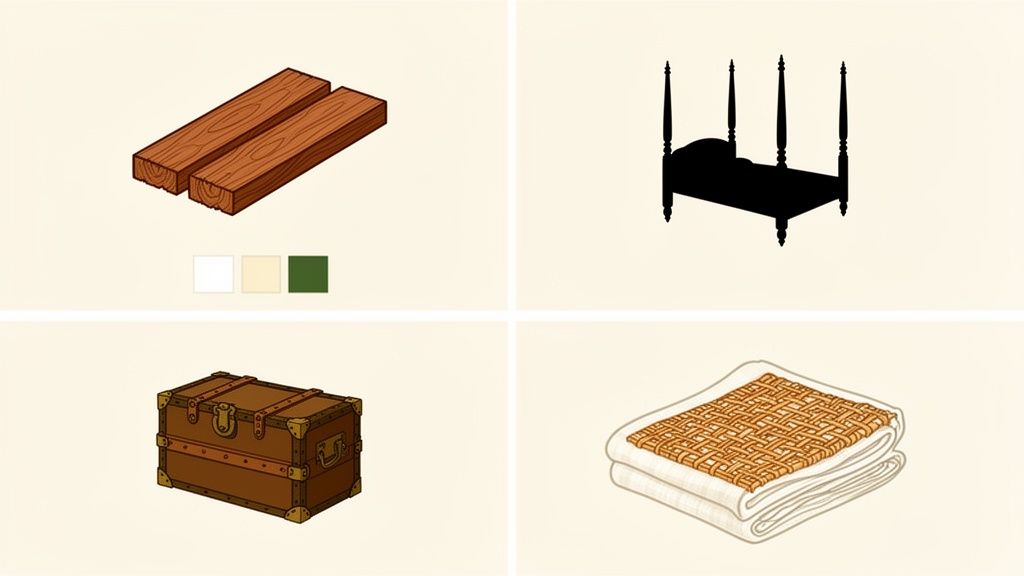
To really get British Colonial style, you have to understand its building blocks. Think of it like learning the ingredients for a classic recipe—each one has a specific role in creating the final, balanced flavor. This style is all about the thoughtful interplay of materials, colors, furniture, and textiles, which all come together to tell a story of refined travel and laid-back elegance.
Breaking down these components shows exactly why this historic style is still so captivating. Its popularity is surging, with some reports showing a 15% annual growth in sales for colonial-inspired decor. In 2024 alone, pins for "British colonial living room" have been saved over 2 million times on Pinterest. This renewed interest is part of a bigger global shift, where even major texts like A History of Architecture are now giving more space to non-European influences—the very fusion this style embodies.
By looking at each piece of the puzzle, you can learn how to bring this sophisticated yet comfortable vibe into your own home.
A Foundation of Natural Materials
The real soul of British Colonial decor is found in its materials. It’s all about creating a beautiful contrast between dark, heavy forms and light, airy textures. This is where you see the style’s famous balance of formal and casual truly come alive. These choices were born from pure practicality—using what was locally available and could withstand humid climates—but they resulted in a look that has stood the test of time.
Dark Tropical Hardwoods: Furniture was almost always crafted from deep, rich woods like mahogany, teak, rosewood, and ebony. Not only were these woods stunning, but they were also naturally resistant to moisture and pests, making them perfect for tropical settings.
Woven and Natural Fibers: To balance the weight of all that dark wood, lighter elements were woven in. Rattan, cane, wicker, and bamboo were used for everything from chair seats and headboards to cabinet fronts, allowing air to circulate. Floors were often covered with rugs made of sisal, jute, or seagrass for texture that wouldn’t trap heat.
The Signature Color Palette
The color scheme in British Colonial style is designed to feel calm, bright, and airy—a direct answer to the intense tropical sun. It's a palette that feels both serene and grounded at the same time.
The core idea is to build a neutral canvas that lets the dark wood furniture and lush greenery really pop. Think of it as creating a cool, shaded retreat from the heat outside.
The foundation is almost always a crisp white or a soft off-white. This simple trick helps reflect natural light, making spaces feel larger and more open. From there, you layer in soft, earthy neutrals to add depth.
Foundation: Crisp White, Alabaster, Soft Cream
Accents: Earthy Browns, Subtle Grays, Botanical Greens
Highlights: You might see occasional touches of deep reds or blues, but they’re usually found in textiles.
This palette often extends to architectural details, too. For example, white or light-colored wainscoting adds character while keeping the bright feel. Our detailed guide offers more insights into using features like beadboard paneling in your home.
Iconic Furniture and Textiles
The furniture is probably the most recognizable part of British Colonial style. The pieces are both elegant and incredibly functional, with many designed for travel, which adds to the worldly feel of the decor.
For a quick reference, here's a breakdown of the style's essential components. You can use this as a simple checklist when you're out shopping or planning your space.
Core Components of British Colonial Style
Element | Key Characteristics | Examples |
|---|---|---|
Furniture | Dark hardwoods, often portable, with woven details. | Four-poster beds, campaign chests, planter's chairs, rattan armchairs. |
Materials | Natural, durable, and climate-appropriate. | Mahogany, teak, cane, bamboo, rattan, wicker, sisal, jute. |
Colors | Bright, airy, and neutral to combat heat. | Crisp white, off-white, cream, with accents of brown, green, and gray. |
Textiles | Lightweight, breathable fabrics with botanical prints. | Cotton, linen, muslin curtains, botanical-print cushions. |
Accents | Items reflecting travel, nature, and exploration. | Vintage maps, globes, botanical illustrations, leather-bound books. |
This table neatly sums up the building blocks you'll need to create an authentic British Colonial look. Now, let's dive a bit deeper into the specifics.
Key Furniture Pieces:
Four-Poster Bed: These are the undisputed stars of the bedroom. Often made from dark wood with intricate carvings, they were originally draped with lightweight muslin or linen netting to keep insects out while letting breezes in.
Campaign Furniture: This includes chests, desks, and chairs designed to be folded up and transported. You can spot them by their distinctive brass hardware and leather straps.
Woven Chairs: Pieces like the famous planter's chair, with its long, reclining arms, were made from rattan or cane for pure comfort in the heat.
When it comes to textiles, the rule was simple: keep it light. Heavy wools and velvets were completely impractical. Instead, rooms were filled with lightweight cotton, linen, and muslin. These fabrics were used for everything from breezy curtains to slipcovers and bedding. Patterns were pulled directly from the local environment, adding a touch of the exotic.
Common Patterns and Motifs:
Lush botanical prints (palm fronds, ferns are classics)
Exotic wildlife (monkeys, elephants, and tropical birds)
Classic stripes and simple checks for a touch of British tradition
Window treatments were absolutely crucial for managing light and airflow. To get the look just right, features like plantation shutters are a classic choice, giving you precise control over sunlight while adding that timeless architectural detail.
Adapting the Style for Modern Homes
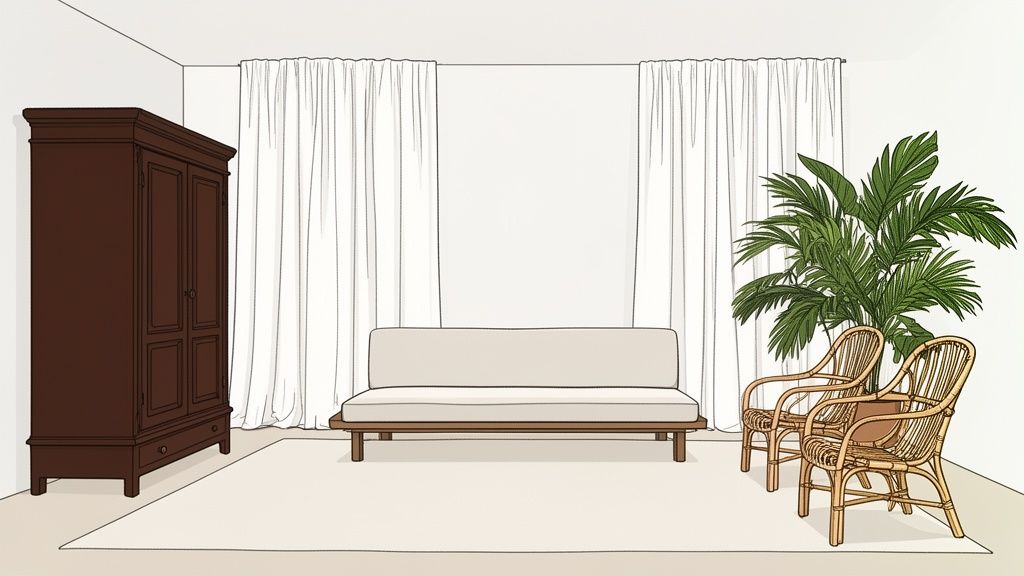
So, how do you bring the spirit of British Colonial design into a modern home without making it feel like a museum exhibit? It's all about striking the right balance. You want to capture that well-traveled, historic vibe, but in a way that feels fresh and perfectly suited for how we live today.
This updated take is often called "Modern Colonial," and it’s less about a strict historical recreation and more about a conversation between eras. Think of it as weaving the best of the past—natural textures, airy spaces, and solid furniture—into a contemporary setting with a much lighter touch. It’s this adaptability that keeps the style timeless, not dated.
The Art of Strategic Pairing
The real secret to pulling off a Modern Colonial look is in the mix. It’s a delicate dance, knowing what to keep classic and what to update. The most effective approach is to pair iconic, traditional pieces with sleeker, more modern elements. That contrast is what creates visual energy and keeps the space from feeling too predictable.
Imagine a grand, dark-wood armoire holding its own in a living room next to a simple, clean-lined sofa. The armoire brings the weight of history, while the sofa offers a comfortable, contemporary anchor. Or picture classic rattan chairs gathered around a minimalist dining table—it’s an unexpected and incredibly stylish combination.
Modern Colonial design isn't about following a rigid set of rules. It's about curating a personal collection where each piece, whether old or new, has room to shine and contribute to a cohesive story.
This idea of blending aesthetics is central to many popular looks. If you love this mix-and-match philosophy, you'll probably appreciate the principles of the Transitional interior design style, which also artfully combines classic and contemporary elements.
Lightening Up the Look
A few thoughtful tweaks can make all the difference, bringing the British Colonial aesthetic squarely into the 21st century. These shifts keep the style’s soul intact while making it work beautifully in today's homes, which are often smaller and more open-plan.
Key Modern Adaptations:
Refine the Color Palette: The classic white-and-wood combo is a great starting point, but you can expand on it. Think about using soft grays, muted sage greens, or even pale, dusty blues as your neutral backdrop. This helps the dark wood accents pop without feeling heavy.
Use Patterns as Accents: Instead of going all-in with botanical prints on walls or large furniture, use them more sparingly. A few throw pillows, a single piece of statement art, or a well-chosen area rug can inject that tropical flair without overwhelming the room.
Embrace Cleaner Lines: Not every piece needs to be ornate. Look for furniture that nods to the original style but with simpler silhouettes. For example, a four-poster bed with a sleek, unadorned frame gives you the classic form without all the heavy, intricate carving.
By making these strategic edits, you’ll create a space that feels both sophisticated and completely livable. It's a style that pays homage to its roots while looking confidently toward the future.
Bringing Your Colonial-Inspired Vision to Life with AI
It’s one thing to gather beautiful images on a mood board, but it's another thing entirely to bring that vision to life in your own home. How do you know if that gorgeous mahogany four-poster bed will actually fit, or if that perfect shade of cream paint will look washed out with your existing floors? This is where the guesswork used to begin, but now technology can step in to help.
Think of AI-powered interior design tools as your personal design assistant. They close the gap between inspiration and reality, letting you test-drive your British Colonial style ideas in a virtual, photorealistic version of your own room before you spend a dime or move a single piece of furniture.
See Your Space Transformed in Seconds
The process is surprisingly simple. You just snap a photo of your room and upload it. From there, you use plain text to tell the AI what you want to see, almost like you’re chatting with a designer.
For instance, you could type something like: "Redesign this bedroom in a modern British Colonial style with a four-poster bed, white linen curtains, and tropical plants." In moments, the tool will generate a new image, showing you exactly how that would look in your space.
This isn't just about making a pretty picture. It's about making smart decisions. When you see a realistic version of your idea, you can instantly tell what works and what doesn't, saving yourself from expensive mistakes later on.
This ability to experiment and change things on the fly is a huge advantage. If the first result isn't quite right, you just adjust your prompt and try again. It gives you the freedom to explore dozens of variations on your colonial-inspired theme without ever picking up a paintbrush.
From Simple Ideas to Detailed Designs
Today's AI tools go way beyond basic redesigns. They come with a whole toolkit that lets you get specific and fine-tune every detail of your British Colonial interior.
Virtual Paint Testing: Instantly try out different wall colors from major brands like Benjamin Moore or Sherwin-Williams and see how they look in your room’s actual lighting.
Virtual Furniture Staging: Not sure if a piece will fit? The AI can place furniture into your photo with realistic shadows and scale, so you can nail the layout and proportions.
Sketch-to-Render: Even a rough napkin sketch of an idea can be turned into a professional-looking, photorealistic concept just by uploading a picture of it.
These tools are built to be easy to use, so you don't need a design degree to get a polished result. If you're curious and want to start playing around, you can learn more about how to use an AI interior design style generator to check out all kinds of curated looks.
By using these features, you can build your room piece by piece. Test different rug patterns, see how botanical prints look on the accent pillows, and make sure you've struck that perfect balance between dark woods and light fabrics. It takes the anxiety out of decorating and gives you the confidence to know your finished room will be every bit as elegant and inviting as you imagined.
Common Questions About British Colonial Design
Even with a crystal-clear vision, translating a design style into your own home can bring up a few questions. Getting a handle on the finer points of British Colonial decor is what allows you to adapt it confidently, making sure the final look is authentic, comfortable, and a perfect fit for modern living.
Let’s walk through some of the most common things people wonder about when bringing this timeless style to life.
Is British Colonial Style Too Formal for a Family Home?
Absolutely not. While the style has some pretty formal roots, today's take is all about comfort and actually living in the space. The focus on natural materials, lightweight fabrics, and airy layouts makes it surprisingly family-friendly.
It's easy to make it work. Just choose durable performance fabrics for your sofas, add plenty of cozy seating, and keep the decor from getting too cluttered. The result is a relaxed yet sophisticated vibe that can handle the reality of daily life.
How Can I Incorporate This Style Without It Looking Outdated?
The secret here is to mix, not match. The magic happens when you blend classic pieces with more contemporary elements. Think about pairing a vintage-style campaign desk with a sleek, modern chair, or using those traditional botanical prints on a few accent pillows instead of on every surface.
A neutral color palette helps the whole room feel current, while the colonial-inspired pieces bring in that wonderful sense of character and history. This approach creates a space that feels thoughtfully collected over time, not like a stuffy period-piece room. For more design help, you can explore the FAQs about our design tools for further guidance.
The goal is a curated look that tells a story, not a historical reenactment. Balance is key to making the British Colonial style feel relevant and personal in today's homes.
What Are the Best Plants for a British Colonial Vibe?
You can't get the authentic British Colonial feel without lush, tropical plants. They are essential. Go for greenery with big, dramatic leaves to really capture that sense of the tropics and blur the line between indoors and out.
Excellent choices include: Kentia Palms, Fiddle Leaf Figs, and Birds of Paradise.
For smaller spaces: Boston ferns or snake plants work beautifully.
Remember to place them in natural planters—think terracotta, ceramic, or woven baskets. This simple touch will really amplify the earthy, authentic feel of your decor.
Ready to stop guessing and start visualizing? With Decor8 AI, you can see exactly how British Colonial elements will look in your room before making any changes. Transform your space with confidence and create a professionally designed look in seconds. Start your free trial today at Decor8.ai.
Comments