
How Do You Design a Room: how do you design a room for any space
- oliverjames0609
- 1 day ago
- 13 min read
Designing a room isn't about some mysterious creative spark; it’s a practical process. It's about figuring out what the room needs to do, planning where everything will go, and then layering in your personal style with color, materials, and lighting. When you break it down, it's really just a series of clear, manageable decisions that take a space from empty to personal and functional.
A Practical Starting Point for Any Room Design
Staring at an empty or outdated room and imagining a finished, beautiful space can feel daunting. I get it. The key is to see it as a step-by-step workflow, not an overwhelming artistic challenge. The whole journey starts with your vision for the space and ends with you placing the final decorative touches. Knowing how to design a room is really just about making a series of smart choices in the right order.
This guide is your roadmap. We’ll break down each phase so the work ahead feels totally achievable. We’re going to cover everything—from nailing down your room's main purpose and accurately measuring your space to creating a layout that just works and layering in all the good stuff like color, lighting, and texture.
The process follows a few key stages. This simple visual shows how you move from the initial idea to the final look.
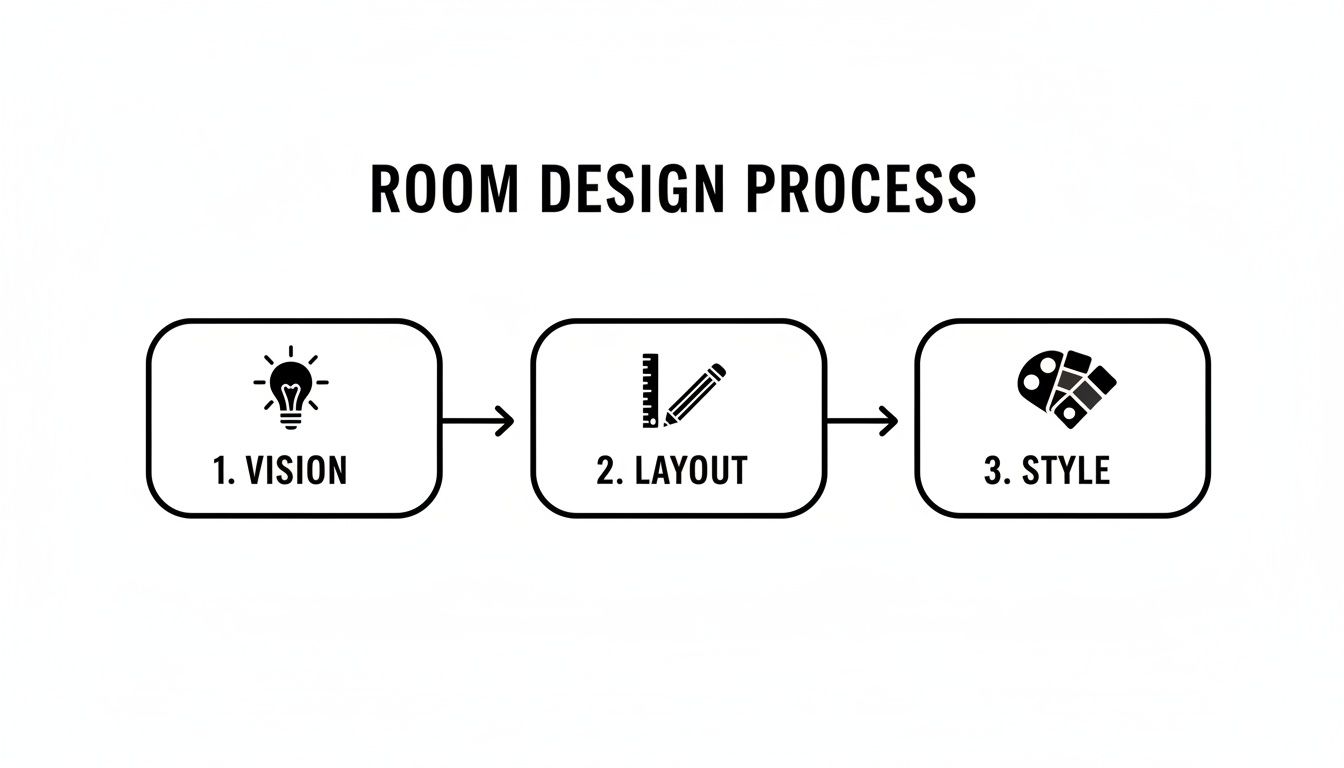
That simple flow—vision, layout, then style—is the backbone of every single successful room design project I've ever worked on.
For a quick overview of what's ahead, this table maps out the entire workflow we'll be following.
The Room Design Workflow at a Glance
Phase | Key Action | Goal |
|---|---|---|
1. Vision & Planning | Measure the space and define its purpose. | Create a solid foundation with clear goals and accurate dimensions. |
2. Style & Function | Choose a design style and list must-have functions. | Ensure the room looks great and works for your everyday life. |
3. Layout & Furniture | Plan furniture placement for optimal flow. | Design a functional and comfortable arrangement. |
4. Color & Materials | Select a color palette and materials. | Build a cohesive and inviting atmosphere. |
5. Lighting & Accessories | Layer lighting and add decorative details. | Add depth, personality, and the finishing touches. |
6. Budget & Timeline | Set financial limits and a realistic schedule. | Keep the project on track and prevent overspending. |
Each phase builds on the last, turning your initial idea into a fully realized space.
The Growing Importance of Thoughtful Design
When you start your project, you’re part of a much bigger movement. The global interior design market has swelled to around $138 billion, with home projects leading the charge. This isn't a coincidence; it’s fueled by more people living in cities and a real desire to create living spaces that are both beautiful and functional. When you take the time to plan your room thoughtfully, you’re tapping into that same trend.
A well-designed room doesn’t just happen. It’s the result of a clear process that balances function, aesthetics, and personal style. Starting with a solid plan prevents costly mistakes and ensures the final space truly meets your needs.
If you're just getting started, a guide on starting the interior design process for a room can give you some great foundational tips. And in this day and age, using modern tools is a game-changer. We've got some helpful advice in our guide to interior design software for beginners made simple. These resources can really help demystify those first few steps and make the whole journey feel a lot smoother.
Defining Your Room's Core Purpose and Style
Before you even think about furniture or paint, every great room design starts with two simple questions: What is this room for, and how do I want to feel when I'm in it? Honestly, getting this right is the bedrock for every single decision that follows. A room without a clear purpose is just a collection of nice things; a room with purpose feels like yours.
First, let's pin down the room's main job. Is it a bustling family room that needs to be bomb-proof? A quiet, heads-down home office? Or maybe a bedroom that's purely a sanctuary for sleep. Get specific about its primary role and who uses it the most.
From Function to Feeling
Once you know what the room needs to do, you can think about the mood. The vibe of a space is just as crucial as its function. The goal is to take abstract words like "cozy," "energetic," or "calm" and turn them into a real, tangible vision.
Think about the atmosphere you want to walk into. Here are a few ways to think about it:
Living Room: Is this a place for hosting friends and sparking conversation, or is it more of a private den for family movie nights?
Bedroom: Are you aiming for a tranquil, spa-like retreat, or a vibrant, inspiring space to wake up in?
Home Office: Does it need to be minimal and distraction-free to help you focus, or creative and eclectic to spark new ideas?
Your room's purpose dictates the "what" (like seating for six or a desk for work). The feeling you're after guides the "how" (warm textures, bright lighting, a certain color palette). Nailing both is the secret to creating a space that’s both practical and deeply personal.
Discovering Your Personal Design Style
Okay, now let's connect that feeling to an actual look. This is where a lot of people get stuck, thinking they have to commit to one official style like "Mid-Century Modern" or "Farmhouse." The truth is, most of us are a blend of different styles, and that’s what makes a home feel authentic and interesting.
If you're not sure where to start, our interactive interior design style finder quiz is a fantastic tool for figuring out what you’re naturally drawn to.
Seeing your ideas in a visual format is a game-changer. This is where AI tools like Decor8 AI really shine. Instead of just trying to imagine it, you can see your vision come to life in seconds. Found a photo of a room you love? Upload it and use the 'Copy Aesthetics' feature to generate concepts that capture that same spirit.
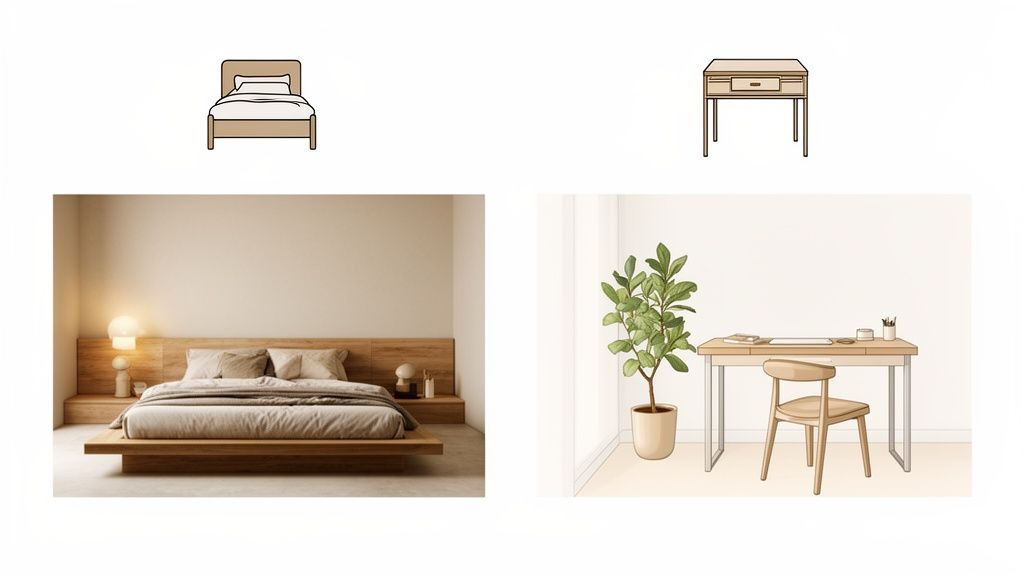
Or, you can just describe what's in your head. Type in a prompt like, “a serene Japandi-style bedroom with minimalist furniture and warm wood tones,” and watch it create a photorealistic render right before your eyes. This process takes you from a vague idea to a concrete visual, which makes every other design choice from here on out so much easier.
Creating a Functional Layout and Furniture Plan
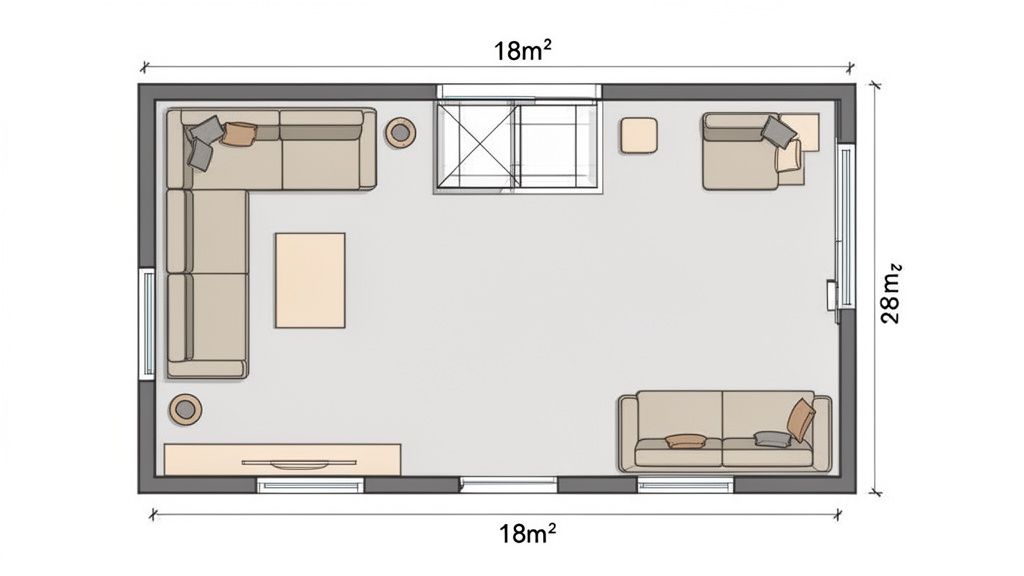
This is where your vision starts to take shape. Moving from mood boards to an actual floor plan is exciting, but it all hinges on one crucial thing: accurate measurements. Don't be tempted to guess—a detailed plan built on solid numbers will save you from the headache of buying a gorgeous sofa that completely swallows your room.
With your measurements in hand, the next thing to consider is flow. Every room needs clear paths to walk through, and a good rule of thumb is to keep main walkways about 30 to 36 inches wide. This simple guideline ensures the room feels open and easy to move around in, not like an obstacle course.
Arranging Furniture for Real Life
A truly great layout isn't just about cramming furniture in; it’s about making the room work for the people who use it. The first step is to find your room's focal point. This could be anything—a cozy fireplace, a stunning view from a window, or even a bold piece of art. Arrange your main seating around this feature to give the space a natural anchor.
For instance, if you want your living room to be a hub for conversation, try placing sofas and chairs so they face each other. This naturally creates intimate "conversation zones" that feel warm and inviting.
A classic design mistake is shoving all the furniture up against the walls. Even pulling your sofa a few inches away from the wall can create an illusion of space and make the whole room feel more considered and airy.
Pay close attention to scale and proportion, too. A rug that’s too small for a seating area will make everything look disconnected and out of place. Generally, you want a living room rug that’s large enough for at least the front legs of your sofa and chairs to sit on. It’s a simple trick, but it works wonders to tie the whole arrangement together.
Using Technology to Perfect Your Plan
Thankfully, we've moved past the days of just sketching things out on paper and hoping for the best. With more and more people working from home, carving out a dedicated 2–3 m² work area within a 15–20 m² living room has become a common design challenge.
This is where AI tools can be a game-changer. Instead of just guessing, you can use something like Decor8 AI’s virtual staging feature. Just snap a photo of your empty room, upload it, and start playing around. See if that big sectional really works better than two separate sofas—all without breaking a sweat.
Being able to visualize everything risk-free gives you the confidence to make choices that are right for your space. Making the most of any room, especially smaller ones, comes down to choosing and placing pieces smartly. For some great ideas, you can explore designer furniture options for small spaces.
As our homes have to work harder for us, designing for multiple uses is essential. For more on this, take a look at our guide on https://www.decor8.ai/post/designing-a-multi-purpose-room-tips-and-ideas.
Building Your Color and Material Palette
This is where the magic really happens. With the layout settled, it's time to breathe life and personality into your space with color and texture. These are the elements that give a room its soul.
One of the most reliable tricks of the trade is the 60-30-10 rule. It’s a classic for a reason—it just works. Think of it as a simple recipe for a perfectly balanced color scheme.
Here’s how it breaks down:
60% Dominant Color: This is your room's foundation. It's the main color you'll see, usually on the walls, setting the overall mood.
30% Secondary Color: This shade is here to add contrast and interest. You’ll see it in larger pieces like furniture, curtains, or maybe an accent wall.
10% Accent Color: These are your finishing touches—the pops of personality. Think throw pillows, artwork, and small decor items.
Combining Textures for a Layered Look
A room without texture is a room that falls flat. Color gets all the attention, but materials are what make a space feel rich, cozy, and thoughtfully designed. The key is to create interesting combinations.
Try mixing hard and soft surfaces. A plush velvet sofa, for example, feels even more luxurious next to a cool marble coffee table. Pairing rustic, warm woods with sleek, modern metals adds a layer of complexity that engages the senses. It’s this contrast that keeps the eye moving and makes a room feel complete.
Taking the Guesswork Out with AI
Let's be honest: choosing paint can be a nightmare. That tiny swatch you loved at the store can look completely different once it's on your walls, under your specific lighting. We've all been there with a collection of half-used sample pots.
This is where a little bit of tech can save you a lot of headache (and money).
Using AI to test colors and materials is like having a crystal ball for your design. You get to see the final result before you commit, giving you the confidence to make bold choices without the risk.
With a tool like Decor8 AI, you can snap a photo of your room and virtually "paint" the walls with real colors from brands like Benjamin Moore or Farrow & Ball. You’ll see exactly how a certain white looks at noon versus how it looks at dusk, right next to your existing furniture.
Decor8 AI can also pull a complete color palette straight from an inspiration photo you love. It instantly identifies the key colors and even gives you the hex codes for a perfect match.
If you want to dive deeper into crafting the perfect palette, our guide on using a color scheme generator has you covered. Suddenly, one of the most stressful parts of decorating becomes fun.
Layering Lighting and Personal Accessories
Okay, the heavy lifting is done. Your main furniture is in place, and the color palette is set. Now comes the fun part—the final layers that take a room from just "designed" to feeling like home. This is where you inject personality and atmosphere, and it all comes down to lighting and accessories.
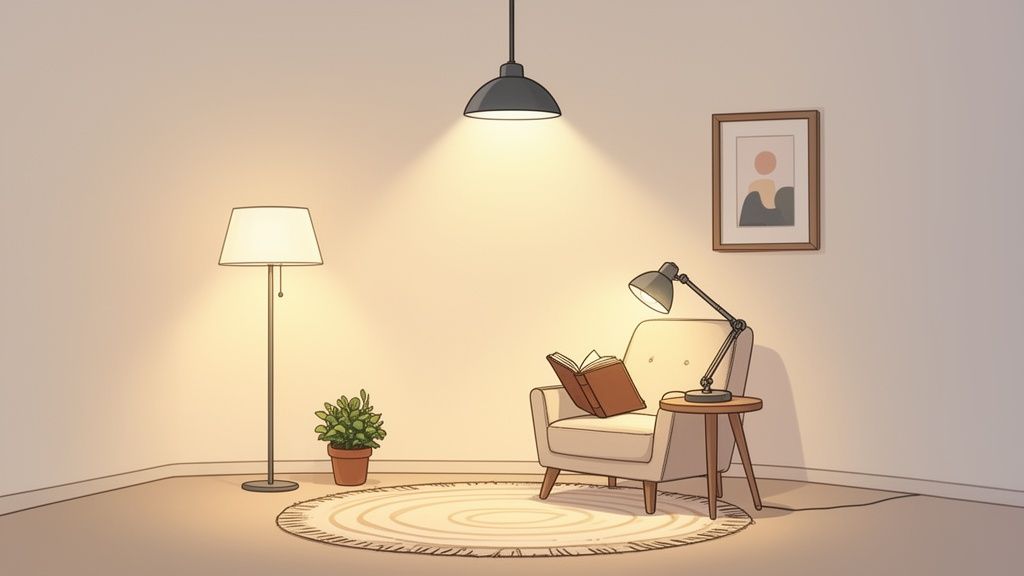
Great lighting isn't just about flipping a switch on a single overhead fixture. It’s about creating mood and making the room work for you by layering different light sources. I always tell my clients that a well-lit room needs a mix of three types to feel truly balanced and inviting.
Ambient Lighting: This is your base layer, the overall illumination for the room. Think of recessed lights, a beautiful chandelier, or flush-mount ceiling fixtures.
Task Lighting: This is your functional light, aimed at specific activities. It could be a reading lamp tucked beside your favorite armchair or those essential under-cabinet lights in the kitchen.
Accent Lighting: This is where you add a little drama. Use accent lights to spotlight a piece of art, a cool architectural detail, or a beautiful plant. It creates depth and directs the eye.
Bringing Your Personality into the Room
With your lighting plan sorted, it's time to accessorize. This is how you tell your story and pull the entire design together. I like to think of accessories as the jewelry of a room—they add that final sparkle, texture, and character.
Things like rugs, curtains, artwork, and plants are non-negotiable for adding softness and life to a space. A classic mistake I see all the time is a rug that’s way too small for the room. A good rule of thumb is to choose one large enough to anchor your main furniture, meaning at least the front legs of your sofa and chairs should be sitting on it.
When it comes to hanging art, the pros use a simple guideline: hang it at eye level. The center of the piece should be about 57 inches from the floor, which is the average human eye level. This simple trick makes the art feel grounded and connected to the room, not like it's just floating randomly on the wall. For a deeper dive, check out our guide on using art in interior design.
The final 10% of a room's design—the accessories, art, and personal touches—is what delivers 90% of its character. Don't rush this stage; it's what makes the space uniquely yours.
These days, a thoughtfully designed room also considers wellness and sustainability. There's a real movement toward using eco-friendly materials and smart, energy-efficient solutions. Your design choices can actually make a difference by improving daylight, cutting energy costs, and even boosting your home’s perceived value. You can discover more insights about interior design market trends to see how this is shaping modern homes.
This is also a fantastic time to plan for the future. With a tool like Decor8 AI, you can play around with seasonal decor before you even think about buying a thing. Want to see how a Christmas tree will look in that corner? Or test out a few festive mantel arrangements? You can visualize it all and get every detail just right for the holidays.
Common Questions About Designing a Room
Even with the best-laid plans, a few questions are bound to pop up during any design project. That’s just part of the process. Let’s walk through some of the most common hurdles I see, with practical answers to keep you moving forward.
Where Do I Start When Designing a Room from Scratch?
Always, always start with function. Before you even think about a paint chip or a piece of furniture, ask yourself one simple question: What does this room need to do? Is it a quiet reading nook, a busy family hub, or a formal entertaining space? Nail down its purpose first.
With that sorted, you can start gathering inspiration. Find three to five images you truly love and look for the common threads. Is it the warm color palette? The minimalist furniture? The cozy textures?
Finally, grab your tape measure. Get the dimensions of the room, windows, doorways—everything. This simple foundation of function, inspiration, and measurements will guide every other decision you make and save you from the biggest headaches down the road.
How Can I Make a Small Room Look Bigger?
Making a small room feel more spacious is all about tricking the eye. Your best tool for this is light-colored paint. When you use similar light tones—like soft whites, beiges, or pale grays—on the walls, trim, and even the ceiling, it blurs the edges of the room and makes the whole space feel bigger.
Next, you want to get as much natural light in as possible. Here’s how:
Swap heavy drapes for sheer curtains to let the light pour in.
If you can, keep windows uncovered to create a stronger connection with the outdoors.
Hang a large mirror. This is a designer’s oldest trick for a reason—it bounces light around and creates an instant illusion of depth.
One more pro tip: choose furniture with legs you can see. A sofa or chair that’s lifted off the floor creates visible space underneath, which makes the room feel much more open and airy.
A common mistake is filling a small room with tiny furniture. It often backfires, making the space feel cluttered. One well-chosen, larger piece, like a proper sofa, can actually make the room feel more grounded and less chaotic than a bunch of small, disconnected items.
What Are the Biggest Room Design Mistakes to Avoid?
The most common mistake I see, by far, is getting the scale wrong. People either choose furniture that's way too big and swallows the room, or pieces that are so small they look like they’re floating in an empty sea. Always measure your room and then measure the furniture you're considering. A great way to visualize it is to use painter's tape to mark out the furniture’s footprint on your floor before you buy.
Another classic error is relying on a single, harsh overhead light fixture. It casts unflattering shadows and can make a room feel sterile. The key is to layer your lighting. Mix in floor lamps, table lamps, and accent lighting to create a warm, inviting glow.
And finally, please don’t pick your paint color first! It seems like the logical starting point, but it's a trap. It is infinitely easier to find a paint color that complements your sofa and rug than it is to find a sofa and rug that perfectly match a very specific wall color.
How Does an AI Tool Like Decor8 AI Actually Help?
Think of a tool like Decor8 AI as your creative co-pilot and visual safety net. It lets you test-drive your ideas without spending a dime or lifting a paintbrush.
Instead of buying a dozen paint samples and painting little patches all over your wall, you can virtually try out hundreds of colors in a matter of seconds. You can see exactly how they’ll look in your home’s specific lighting conditions.
And instead of guessing if that new sofa will fit, you can use virtual staging to place different furniture arrangements in a photo of your actual room. AI is also an amazing brainstorming partner. It can generate tons of design concepts to help you zero in on the style you really love.
It basically takes all the risk out of the design process, giving you the confidence to make bold, creative choices.
Ready to bring your vision to life without the guesswork? Decor8 AI lets you visualize new layouts, test paint colors, and generate stunning design concepts right from a photo of your room. Start designing with confidence today.
Comments