
Virtual Staging AI A Guide to Transforming Properties
- oliverjames0609
- 4 days ago
- 16 min read
Picture this: you have a photo of a completely empty room. It's bland, uninspiring, and hard for potential buyers to imagine as their own. Now, what if you could snap your fingers and have it instantly filled with beautiful, stylish furniture? That's exactly what virtual staging AI does.
It's a technology that digitally furnishes an empty room's photo in seconds, transforming it into a welcoming, move-in-ready space. Think of it as having an expert interior designer on call, ready to work at the speed of light. The AI uses sophisticated algorithms to look at a room's layout, lighting, and dimensions to add photorealistic furniture and decor, making properties infinitely more appealing online.
What Is Virtual Staging AI and How Does It Work?
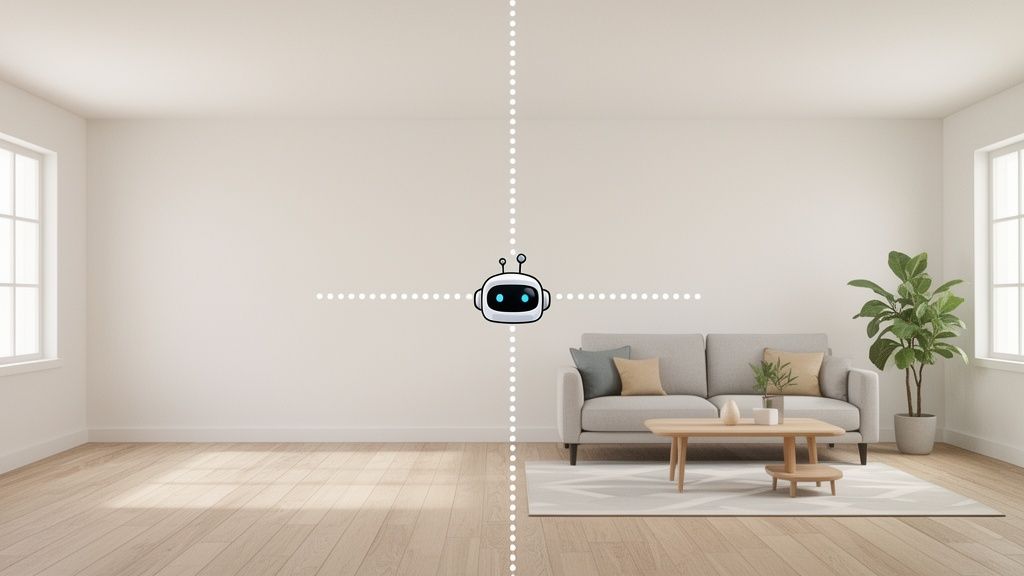
At its heart, AI virtual staging is a smart tool that gives a vacant property a full makeover without moving a single piece of physical furniture. It starts with a simple photo of an empty room and then works its magic, filling it with stylish furnishings that look like they were meant to be there.
But this isn't your average photo editing. The AI behaves like a seasoned designer, quickly grasping the room's unique character. It doesn't just cut and paste pictures of couches into a photo; it builds a completely believable and cohesive environment from the ground up.
The Brains Behind the Beauty
The real power of virtual staging AI is how it can understand and interpret a 2D image so accurately. When you feed it a photo, the technology immediately starts identifying the key features of the space.
This intelligent analysis covers a few critical areas:
Spatial Recognition: The AI maps out the walls, floors, ceilings, and windows to get a firm grasp of the room's dimensions and layout.
Perspective Matching: It figures out the camera's angle to make sure every piece of virtual furniture sits correctly in the space, avoiding that awkward "floating" look you see with bad edits.
Lighting and Shadow Simulation: It analyzes where the light is coming from—be it windows or light fixtures—to cast realistic shadows and reflections. This is what makes the digital items look like they actually belong in the room.
This whole process ensures the final image isn't just furnished, but convincingly staged. The AI makes thousands of tiny calculations behind the scenes to get the scale of a rug, the shadow from a chair, and the gleam on a glass table just right.
By understanding the physics of light and space, virtual staging AI creates visuals that are often indistinguishable from professionally shot photographs of physically staged homes.
From Blank Canvas to Finished Masterpiece
Once the AI has a solid understanding of the room, the creative part begins. This is where a platform like Decor8 AI really excels by making the workflow incredibly simple. You just pick a style you like—say, Modern, Farmhouse, or Scandinavian—and the AI fills the room with furniture and decor that fits that vibe.
This is all powered by generative AI, a specific type of artificial intelligence that can create brand-new content. It isn’t just grabbing items from a fixed library; it’s generating a unique arrangement designed for your specific room. That’s why a strong AI room design tool can churn out endless options for a single space, helping agents and homeowners find that perfect look. If you want to get into the nitty-gritty, you can learn more about how AI virtual home staging works and see its impact on property marketing firsthand.
In the end, the technology does all the heavy lifting for you. It picks the furniture, arranges it in a way that makes sense, and renders a high-resolution image, giving you a stunning, list-ready photo in just a few minutes.
Why AI Virtual Staging Is a Real Game-Changer
Let's cut through the noise. AI-powered virtual staging is delivering real, measurable results for real estate pros. This isn't just about adding some digital furniture to an empty room; it's a powerful tool that saves you serious money, speeds up your sales cycle, and gives your marketing a massive boost.
The most obvious win is the huge cost savings. Anyone who has staged a home the old-fashioned way knows the pain of coordinating furniture rentals, movers, and designers—a process that easily runs into thousands of dollars. With AI virtual staging, you can get a more polished and targeted look for over 90% less. It turns a major budget item into a small, predictable expense.
This shift in cost means you can professionally stage every single listing, not just the million-dollar properties. What was once a luxury service is now a practical tool for making any home look its absolute best online.
The Power of Speed and Flexibility
In real estate, speed is everything. Traditional staging can drag on for weeks, leaving a property sitting idle when it should be generating buzz. AI platforms completely shred that timeline. You can snap photos of a vacant home in the morning and have a full gallery of beautifully staged images ready to go live that same afternoon.
That speed alone gives you a serious leg up on the competition, letting you capture buyer attention right away.
But the true marketing magic is in its flexibility. With physical staging, you're locked into one look. If a potential buyer isn't a fan of modern farmhouse, you might lose them. Virtual staging AI blows that limitation wide open.
Appeal to Different Buyers: You can show that spare room as a sharp home office for a remote worker, then as a cozy nursery for a young family, and even as a home gym for a fitness buff—all from the same base photo.
Play with Different Styles: Effortlessly test out different looks. See if a Scandinavian AI home design makes the space feel bigger or if a classic Traditional vibe feels more welcoming.
Make Changes Instantly: Did you get feedback that the living room feels a bit too formal? No problem. You can generate a more relaxed, inviting version in a matter of minutes.
This ability to tailor the home's presentation helps a much wider range of buyers connect with the space emotionally, and that connection is what leads to offers. For more strategies on this, check out our guide on how AI for real estate boosts brand marketing and sales.
To really understand the difference, let's compare the two approaches side-by-side.
Factor | Traditional Physical Staging | Virtual Staging AI |
|---|---|---|
Cost | Typically $2,000 - $7,000+ per project (rentals, movers, design fees) | $15 - $60 per image, often with bulk or subscription discounts |
Time | 1-3 weeks for consultation, delivery, and setup | Minutes to a few hours from photo upload to finished images |
Flexibility | One style per room; changes are expensive and slow | Unlimited styles and revisions; can create multiple versions |
Logistics | Involves movers, furniture rental, and potential property damage | 100% digital; no physical access or coordination needed |
ROI | Good, but with high upfront costs and long lead times | Excellent, with minimal cost and immediate turnaround |
The table makes it clear: while traditional staging has its place, AI offers an efficiency and adaptability that's hard to beat.
Driving Faster Sales at Higher Prices
At the end of the day, it's all about selling homes quickly and for top dollar. Virtual staging bridges the "imagination gap" that so many buyers struggle with when looking at empty photos. Staged homes simply feel more like a place someone could actually live.
An empty room sells a space, but a beautifully staged room sells a lifestyle. Virtual staging AI makes it possible to craft that lifestyle narrative for every property, helping buyers envision their future and motivating them to make an offer.
This kind of powerful visual storytelling leads directly to better business outcomes, including more clicks online, more requests for showings, and a shorter time on the market.
This technology isn't just a niche tool; it's part of a massive industry shift. The generative AI market in real estate is projected to explode from USD 544.29 million in 2026 to a mind-boggling USD 1,427.36 million by 2035. As detailed in a report from Precedence Research, this growth is driven by the clear need for digital tools that capture buyer interest without the old-school costs. Platforms like Decor8 AI are leading this charge, giving agents the tools they need to stand out and win in a crowded market.
How to Use Virtual Staging AI Step by Step
Jumping into AI virtual staging is a lot easier than you might think. You don't need a design degree or any experience with complicated software. In fact, you can go from an empty room to a beautifully staged photo in just a few minutes. The process feels less like wrestling with technology and more like giving a few simple directions to a super-fast interior designer.
It all starts with your source photo. A high-quality image is the foundation for a believable result, so try to use photos that are clear, well-lit, and taken from a good angle. Shooting from a corner of the room is usually best, as it captures more of the space and gives the AI more information to work with.
Step 1: Upload Your Room Photo
First things first, you need to upload your photo to a platform like Decor8 AI. This is a simple drag-and-drop or upload process you can do right from your computer or phone. The system accepts standard image files like JPEGs, so there’s no need to mess with fancy formats.
As soon as your photo is uploaded, the AI gets to work. It instantly analyzes the image to identify key elements like the walls, floor, ceiling, and even where the light is coming from. This quick scan is what allows the AI to place furniture that looks like it truly belongs in the room—proportions, lighting, and all.
Step 2: Choose Your Design Direction
Now for the fun part: playing creative director. You generally have two ways to guide the AI. The simplest option is to pick from a list of pre-set styles, which is perfect when you want a professional look without having to think too hard about it.
Some of the most popular style options you'll find are:
Modern: Think clean lines, neutral colors, and a less-is-more vibe.
Farmhouse: All about creating a cozy, rustic feel with warm, natural wood tones.
Scandinavian: Bright, airy, and functional, with light woods and simple furniture.
Traditional: Classic and elegant, featuring richer colors and more detailed pieces.
If you have a more specific vision, you can use a text prompt to describe exactly what you want for the AI home décor. For example, you could type, "a bright coastal living room with a light blue sofa, wicker chairs, and nautical artwork." This gives you total control to create a custom look that perfectly matches the property's character.
This simple workflow is powerful, and the infographic below breaks down exactly why.
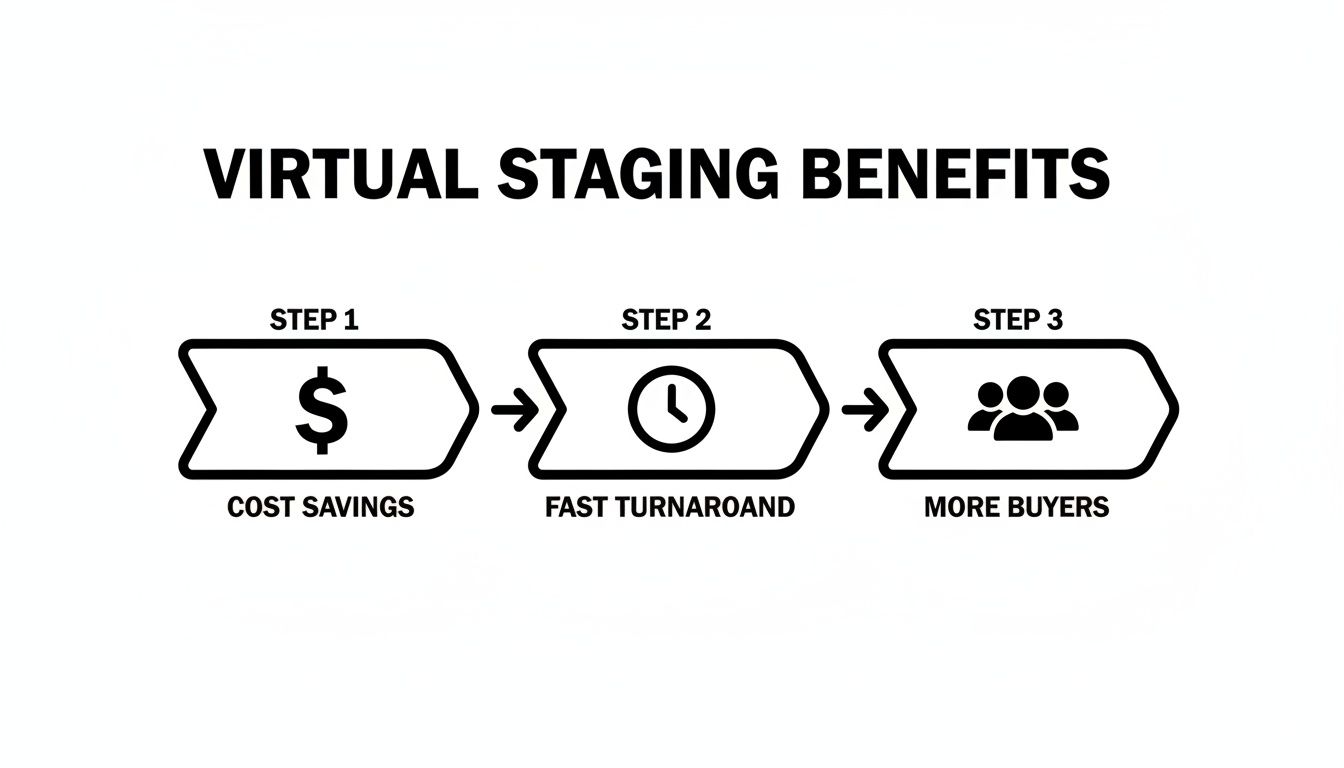
As you can see, the process directly leads to major cost savings and an incredibly fast turnaround, which helps attract more interested buyers.
Step 3: Refine and Perfect Your Image
The AI usually generates its first draft in under a minute, and it’s often pretty impressive right out of the gate. But the real magic is in the fine-tuning. You can ask the AI to make small tweaks, like swapping out a specific piece of furniture, changing the wall color, or even trying out different flooring.
For homes that aren't empty, advanced features like item removal are a huge help. If a room has old furniture or just general clutter, the AI can digitally erase it to give you a clean slate. This is a game-changer, letting you stage a property without having to physically move anything. You can see for yourself how easy it is to add furniture to empty rooms with our free AI interior design tool.
The real power of a great virtual staging AI tool isn't just in the first generation, but in its ability to let you iterate. This collaborative process between you and the AI ensures the final image perfectly captures the home's potential.
Step 4: Download Your Listing-Ready Photo
Once you’re happy with how the staged room looks, the last step is to download the high-resolution image. Platforms like Decor8 AI provide crisp, clear JPEGs that are ready to go straight into your MLS listing, website, or social media feed.
The whole process is designed to be quick and painless. You can even create a few different design options for the same room to show off its versatility and appeal to an even wider range of buyers.
Advanced Uses for Real Estate Professionals and Designers
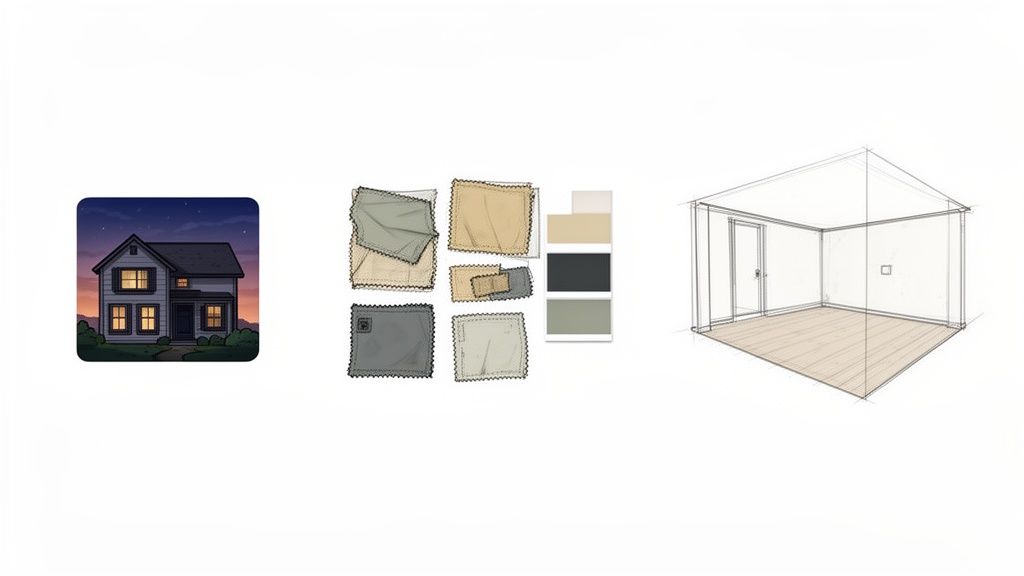
While filling empty rooms is the bread and butter of virtual staging AI, the technology's real magic is in its versatility. It's so much more than a staging tool—it’s a visual marketing Swiss Army knife for real estate agents, designers, and builders. We're moving past just making a property look good and into total project visualization.
For pros who are ready to push beyond the basics, these advanced applications create new ways to hook clients, speed up sales, and make creative work a whole lot smoother. It's all about using AI to solve a bigger set of visual problems.
Enhancing Listings Beyond the Interior
Every great real estate agent knows the first impression often happens outside. A gray, gloomy sky or a dull dusk photo can make even the most beautiful home feel lifeless. Thankfully, modern AI tools can fix this in a snap.
Twilight Exteriors: With a single click, AI can take a standard daytime photo and give it that stunning "day-to-dusk" glow. It adds warm interior lighting and a dramatic sunset, creating a high-end vibe that stops scrollers in their tracks on listing sites.
Sky Replacement: You can instantly swap a boring, overcast sky for a bright and sunny one. This simple tweak makes a property feel more welcoming and can completely change the mood of your photo gallery.
AI-Generated Descriptions: Some platforms can even analyze your photos and write compelling listing descriptions or social media posts for you. This is a huge time-saver that ensures your copy always highlights the home's best features.
These tools help agents create a polished and professional look across every single photo, not just the ones indoors.
A Creative Superpower for Interior Designers
For interior designers, AI Interior Design tools are quickly becoming a trusted creative partner. Think of it as having a junior designer who can whip up initial concepts in seconds. This frees up designers to spend less time on the tedious early stages and more time focusing on client relationships and executing the final vision.
Instead of spending hours building mood boards from scratch, a designer can upload a photo of a client's room and generate multiple design ideas almost instantly. Using a simple text prompt like "mid-century modern living room with a green velvet sofa and brass accents," they can bring a specific idea to life right before the client's eyes.
By using virtual staging AI, designers can present clients with a variety of fully visualized concepts in the time it used to take to gather a few fabric swatches. This drastically shortens the feedback loop and helps secure client buy-in faster.
These tools are also perfect for showing a client how a new paint color or flooring choice will look without having to paint a single wall. Giving clients that visual confirmation helps them feel confident and ready to move forward with big decisions.
From Blueprint to Reality for Builders
Builders and developers have a unique challenge: they need to sell a vision that doesn't exist yet. Blueprints and architectural drawings are often hard for buyers to connect with emotionally. This is where AI’s ability to turn a flat sketch into a stunningly realistic rendering becomes an incredible sales tool.
A developer can now upload a simple floor plan, and the AI will generate a photorealistic 3D rendering of the finished space—fully furnished and decorated. This helps pre-sell units by showing potential buyers exactly what their future home will feel like, creating a powerful connection to a property before ground is even broken. Of course, getting the visuals right is just one piece of the puzzle; smart digital marketing, like a solid PPC management for real estate strategy, is also key to attracting qualified buyers.
Virtual staging is part of the massive generative AI boom, which is projected to grow at a staggering 46.47% CAGR between 2024 and 2030, hitting USD 356.10 billion. This growth is already happening in real estate, where 79% of firms are now using GenAI to improve how they interact with customers. For builders, this means tools like Decor8 AI are essential for bringing projects to life. And for renovators, check out our guide on how to declutter real estate photos instantly with AI to see how you can clean up visuals before you even start staging.
Choosing the Right Virtual Staging AI Tool
With so many virtual staging tools flooding the market, how do you pick the right one? It can feel a bit paralyzing. But from my experience, a smart choice always boils down to a few key features that separate the genuinely useful tools from the flashy but frustrating ones.
The absolute dealbreaker is photorealistic quality. It's not enough for the AI to just plop a sofa into a room. It has to understand light, shadow, and reflection to make the scene look real. That’s the magic ingredient that makes a potential buyer feel like they could actually live there.
Beyond that, you need options. Look for a deep library of design styles—from Modern and Farmhouse to Scandinavian and Coastal. You want the flexibility to match the home's vibe and appeal to the right buyers. And, of course, the platform has to be easy to use. You shouldn't need a degree in graphic design to get professional-looking results.
Core Features to Look For
When you start comparing different platforms, it helps to have a mental checklist of the non-negotiables. These are the features that will actually make a difference in your day-to-day workflow and marketing.
Advanced Editing Tools: Don't settle for just adding furniture. The best tools let you do things like replace a dreary sky in an exterior shot, digitally remove old clutter, or even add a dramatic twilight effect.
High-Resolution Downloads: Make sure you can export images that are crisp and clear enough for MLS, print brochures, and big-screen displays. Pixelated photos scream "amateur."
Prompt-Based Customization: The ability to use simple text prompts for a custom AI home design is a game-changer. It gives you complete creative freedom when the pre-set styles don't quite hit the mark.
Speed and Reliability: In real estate, time is everything. You need an AI that can turn around images in minutes, not hours, so you can meet your marketing deadlines without breaking a sweat.
As you shop around, it's also worth checking out guides on the best AI image generator tools in general. They often have good insights that apply here, too.
Measuring Your Return on Investment
It's easy to see virtual staging as just a cost-saver, and the savings are huge—often over 90% compared to physical staging. But the real ROI isn't just about the money you don't spend. It’s about the money you make.
We all know staged homes sell faster and for more money. By using a tool like Decor8 AI, you can afford to stage every single listing, not just the high-end ones. That means you're maximizing its appeal right from the start, attracting more serious buyers and getting better offers, faster. For a deeper dive, you can explore some great options in our guide on the 12 best AI-powered interior design tools for 2026.
The right virtual staging AI tool isn't an expense; it's a revenue-generating asset that empowers you to market properties more effectively, close deals faster, and deliver superior results for your clients.
The economic engine behind this is staggering. Global AI spending is projected to hit USD 2 trillion by 2026, and some analysts believe AI could pump an extra USD 15.7 trillion into the global economy by 2030. For those of us in real estate, this translates directly into powerful, affordable tools that actually drive business. By adopting a solid platform now, you're positioning your business to ride this massive technological wave instead of getting left behind.
Your Top Questions About Virtual Staging AI, Answered
Whenever a new technology shakes things up, a lot of questions pop up. It's only natural. To help you get comfortable with virtual staging AI and use it like a pro, we've put together answers to the most common questions we hear from agents, designers, and homeowners.
Think of this as your personal FAQ, designed to cut through the noise and give you clear, honest answers.
How Realistic Does AI Virtual Staging Actually Look?
This is always the first question, and for good reason. The answer? Shockingly realistic. If you're picturing the clunky, obviously fake digital furniture of years past, it's time for an update. Today's AI has become a true artist, mastering the three things that make an image feel real: light, shadow, and perspective.
The best platforms don't just plop a generic sofa into a room. Instead, the AI starts by carefully studying your photo to figure out the lighting.
It finds where the light is coming from—be it a big window or a ceiling fixture.
It then paints in believable shadows that anchor every piece of furniture to the floor.
Finally, it even adds subtle reflections on shiny surfaces like hardwood floors or glass.
This whole process happens in a flash, but it’s incredibly detailed. The result is a crisp, photorealistic image that's often impossible to tell apart from a traditional, physically staged photo. This is what helps buyers actually see themselves living in the space and form that all-important emotional connection.
Can I Stage a Room That Already Has Furniture in It?
Yes, you absolutely can, and this is where powerful AI virtual staging tools really shine. So many homes on the market are still lived in, filled with personal items and furniture that might not have broad appeal.
Top-tier AI platforms now include an item removal or declutter feature. Think of it as a magic eraser for your photos. The AI can digitally remove existing furniture, clear away clutter, and even take down family photos, giving you a completely empty room to work with—all without anyone lifting a finger.
Once the AI has created that "blank slate," you're free to stage it with any AI room design you can imagine. This is a total game-changer for agents listing occupied homes, letting you show off a property's true potential without inconveniencing the sellers.
It's also the perfect solution for homes with dated decor. You can instantly give an old-fashioned space a modern, stylish update that grabs buyers' attention online.
Do I Need Technical Skills to Use Virtual Staging AI?
Not at all. One of the best things about this technology is that it’s built for everyone. The whole point is to make professional-level staging simple and accessible, no matter your comfort level with tech.
The process is designed to be completely intuitive. It really just boils down to a few simple steps:
Upload Your Photo: Just drag and drop your image or click to select a file.
Choose a Style: Pick a pre-made style like "Modern" or "Farmhouse," or just type a quick description of what you want.
Generate and Refine: The AI creates the image in seconds. If you want to tweak it, you can ask for changes until it’s just right.
Download: Save the final, high-resolution photo to your computer.
Because tools like Decor8 AI are web-based, there's no software to install or powerful computer needed. Seriously, if you can upload a photo to Facebook, you’ve got all the technical skill you need to create incredible virtual staging.
What Is the Difference Between AI and Traditional Virtual Staging?
The biggest differences are speed, cost, and creative freedom. While both approaches get you a digitally furnished room, the way they get there is night and day.
Traditional virtual staging is a manual service. You hire a 3D artist, send your photos, and wait a few days for them to meticulously edit each one. The results can be great, but it’s a slow and pricey process.
AI virtual staging, on the other hand, puts the entire process on autopilot. This automation completely changes the game.
Factor | Traditional Virtual Staging (Manual) | Virtual Staging AI (Automated) |
|---|---|---|
Turnaround Time | 24-72 hours per image | Under 60 seconds per image |
Cost | $30 - $300 per image | $1 - $15 per image (or less with subscriptions) |
Revisions | Slow and often costs extra | Instant and typically unlimited |
Scalability | Limited by artist's workload | Nearly infinite; can process thousands of images at once |
What this table really shows is that with an AI tool, you can try out a dozen different AI interior design ideas for a single room in less time than it takes to get one version back from a manual service. This makes high-quality staging a smart, affordable option for every single listing you have, not just the luxury ones.
Ready to see what AI can do for your listings? With Decor8 AI, you can transform any space in seconds. From virtual staging and item removal to sky replacement and turning sketches into reality, you have a complete visual marketing toolkit right at your fingertips. Start creating stunning, listing-ready images today!
Comments