
Your Guide to Modern Coastal Kitchen Design
- oliverjames0609
- 1 day ago
- 16 min read
Coastal kitchen design is all about capturing that light, breezy, and relaxed feeling you get at the beach. It’s about blending natural textures with clean lines to create a space that feels deeply connected to the outdoors. The goal is to bring the calm of a seaside retreat right into your home, focusing on natural light, organic materials, and a beautifully simple, clutter-free environment. And no, you don't need to live by the sea to enjoy it; this style can bring that vacation vibe anywhere.
What Defines a Modern Coastal Kitchen?
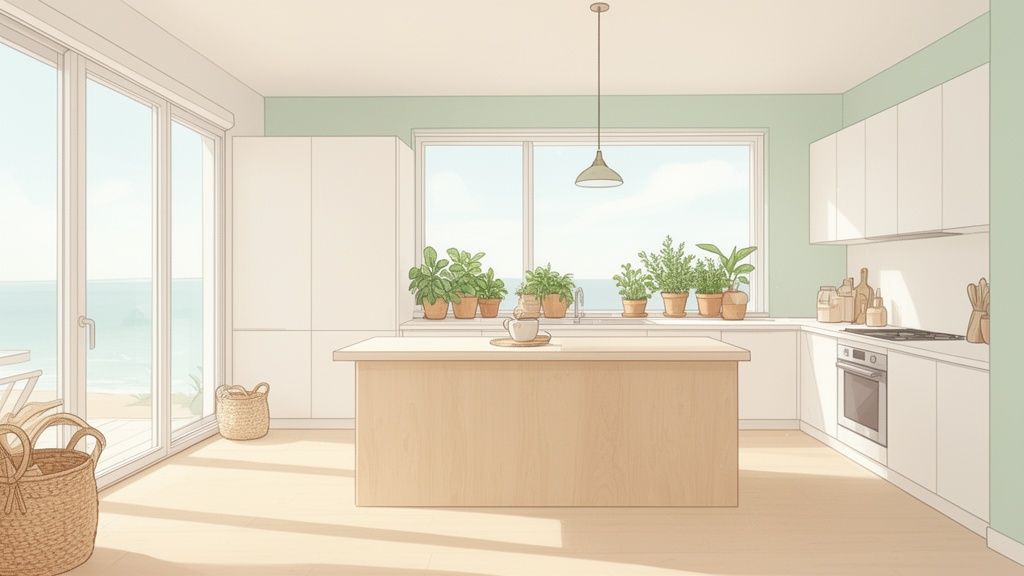
When you hear "coastal," you might think of seashell jars and anchor motifs. Let's leave those behind. The modern coastal kitchen is far more subtle and sophisticated. It’s about creating an atmosphere of effortless calm and openness, turning the kitchen into the true heart of the home—a place where people naturally want to gather, relax, and just enjoy daily life. Think of it as capturing the feeling of the coast, not just copying it literally.
This design philosophy isn't about slapping on a theme. It's about getting to the core of what makes coastal living so appealing. The aim is to build a space that feels both timeless and fresh, which is good for your home’s look and your own well-being. By keeping things simple and functional, a modern coastal kitchen becomes a peaceful sanctuary from the busy world outside.
The Core Principles
At its heart, this style rests on a few key ideas that work together to create that cohesive, inviting atmosphere. Getting these principles right is the first step toward crafting your own serene culinary space. These aren't strict rules, but they'll help you nail the right vibe.
Embrace Natural Light: Large, often uncovered windows are a signature element. The whole design should be geared towards maximizing sunlight, making the kitchen feel bright and expansive all day long.
Use Organic Materials and Textures: Think light-toned woods like white oak, rattan or wicker for barstools and light fixtures, and natural stone countertops. These elements bring in warmth and a tactile quality that keeps the space from feeling too cold or sterile.
Create an Open and Airy Layout: The layout itself should feel effortless and encourage social interaction. A kitchen island often becomes the central hub, and a seamless connection to a dining area, living room, or outdoor space is a huge plus.
A true coastal kitchen feels like a deep breath of fresh sea air. It's less about the specific objects you put in it and more about the sense of peace and simplicity it inspires. The best designs are understated, letting natural textures and light do the heavy lifting.
This approach to seaside serenity transforms your home, creating a harmonious feel that can extend well beyond the kitchen. The principles of light, texture, and openness can turn any room into a tranquil escape, making sure every part of your home contributes to that relaxing, cohesive environment.
Choosing Your Palette and Materials
The real heart and soul of a coastal kitchen are found in its colors and materials. These are the choices that set the mood for the entire space. While that classic blue-and-white combo is a classic for a reason, the modern coastal look often leans into a more subtle and sophisticated palette, one that pulls from the entire seaside landscape.

Think beyond the obvious. Instead of just navy, imagine the soft, sun-bleached tones of driftwood, the gentle green of sea glass, or the warm, hazy glow of a sandy shore at sunset. It's these nuanced colors that create an atmosphere that feels both genuine and deeply calming.
Building a Sophisticated Coastal Color Scheme
The secret is to layer whites, off-whites, and natural tones to create a sense of depth and history. Start with a foundational white, but be careful to pick one that isn’t cold or sterile. Paint brands like Sherwin-Williams have brilliant options like Alabaster (a warm, soft white) or Sea Salt (a chameleon shade of green-gray-blue) that perfectly capture the feeling of a misty morning on the coast.
From that base, you can start weaving in complementary colors:
Sandy Beiges and Taupes: These shades ground the space and bring in a natural warmth, which is key to keeping an all-white kitchen from feeling clinical. They echo the look of sand and stone, reinforcing that connection to the outdoors.
Soft Seafoam Greens: Just a hint of pale green can add a touch of color without disrupting the serene vibe. It’s a wonderfully refreshing choice for a backsplash, an island base, or even your lower cabinets.
Muted Blues: Instead of a sharp, bold navy, try a dusty, gray-toned blue. It’s a much more understated nod to the sea and looks incredible paired with natural wood tones and brass hardware.
A quick pro-tip: always test your paint swatches in the actual room. The way natural light hits a color throughout the day can completely transform its look. For a deeper dive, take a look at our guide on the latest kitchen cabinet color trends you'll see everywhere in 2025.
Selecting Durable and Beautiful Materials
In a home that’s actually near the coast, your materials have a tough job. The combination of humidity, salty air, and intense sunlight means durability is non-negotiable. But here’s the good news: you don't have to sacrifice style for strength. The right materials will look gorgeous for years while standing up to the elements.
This focus on blending a beach-inspired feel with serious durability is a major trend right now. Open layouts often feature multi-functional islands topped with quartz countertops that easily resist scratches and stains. We're also seeing a lot more waterproof porcelain tile floors and even marine-grade cabinet boxes with UV-stable finishes to fight off sun damage and corrosion. It makes sense, considering that 72% of homeowners now say large windows are a priority to connect their homes with the outdoors. You can see more about emerging coastal kitchen trends on lizcarpentry.com.
So, what should you be looking for? Here's a quick look at some of the best materials to consider.
Key Materials for a Durable Coastal Kitchen
Choosing materials that can withstand a true coastal environment is crucial. This table breaks down some of the most reliable and stylish options that I recommend to clients.
Material | Best For | Key Benefits | Maintenance Level |
|---|---|---|---|
Quartz | Countertops | Non-porous, scratch-resistant, and low-maintenance | Low |
Porcelain Tile | Flooring, Backsplash | Waterproof, durable, and easy to clean | Low |
Marine-Grade Plywood | Cabinetry (Boxes) | Resists moisture, humidity, and warping | Low |
Natural Wood | Open Shelves, Accents | Adds warmth and organic texture | Medium |
Ultimately, picking the right materials is about balancing beauty with practicality to ensure your kitchen is a true sanctuary.
Your material selections should feel like they were gathered from the coastline itself. Think smooth, water-worn stones, weathered woods, and the subtle texture of sand. This tactile connection is what makes a coastal kitchen truly special.
When you're planning your cabinetry, using marine-grade plywood for the cabinet boxes is a brilliant long-term investment, especially in humid climates, since it's engineered to resist moisture. For the cabinet fronts, you can go with light-toned woods like white oak or a painted finish in your chosen coastal palette.
For countertops, quartz is a lifesaver. It gives you the elegant look of natural marble without the constant worry of it etching from acidic things like lemon juice or a splash of wine. That peace of mind is priceless in a space meant for relaxing and entertaining.
Optimizing Your Layout for Light and Flow
Beyond colors and materials, the actual footprint of your kitchen is what makes it feel genuinely coastal. The whole point is to create a room that feels open, airy, and connected to everything else—both inside your home and out to the view. This is where you really engineer that breezy, sun-drenched vibe.
A great coastal kitchen is all about maximizing natural light and creating an intuitive flow. You want a layout that just makes sense, one that encourages people to move around easily and gather naturally. It’s less about just placing appliances and more about crafting an experience.
Popular Layouts for Coastal Kitchens
While every home is different, some layouts just lend themselves better to that open, coastal feel. L-shaped and U-shaped kitchens have been classics for ages, and for good reason. They do a great job of defining the main cooking area without boxing it in, which leaves plenty of space for a central island and clear walkways.
This isn't just a hunch; the numbers back it up. A recent This Old House survey of 2,000 homeowners found that of those changing their kitchen’s footprint, 37% are choosing L-shaped layouts. U-shaped designs weren't far behind at 33%. It’s clear that people are moving away from closed-off kitchens. You can see more from the full remodeling trends report on thisoldhouse.com.
L-Shaped Layout: This is a super versatile design that uses two adjacent walls, which naturally opens up the rest of the room. It’s perfect for adding a big island or a dining nook, making the whole space feel more social.
U-Shaped Layout: While it offers a ton of counter and storage space, a U-shaped kitchen can still feel incredibly open. The trick is to use a peninsula or island for one of the "legs" instead of a solid wall. You get all the efficiency of a work triangle without sacrificing that connected feeling.
The Kitchen Island as the Social Hub
In a coastal kitchen, the island is so much more than a prep station—it's the heart of the home. It’s the spot where friends lean with a glass of wine, where the kids spread out their homework, and where you serve up casual weeknight dinners. Its role has become so central that homeowners are now thinking bigger. Much bigger.
That same survey revealed that 51% of homeowners planning a kitchen remodel are opting for oversized islands of 10 feet or more. A larger island gives you enough real estate to comfortably include seating, a prep sink, and maybe even a wine fridge, all without feeling cluttered.
Think of your island as a destination, not a barrier. Its placement should guide traffic gracefully around the primary work zones, inviting people into the space without getting in the way of the cook.
If you have the luxury of a larger kitchen, a double island layout can be a total game-changer. One island can be a dedicated workhorse for chopping and cooking, while the second acts as the social hub for seating, serving, and entertaining. This creates distinct zones that let multiple things happen at once without anyone tripping over each other.
Connecting Indoor and Outdoor Living
One of the defining characteristics of coastal design is the way it blurs the line between inside and out. Your most powerful tools for achieving this are your windows and doors.
Think about swapping a standard window over the sink for a large pass-through window that opens onto a deck or patio. It’s a relatively simple change that creates an instant indoor-outdoor bar—perfect for summer parties. Large sliding glass doors or a set of French doors can also create a massive, inviting opening that floods the kitchen with sunlight and fresh air.
To polish off the look, you might want to explore some top window treatments for coastal homes that give you privacy and style without blocking that precious view.
These core principles of light and flow aren't unique to just one style. For instance, our guide on creating a bright and inviting Scandinavian kitchen also dives deep into the importance of an open, airy feel. By prioritizing a smart layout and a strong connection to the outdoors, you’re laying the foundation for a coastal kitchen that’s not just beautiful, but truly functional.
Illuminating Your Space with Coastal Lighting
Great lighting is what takes a coastal kitchen from just "nice" to truly breathtaking. It’s the secret ingredient for capturing that bright, sun-drenched feeling you get at the shoreline. The best way to achieve this is with a layered lighting plan, which is just a fancy way of saying you use different types of light to create a space that’s both functional and full of atmosphere.
You can't just stick one big light in the middle of the ceiling and call it a day. A well-designed kitchen combines three distinct layers of light that work in harmony. This approach gets rid of shadows and ensures the whole room feels warm and inviting, whether you're making morning coffee or grabbing a late-night snack.
The Three Layers of Coastal Lighting
Think of your lighting plan as building from the ground up, with each light having a specific job. By mixing ambient, task, and accent lighting, you'll get a kitchen that looks and works beautifully.
Ambient Lighting: This is your room's main source of light—the foundation. For a coastal kitchen, you want this to be subtle. Think recessed cans or simple flush mounts that blend right into the ceiling, keeping the focus on that open, airy vibe.
Task Lighting: This is your workhorse lighting, aimed at specific spots where you'll be chopping, prepping, or reading recipes. Pendant lights hanging over the island are a classic for a reason—they work perfectly. And honestly, under-cabinet lighting is a must-have for properly lighting up your countertops.
Accent Lighting: This is the fun part—the "jewelry" for your kitchen. Accent lights draw attention to the details you love, like a gorgeous tile backsplash or some carefully styled open shelves. Small spotlights or a pair of elegant wall sconces are perfect for this job.
A layered lighting plan does more than just brighten a room; it sculpts the space. It gives you the flexibility to transition from bright, focused light for cooking to a soft, ambient glow for relaxing with family and friends.
Choosing Fixtures with Coastal Character
The light fixtures themselves are a huge opportunity to bring in texture and drive home that coastal theme. This is where you can add some real personality. I always tell my clients to look for materials that feel organic and natural.
Woven rattan or wicker pendants are practically synonymous with coastal style; they cast a warm, patterned light that adds so much character. Fixtures made from weathered wood or with a whitewashed finish bring in that rustic, beach-house charm. If you're leaning more modern, simple glass pendants or fixtures with brushed brass finishes can add a touch of clean, contemporary elegance without feeling out of place.
Ultimately, your fixtures should enhance the feeling of openness, not fight it. The goal is to support all that wonderful natural light, which is central to any coastal design. Speaking of natural light, managing it is just as important as choosing your bulbs. New tech is making this even easier—you can even learn about innovations like AI-enhanced window tinting that responds to weather forecasts to see what's on the horizon. By carefully balancing natural and artificial light, your kitchen will feel like a bright, welcoming hub all day and all night.
4. Styling Your Kitchen with Authentic Coastal Details
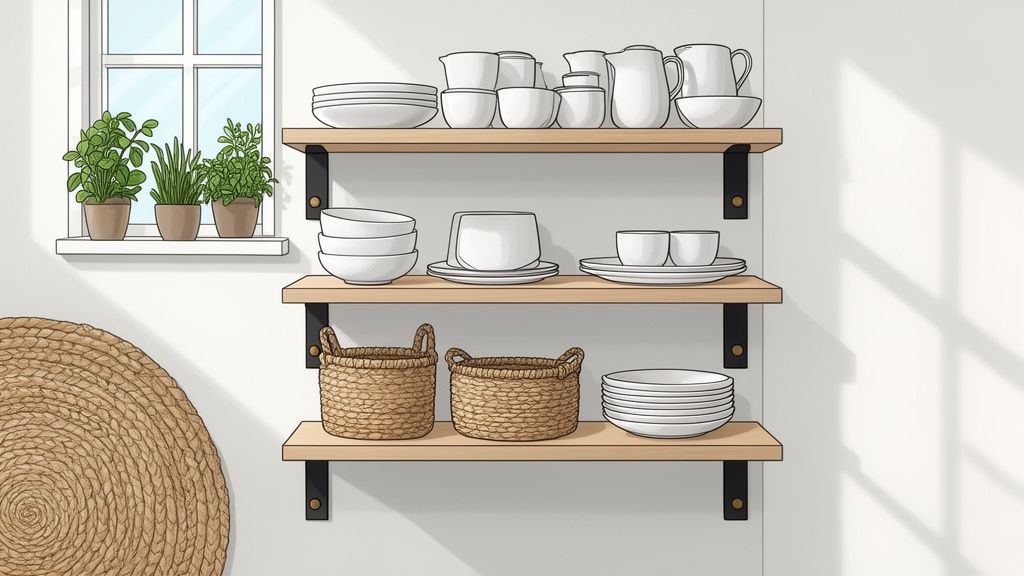
Now for the fun part. With the big pieces in place, it's time to layer in the details that give your coastal kitchen its personality. Styling is what makes a space feel authentic and lived-in—it’s your chance to add warmth, texture, and character that feels genuinely you.
The aim here is to avoid the obvious clichés. Instead of anchors and seashells everywhere, think about a more sophisticated approach. We're going for details that feel collected over time, like they belong in a well-loved seaside home.
Curating Open Shelving with Intention
Open shelves are practically a signature of coastal design, but they can go from chic to cluttered in a heartbeat if you're not careful. The trick is to find that sweet spot between everyday function and curated display. Resist the urge to cram every dish you own onto them. Instead, pick a cohesive set of simple dinnerware in a clean white or a soft, sandy neutral.
Stack those pieces neatly to create a calm, uniform backdrop. Then, you can start weaving in natural textures. I love using woven baskets to hide less sightly essentials (think coffee pods or snack bars), as they add a lovely organic feel. A few carefully chosen objects, like a unique piece of driftwood or a simple ceramic vase, can finish the look without making it feel busy.
Expert Tip: The secret to beautifully styled open shelving is restraint. Group items in odd numbers, like threes or fives, and play with their height and texture. Most importantly, leave some negative space. That "breathing room" is what keeps it all feeling airy and intentional, not chaotic.
Choosing Hardware That Elevates the Design
You might think cabinet hardware is a minor detail, but it’s the jewelry of your kitchen. The right pulls and knobs can have a huge impact, adding a touch of modern sophistication to the whole coastal vibe. While polished nickel is a timeless choice, don't be afraid to explore more contemporary finishes.
Brushed Brass: This is my go-to for adding a warm, sun-kissed glow that plays beautifully with coastal colors. It feels a bit luxe but still relaxed, and it’s a perfect match for light wood tones and soft whites.
Matte Black: If you want a slightly bolder, more modern take, matte black hardware creates a fantastic contrast. It helps ground the lighter elements in the room and looks especially stunning against both pale and dark cabinetry.
This is also a great opportunity to subtly mix metals. You could use brass pulls on your cabinets and a polished nickel faucet, for example. It creates a layered, collected-over-time look that feels much more personal than a perfectly matched set.
Grounding the Space with Natural Fibers
Kitchens are full of hard surfaces—stone countertops, tile backsplashes, stainless steel appliances. Bringing in soft, natural textures is crucial to make the space feel comfortable and inviting.
A simple jute or sisal runner is one of the easiest ways to do this. It not only feels great underfoot but also introduces an earthy, rustic element that reinforces that connection to the outdoors. Plus, these materials are surprisingly durable and do a fantastic job of hiding crumbs between sweepings.
Here's a quick guide to help you style your coastal kitchen with sophistication.
| Coastal Kitchen Styling Dos and Don'ts || :--- | :--- || Do | Don't || Layer natural textures like jute, linen, and rattan. | Overdo it with cliché nautical themes (anchors, fishnets). || Choose hardware with a warm or contrasting finish. | Settle for builder-grade, generic hardware. || Curate open shelves with a "less is more" mindset. | Clutter shelves with mismatched, everyday items. || Incorporate live plants and fresh greenery. | Forget to add elements of life and softness. || Use art that evokes a coastal feeling, not a literal scene. | Rely on signs with beachy phrases. |
Getting these final touches right is what separates a good design from a truly special one.
Beyond the floor, look for other places to add natural fibers. Linen Roman shades or simple cotton curtains can gently filter the light and add another layer of softness. And don't forget the power of greenery! A small herb garden on the windowsill or a potted plant on the counter literally brings life into the room, strengthening that all-important indoor-outdoor connection.
Bring Your Coastal Kitchen Vision to Life with AI
Let’s be honest, turning a mood board full of beautiful ideas into a concrete plan is where most kitchen remodels get stuck. It’s tough to bridge that gap between what’s in your head and what will actually work in your space. This is where a little bit of modern magic comes in handy. Forget trying to guess how a paint color will look—now you can see a stunningly realistic preview before you even pick up a brush.
Using an AI tool like Decor8 AI, you can take a quick photo of your current kitchen and start dreaming. Instantly apply a complete coastal style, test out a dozen different paint colors on your cabinets, or even see how major structural changes would look with just a few simple words.
From Messy Photos to Magazine-Worthy Mockups
The whole process is incredibly simple. You just snap a picture of your kitchen as it is right now—yes, even with the clutter on the counter. From there, the tool becomes your personal design assistant, letting you play with an endless stream of possibilities for your coastal kitchen.
Let's say you're stuck between two shades of a breezy seafoam green for your cabinets. Instead of painting sample boards and squinting, you can apply both colors virtually and see them side-by-side in seconds. This kind of rapid-fire testing helps you make decisions you feel great about, and a whole lot faster. If you want to see exactly how this works, you can learn more about how to visualize kitchen cabinet colors right here.
Here’s a look at the Decor8 AI interface. It’s as easy as uploading a photo and choosing a style to get started.
This simple starting point is all you need to generate dozens of high-quality designs for your project.
Experiment with Big, Bold Changes
The real fun begins when you want to visualize bigger transformations. Ever wonder what your kitchen would look like if you knocked down that non-load-bearing wall to open up the space? Or maybe you’re dreaming of adding a second island to create better flow and more seating for guests.
Instead of waiting for an architect to draw up pricey initial sketches, you can just type what you’re thinking. Try a prompt like, "add a second 7-foot island with a white quartz countertop and three rattan barstools." The AI will instantly generate an image showing you exactly how that would look in your kitchen, complete with realistic lighting and shadows. To see just how far you can push your design ideas, you can explore powerful AI Interior Design Tools.
This isn't just about personal planning—it's a game-changer for real estate. It lets you create compelling visuals that show a property's true potential, helping buyers envision their dream home instead of just seeing a renovation project.
This approach has a massive impact in competitive markets. In today's hot coastal real estate scene, homes with updated coastal kitchens sell a stunning 35% faster and often fetch 15-20% more. We've seen projects where adding a double island design increased a home's value by 22%, delivering a massive 135% ROI. With 82% of luxury buyers citing the kitchen as a top priority, having listing-ready JPEGs to show off these potential transformations can make your property stand out.
Ultimately, these tools give you the creative confidence to explore every possibility for your coastal kitchen. By generating photorealistic images, you can finalize your plans, communicate your vision perfectly to contractors, and make sure the final result is the light, airy, and serene space you've been dreaming of.
Frequently Asked Questions
Even with a perfect plan, a few questions always pop up along the way. Here are some quick answers to the most common challenges I see when people are designing a coastal kitchen, so you can keep your project moving smoothly.
How Can I Apply Coastal Style to a Small Kitchen?
Bringing that breezy coastal vibe into a small kitchen is entirely possible. The trick is to focus on creating the illusion of space and light.
Think vertically. Instead of wide cabinets, use taller, more slender ones and open shelving. This draws the eye upward and makes the ceiling feel higher than it is.
Embrace reflective surfaces. A glossy backsplash, polished chrome or nickel hardware, and even a mirror can work wonders. They’ll bounce light all around the room, making it feel much bigger and brighter.
Choose a smaller scale. You don't have to sacrifice function. Look for apartment-sized appliances and consider a mobile kitchen cart instead of a fixed island to keep the layout flexible and open.
The heart of coastal design is an airy, uncluttered feeling. In a small kitchen, that means every single item on your countertop needs to justify its existence. Be ruthless about clutter to maintain that calm, open atmosphere.
Best Low-Maintenance Materials for Families
Let's be real—for a busy family, durability is non-negotiable. You need surfaces that can stand up to daily life without needing constant attention.
Quartz countertops are a lifesaver. They are non-porous, which means spills from things like juice or wine won't stain them. For flooring, porcelain tile is practically indestructible and waterproof, making cleanups simple.
When it comes to the backsplash, think about minimizing grout lines. Grout is always the hardest part to keep clean, so choosing a large-format tile or a solid slab can save you a lot of scrubbing.
You can actually test out these material ideas in seconds. This simple AI design workflow shows how easy it is to visualize different options.
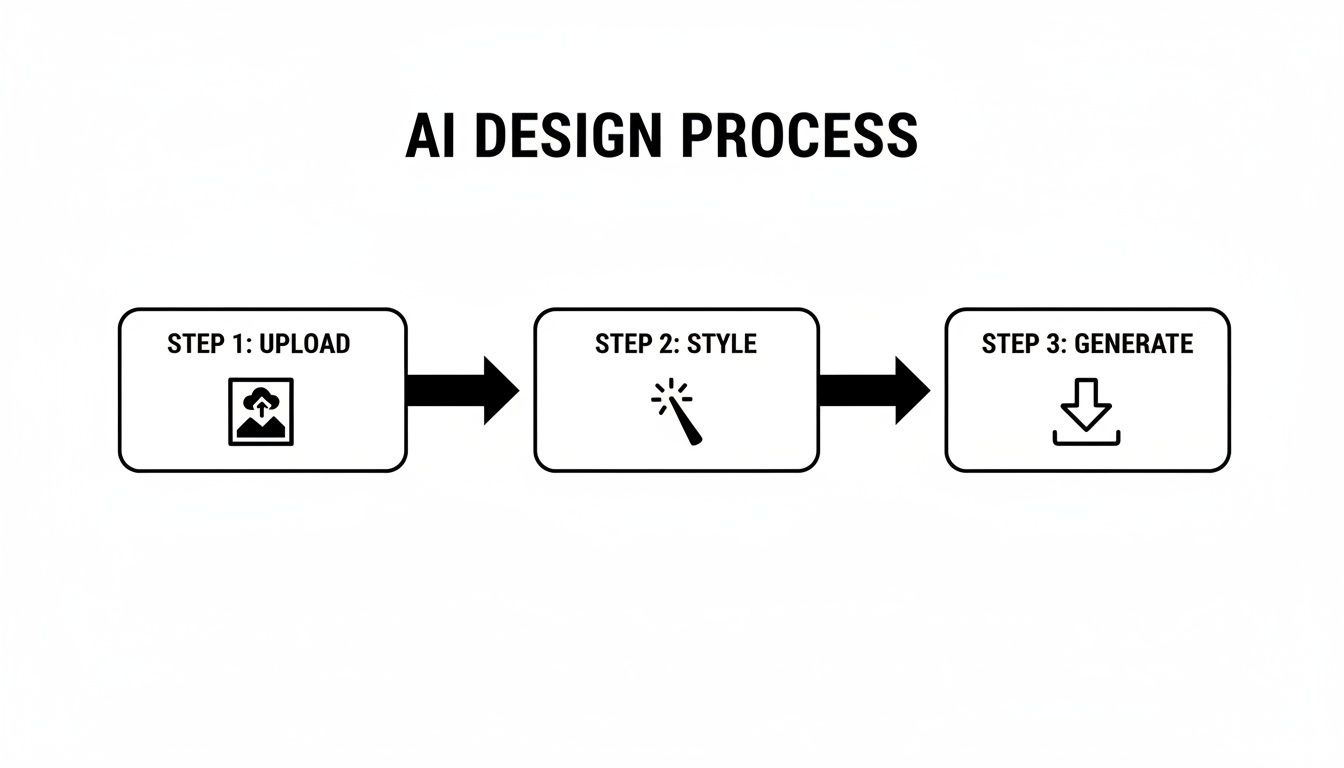
The process is straightforward: just upload a photo of your space, pick a style, and generate a new look. It's a fantastic way to see if something truly works before you commit.
Ready to stop guessing and start seeing? With Decor8 AI, you can bring your coastal kitchen ideas to life in stunning detail without making any permanent decisions. Design with confidence and build the serene kitchen you've always wanted. Start designing for free today at Decor8.ai.
Comments