
Arts and Crafts Interior Design A Guide to Timeless Style
- oliverjames0609
- 3 hours ago
- 15 min read
Arts and Crafts interior design is all about celebrating simplicity, natural materials, and the beauty of handmade craftsmanship. It pushes back against the cold, mass-produced feel, valuing honest construction and objects with a real sense of purpose and soul. Think of it as creating a warm, functional sanctuary that truly honors the human touch.
Uncovering the Soul of Arts and Crafts Design
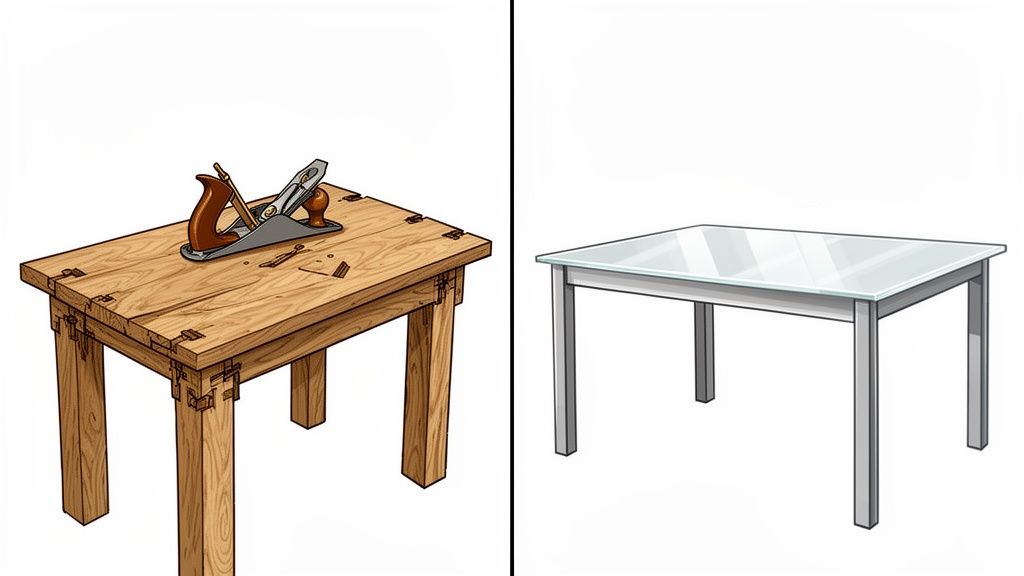
Picture two different tables. The first is a gleaming, factory-made piece, perfect and identical to a thousand others. The second is a solid oak table, built by hand. You can still see the faint, honest marks left by the craftsman's tools and the strong, beautiful joinery holding it all together. That second table? That’s the very heart of Arts and Crafts design.
This design philosophy was never just about looks; it was a genuine movement. It grew from a deep desire to find authenticity again in a world that was quickly filling up with machine-made, impersonal goods.
A Philosophy of Honesty and Purpose
At its core, this style believes that the things we surround ourselves with should be both beautiful and useful. It says no to fussy, unnecessary decoration. Instead, it finds beauty in the structure of an object itself. The mortise-and-tenon joints on a chair leg aren't hidden away—they become a key part of the design.
Peaking between 1880 and 1910, the Arts and Crafts movement completely reshaped what a home could be. Pioneers like William Morris in Britain and Gustav Stickley in the U.S. championed this new way of thinking, pushing back against soulless factory production. In fact, Stickley's Craftsman magazine was so popular it reached a circulation of 225,000 copies by 1916. You can explore more about these historical shifts here: https://www.decor8.ai/post/stepping-back-in-time-embracing-the-charm-of-vintage-interior-design.
You could say this was the original minimalist movement. Every object had a purpose and told the story of how it was made. It's about building a home that values integrity over industrial perfection.
The Enduring Appeal of Craftsmanship
So, why does this style still feel so relevant today? It all comes down to its deep connection to nature and humanity. In our fast-paced world, an Arts and Crafts interior offers a rare sense of calm and grounding. It’s a return to quality, durability, and a more intentional way of living.
The values driving this style are simple but powerful:
Honest Materials: A heavy focus on natural, local woods like oak, alongside stone, copper, and leather.
Visible Craftsmanship: Exposed joints and hand-hammered metal finishes aren't just accepted; they're celebrated.
Nature-Inspired Motifs: Patterns in textiles and stained glass often feature stylized leaves, flowers, and animals.
Functionality First: Every piece of furniture, every architectural detail, serves a clear and practical purpose.
This isn't just about aesthetics. When you dig into the principles of Arts and Crafts, you find a commitment to quality and sustainability that feels very modern, echoing many eco-friendly interior design principles. Choosing this style means you’re creating more than just a beautiful room—you're cultivating an environment that feels authentic, warm, and deeply personal.
The Hallmarks of Arts and Crafts Style
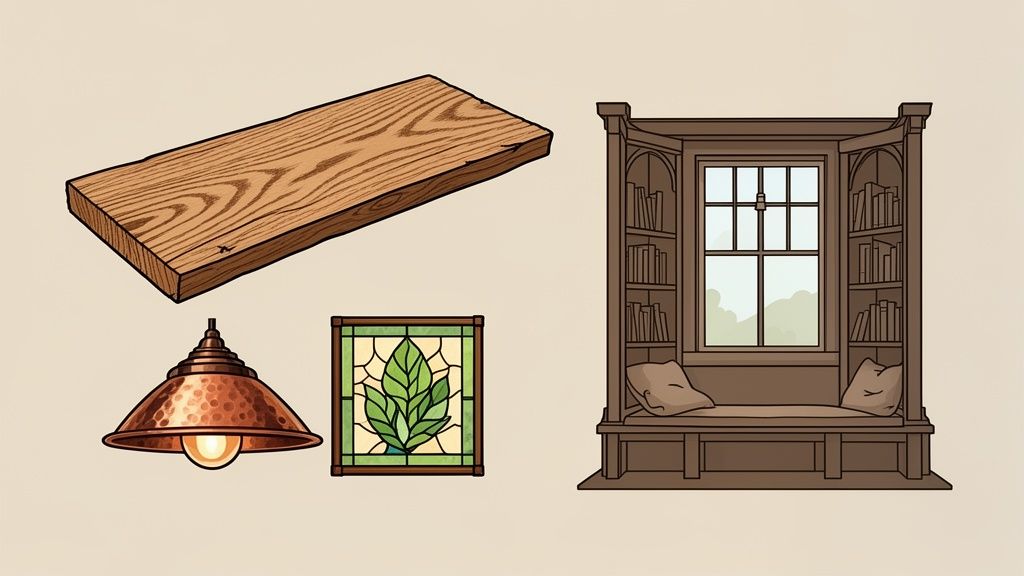
To really get Arts and Crafts interior design, you have to look past a simple checklist. It’s a complete philosophy. Every single element, from the biggest beam in the ceiling to the smallest hinge on a cabinet, is meant to work in harmony. The goal is a home that feels warm, honest, and deeply connected to nature.
This style doesn’t find beauty in fussy ornamentation that’s just stuck on. Instead, beauty comes directly from the structure and the materials themselves.
Think of it like a beautiful, handmade leather bag. Its quality isn’t about some shiny, glued-on logo. It’s in the rich texture of the leather, the strength of the stitching you can actually see, and the solid feel of the buckle. Arts and Crafts design applies that exact same logic to an entire room.
Celebrating Honest Materials
The entire foundation of an Arts and Crafts space rests on its commitment to natural, high-quality materials. Wood is the undisputed star of the show, but not just any wood. The movement championed sturdy, local varieties that were celebrated for their natural grain and character.
Quarter-Sawn Oak: This was the go-to choice, prized for its strength and stunning "ray flake" grain pattern. This unique cut adds a subtle, shimmering texture to furniture, flooring, and trim.
Other Native Woods: You'll also see a lot of cherry, maple, and ash, all chosen for their durability and warm, inviting tones.
Hand-Hammered Metals: Copper, bronze, and wrought iron were the metals of choice for light fixtures, drawer pulls, and other accents. The maker's hammer marks were often left visible on purpose—a proud badge of hand-craftsmanship.
Earthy Ceramics: Handmade tiles with matte or low-sheen glazes are essential. You’ll find them surrounding fireplaces and in kitchen backsplashes, often in deep greens, blues, and rich ochres.
These materials weren't just picked for their looks; they were chosen for their integrity. The idea was to build homes that would last for generations, filled with objects that would only get better with age.
Decoration Through Construction
One of the most unique things about this style is how it turns structural elements into decorative features. Instead of hiding how something is made, Arts and Crafts design puts the craftsmanship right out in the open for everyone to see. It’s all about authenticity.
Exposed joinery is the perfect example. Rather than hiding how a table leg is attached, the design proudly features visible mortise-and-tenon joints. These incredibly strong connections also create a simple, beautiful geometric detail. This focus on artisanal craftsmanship continues to be a major draw in today's housing market. The residential segment, holding the largest market share at 42%, sees Arts and Crafts-inspired designs in 22% of new urban remodels, often giving a real boost to property values.
Architectural Features as Focal Points
Arts and Crafts homes were designed to be lived in, with an architecture that creates a feeling of comfort and togetherness. The spaces often include built-in elements that are as functional as they are beautiful, making the furniture feel like a natural part of the house itself.
The fireplace or hearth is almost always the heart of an Arts and Crafts home. It serves as the central gathering point, often flanked by built-in benches or bookcases, creating a cozy and inviting atmosphere.
Here’s a quick look at some defining architectural features you'll often see:
Built-In Cabinetry: Think bookshelves, sideboards, and benches built right into the walls. This creates a wonderfully unified look and makes great use of space.
Inglenooks: These are those cozy little nooks, usually built around a fireplace with seats on either side. They were designed to be intimate spots for a quiet chat.
Window Seats: Often tucked into a bay window or dormer, these provide the perfect spot to curl up with a book and connect with the outdoors.
Substantial Woodwork: You'll notice thick, unpainted wood trim around doors and windows, exposed ceiling beams, and paneled walls. Materials like beadboard were also common. If you love this classic touch, take a look at our guide on beadboard paneling for inspiration.
These features completely blur the line between architecture and furniture. They work together to create an environment that feels solid, permanent, and deeply welcoming. It’s a home where every detail has been crafted with intention.
To bring these concepts together, here's a table summarizing the key elements that define this timeless style.
Element | Description | Common Examples |
|---|---|---|
Materials | Focus on natural, high-quality, and locally sourced materials celebrated for their inherent texture and durability. | Quarter-sawn oak, cherry wood, hand-hammered copper and bronze, handmade ceramic tiles, slate, and stone. |
Construction | Structural elements are exposed and treated as decorative features, showcasing the skill of the craftsperson. | Exposed beams, visible mortise-and-tenon joints, handcrafted hardware, and sturdy, visible framing. |
Architectural Features | Built-in elements that integrate furniture with the home's structure, promoting coziness and functionality. | Inglenooks (fireplace nooks), built-in bookcases and sideboards, window seats, substantial wood trim, and paneled walls. |
Colors | A palette drawn from nature, featuring earthy, muted, and warm tones that create a restful atmosphere. | Deep greens, dusty blues, warm browns, rich ochre, and muted cream tones. |
Understanding these core components is the first step to appreciating just how thoughtful and cohesive the Arts and Crafts style truly is.
Choosing Your Arts and Crafts Color Palette
Color is the invisible thread that ties an entire Arts and Crafts room together. It sets the mood, highlights the beautiful natural materials, and creates that signature warm, grounded atmosphere. The right palette doesn’t just decorate a space; it brings the whole philosophy of the movement to life.
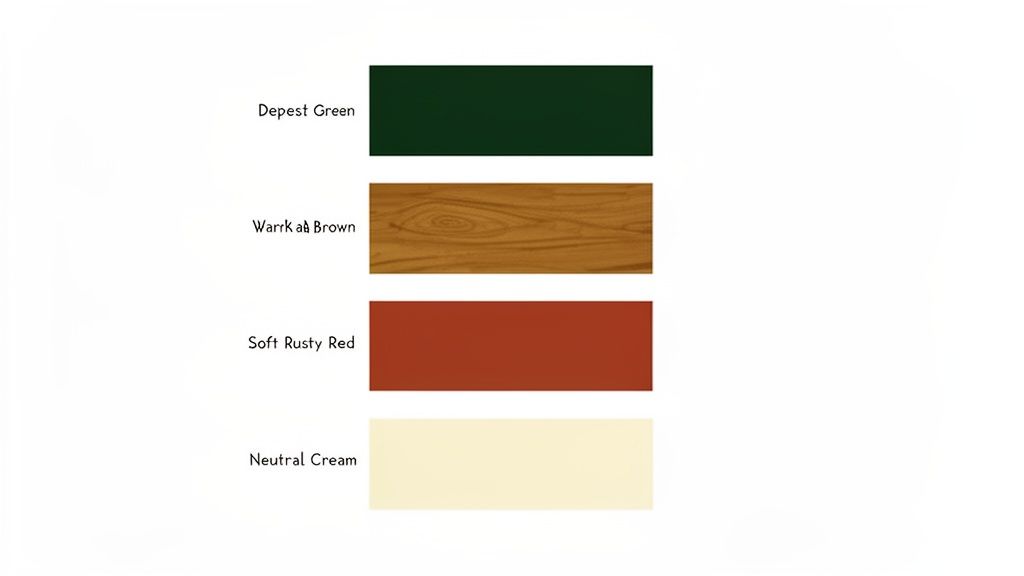
Forget bright, jarring colors. The Arts and Crafts palette is pulled directly from the natural world. Picture a walk through a forest in autumn: the deep greens of moss, the rich browns of tree bark, the muted golds of fallen leaves, and the soft, rusty reds of the earth. These are the hues that define the style.
It's all about creating harmony, not high contrast. The goal is a tranquil, restful environment where the colors complement the rich wood tones of the furniture and trim instead of competing with them.
Building Your Foundation with Earthy Tones
The most successful Arts and Crafts interiors use a layered approach to color. Instead of one bold statement, they build depth with a family of related, nature-inspired tones. These colors are typically muted or "muddy"—meaning they're softened with a touch of gray or brown, giving them a subtle complexity that feels incredibly sophisticated.
Start with your largest surfaces—the walls. A soft, earthy color provides the perfect backdrop, allowing the woodwork and handcrafted furniture to truly be the stars of the show.
Deep Greens: Think forest, moss, and olive. These colors bring the outdoors in and create a sense of calm and stability.
Warm Browns: From deep chocolate to lighter tans, these echo the wood tones throughout the room for a cohesive, enveloping feel.
Muted Golds and Reds: Ochre, mustard, and terracotta add warmth and richness without ever feeling loud or overwhelming.
Soft Creams: For a lighter take, choose creamy off-whites with warm undertones. This helps you avoid a stark, modern look that would feel out of place.
The key is to select colors that feel honest and organic. An Arts and Crafts palette should never feel synthetic or artificial; it should feel as if it was sourced directly from the landscape.
The enduring appeal of these colors is undeniable. For instance, Benjamin Moore sells 1.2 million gallons a year of Arts and Crafts-friendly colors like October Mist (1495), and Sherwin-Williams has seen a 35% increase in searches for earthy beiges. You can see more data like this in broader interior design market trends.
Balancing Color and Wood Finishes
One of the defining features of this style is its prominent, often dark, wood trim. This creates a beautiful, grounding framework for the room, but you have to balance it carefully with your wall colors. Pairing dark wood with an equally dark wall color can make a room feel heavy and small if you're not careful.
Think about the relationship between your walls and woodwork. A classic approach is to pair dark oak or cherry trim with a mid-tone wall color, like a soft olive green or a warm tan. This creates a harmonious contrast that feels both cozy and sophisticated. For more inspiration on how woodwork and wall colors can work together, see our guide on pairing brown walls with classic white trim.
Here’s a simple strategy for building your own balanced Arts and Crafts color scheme:
Select Your Dominant Wood Tone: This is your anchor. Look at its undertones—is it a reddish cherry, a deep walnut, or a golden oak?
Choose a Muted Wall Color: Pick a color that complements your wood's undertones. Greens and golds, for example, often work beautifully with oak.
Add Accent Colors: Finally, bring in richer or slightly brighter tones through your textiles, art, and ceramic tiles. A pop of burnt orange in a pillow or a deep blue in a rug can add wonderful depth and personality.
Furnishing and Lighting Your Space
In an Arts and Crafts home, furniture and lighting aren't just there to fill a room—they're the heart and soul of the space. Each piece tells a story of simplicity, strength, and honest-to-goodness utility. Think of it less like decorating and more like curating a collection of solid, handcrafted items that are built to last.
The whole philosophy boils down to a simple idea: form follows function. You won’t find any fussy carvings or delicate, over-the-top details here. Instead, the focus is on clean, straight lines and solid construction, allowing the natural beauty of the wood to really shine.
The Foundation of Craftsman Furniture
The style you'll see most often is Mission furniture, made famous by designers like Gustav Stickley. It's known for its strong, rectangular shapes and heavy proportions, giving it a grounded, permanent feel. This is furniture that’s meant to be used and loved for generations.
A few key details really define this iconic look:
Solid Wood Construction: Oak is the star of the show, especially quarter-sawn oak. You can't miss its straight grain and the beautiful shimmering patterns known as "ray flake" that add a subtle, organic texture.
Exposed Joinery: Keep an eye out for visible mortise-and-tenon joints, where one piece of wood fits snugly into another. This isn't just how it's built; it's the primary decoration, celebrating the skill behind the craft.
Simple Hardware: Drawer pulls and hinges are usually made from hand-hammered copper or dark iron. They’re straightforward and sturdy, never ornate.
When you're starting out, focus on the big, foundational pieces. A solid trestle dining table, a classic Morris chair with its adjustable back, or a heavy sideboard with that beautiful exposed joinery will instantly anchor the room and give it an authentic Arts and Crafts vibe.
Creating a Warm Glow with Authentic Lighting
Lighting in an Arts and Crafts interior is all about creating a warm, cozy atmosphere. The goal is a soft glow that brings out the rich tones in the wood and the earthy colors on the walls. Just like the furniture, the fixtures themselves are works of art, often featuring hand-worked metals and shades inspired by nature.
Think of your lighting as functional sculpture. A great lamp or chandelier can become a focal point, drawing you in with its simple form and warm light. The most common materials for shades are:
Mica: This natural mineral, pressed into thin sheets, gives off a warm, amber glow that’s both soft and wonderfully textured.
Stained Glass: You'll often see geometric patterns or stylized natural motifs like flowers and leaves. While Tiffany lamps are technically part of the related Art Nouveau movement, they share this love for handcrafted glass.
Slag Glass: This is an opaque, pressed glass with streaks of color that creates a soft, diffused light perfect for a cozy room.
The goal of Arts and Crafts lighting is to foster intimacy and comfort. The light should be gentle and atmospheric, encouraging people to gather and relax, often centered around the hearth.
Arranging Your Space for Comfort and Function
The layout in an Arts and Crafts room should feel completely natural and intuitive, designed for both social gatherings and quiet moments. Forget stiff, formal arrangements. The idea is to group furniture in a way that feels comfortable and makes sense for how you live.
A fireplace often acts as the heart of the room, with seating arranged around it to invite conversation. You'll also see lots of built-in elements, like window seats and bookcases, that blend right in with the freestanding furniture. And don't be afraid of a little empty space—the simple, bold nature of the furniture means you don’t need to clutter every corner.
When it comes to accessories, less is always more. Stick with items that honor the spirit of craftsmanship. Hand-thrown pottery, embroidered textiles, and simple copper vessels are all perfect choices. For example, if you're adding plants, look for simple, handcrafted containers; you can find great ideas for vases to elevate your home that fit this natural feel. Artwork should also feel like a natural fit for the space; our guide on how to choose and display artwork can help you find pieces that enhance your room without overwhelming it.
Bringing Your Vision to Life with AI
Knowing the principles of Arts and Crafts design is one thing. Actually picturing them in your own home? That's a whole different challenge. This is where timeless style gets a helping hand from modern technology, letting you bridge that gap between inspiration and reality without any of the risk.
Think of a tool like Decor8 AI as your personal design sandbox. It lets you experiment freely, so you can be sure every single choice feels right before you commit to paint, furniture, or construction.
It’s like test-driving your design ideas. Just upload a photo of your current room, and with a simple command, you can see it completely transformed into an Arts and Crafts space in seconds.
This whole process takes the guesswork out of design. Ever wondered if a deep, earthy green will make your living room feel too dark? Or if a heavy oak Morris chair might overpower the space? Now you can see it for yourself and make decisions based on a realistic preview, not a hopeful guess.
Fine-Tuning Your Design with Simple Prompts
Once you have that initial Arts and Crafts look, the real fun begins. This is your chance to dial in the details using simple, conversational prompts. The AI acts like your personal design assistant, ready to bring any idea to life in an instant.
You can get incredibly specific to perfect the look.
For instance, you could try prompts like:
"Add a dark oak Morris chair with green leather cushions next to the fireplace."
"Show the walls painted in Sherwin-Williams' 'Roycroft Bronze Green'."
"Change the window trim to a rich, quarter-sawn oak finish."
"Place a hammered copper lamp with a mica shade on the side table."
This back-and-forth process lets you see exactly how each element—every color, every piece of furniture—shapes the overall mood of the room. It’s a fantastic way to discover what truly works for your home and your own personal style. To learn more about this approach, check out our complete guide to AI-powered home design.
The real magic is the ability to experiment without consequences. You can try out dozens of furniture layouts, color schemes, and lighting options until you land on that perfect, harmonious design that truly feels like home.
From a Quick Sketch to a Photo-Real Room
AI tools aren’t just for tweaking existing spaces. They can also bring brand-new ideas to life from scratch. If you've ever scribbled an idea for a built-in bookcase or a cozy fireplace inglenook on a napkin, you can turn that simple drawing into a photorealistic image that looks like a finished photograph.
This is especially helpful for visualizing the custom architectural features so central to the Arts and Crafts style. You can see precisely how a new built-in will fit with your room's layout and scale before you even think about calling a carpenter. That visual confirmation is gold when you're planning bigger projects.
For professionals, these tools are a complete game-changer. They can turn construction sketches into 3D Craftsman visions, swap a boring sky in an exterior shot for a warm twilight glow, or add seasonal decor to an image. In fact, some real estate agents have reported selling homes up to 50% faster using AI-staged images that capture that historic charm.
The chart below breaks down how you can layer the key elements together within your AI-generated design.
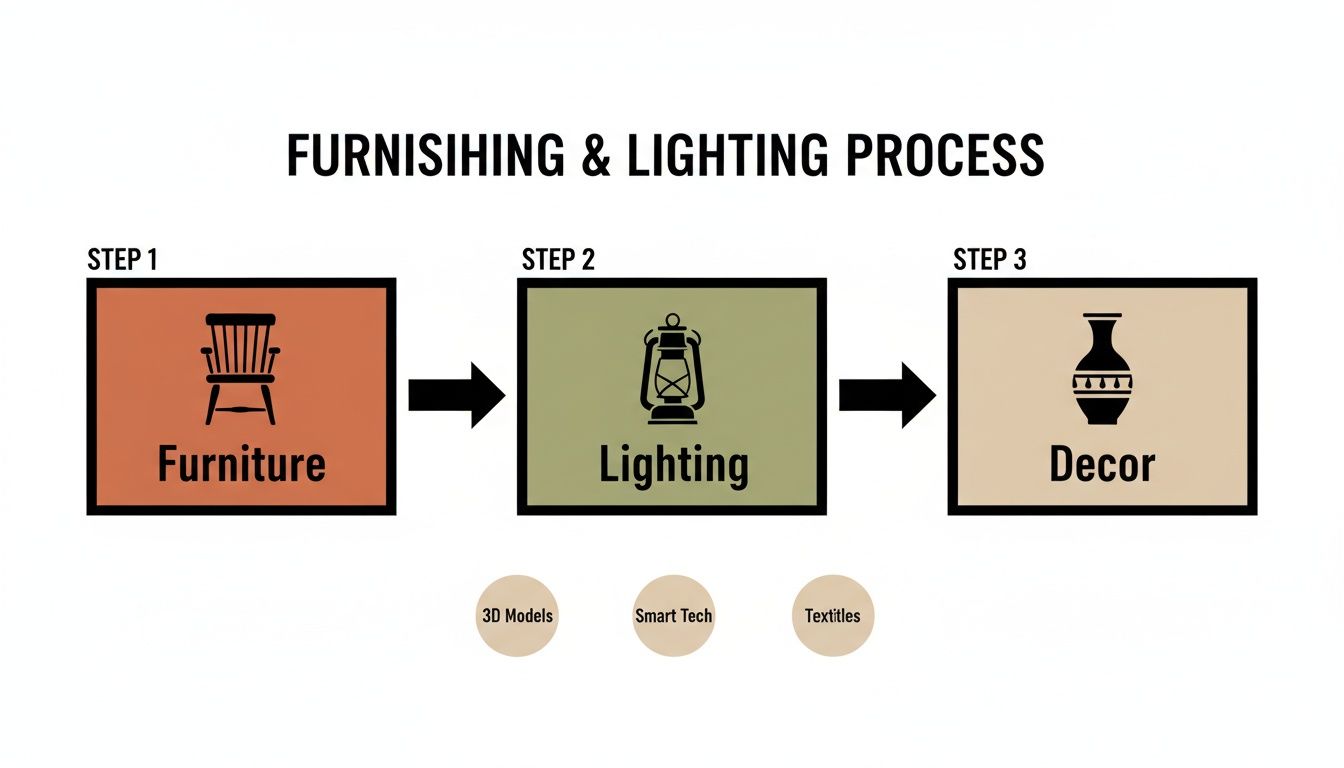
As you can see, by starting with the foundational furniture, then adding the right lighting, and finally layering in decor and textiles, you can build a cohesive and authentic Arts and Crafts space, one step at a time.
Arts and Crafts Design Prompts for Decor8 AI
To get you started, here are a few example prompts tailored for generating specific Arts and Crafts looks in Decor8 AI. Think of these as conversation starters for you and the AI.
Design Goal | Example AI Prompt |
|---|---|
Generate a Living Room | "Create a cozy Arts and Crafts living room with a stone fireplace, exposed oak beams, and William Morris wallpaper." |
Specify Furniture | "Add a Stickley-style Morris chair in quarter-sawn oak with dark green leather upholstery next to the window." |
Test a Color Palette | "Paint the walls in a warm, earthy terracotta color and make the trim a dark, rich wood stain." |
Add Architectural Details | "Incorporate a built-in bookcase and a window seat with storage into the main wall." |
Choose Lighting | "Place a Tiffany-style stained glass lamp on the end table and a hammered bronze chandelier in the center." |
Refine Textiles | "Show the sofa with hand-embroidered pillows featuring a stylized floral motif in greens, golds, and deep reds." |
Visualize a Kitchen | "Design an Arts and Crafts kitchen with soapstone countertops, simple Shaker-style cabinets in sage green, and copper hardware." |
Don't be afraid to get descriptive! The more detail you provide, the closer the AI will get to the vision you have in your head. Mix and match these ideas to create a space that’s uniquely yours.
Common Questions About Arts and Crafts Design
Thinking about bringing a classic style like Arts and Crafts into a modern home? It's a great idea, but it's natural to have a few questions. People often worry about everything from the cost to whether it will feel too dated. Let's walk through some of the most common concerns.
Is This an Expensive Style to Recreate?
This is probably the number one question I get. While it's true that an original Stickley Morris chair will cost a small fortune, the heart of the Arts and Crafts movement was never about big price tags—it was about honest craftsmanship.
You can absolutely get the look without breaking the bank. Look for high-quality reproductions or even simple, well-made wooden furniture from today's makers. The key is to focus on solid construction and natural materials, not a specific brand name.
Will It Make My Home Feel Dark and Heavy?
That’s another big concern. It’s easy to picture rooms with floor-to-ceiling dark oak, and that can feel a bit much for our modern, light-filled homes. But the style is surprisingly adaptable.
The trick is to create balance. You can absolutely have that beautiful dark wood trim, but pair it with lighter wall colors like a warm off-white, a soft sage green, or a buttery yellow. This contrast keeps the space feeling bright and welcoming, not gloomy.
Can It Mix with Other Styles?
Absolutely! You don't have to create a time capsule. The goal is to build a room that feels cohesive and personal, not like a museum exhibit.
The clean lines and natural materials of Arts and Crafts pieces play incredibly well with other styles. Think about pairing them with minimalist, rustic, or even some mid-century modern designs. Just look for a common thread, like a commitment to quality materials or a simple, unadorned form.
An Arts and Crafts sideboard can be the perfect anchor for a dining room, even if the chairs around the table have a more contemporary shape. It's all about thoughtful mixing and matching.
Is This a High-Maintenance Style?
Quite the opposite, actually. This style was born from a desire for things that were beautiful, functional, and built to withstand real life.
Solid wood furniture is incredibly durable and often gains more character with age. Because the focus is on function over fuss, you'll have fewer delicate items to tiptoe around. It's a genuinely practical choice for a busy, modern family.
The movement’s emphasis on quality wasn't just a philosophy; it had a massive impact. By 1900, over 4 million square feet of William Morris textiles had been produced, and his ideas went on to influence 40% of U.S. Prairie School homes by 1920. You can explore its continuing impact by checking out the latest interior design market forecasts. That legacy of quality is precisely what makes the style so livable today.
Ready to see how Arts and Crafts design could look in your own home? With Decor8 AI, you can instantly visualize new furniture, test paint colors, and perfect your layout without any guesswork. Start designing your dream room for free today!
Comments