Transitional Interior Design
Where classic meets contemporary in perfect balance
Transitional design bridges traditional and contemporary, taking the best of both worlds. Classic furniture shapes meet cleaner lines, rich materials pair with modern restraint, and timeless elegance blends with current sensibility. It's sophisticated design that doesn't commit to a single era.
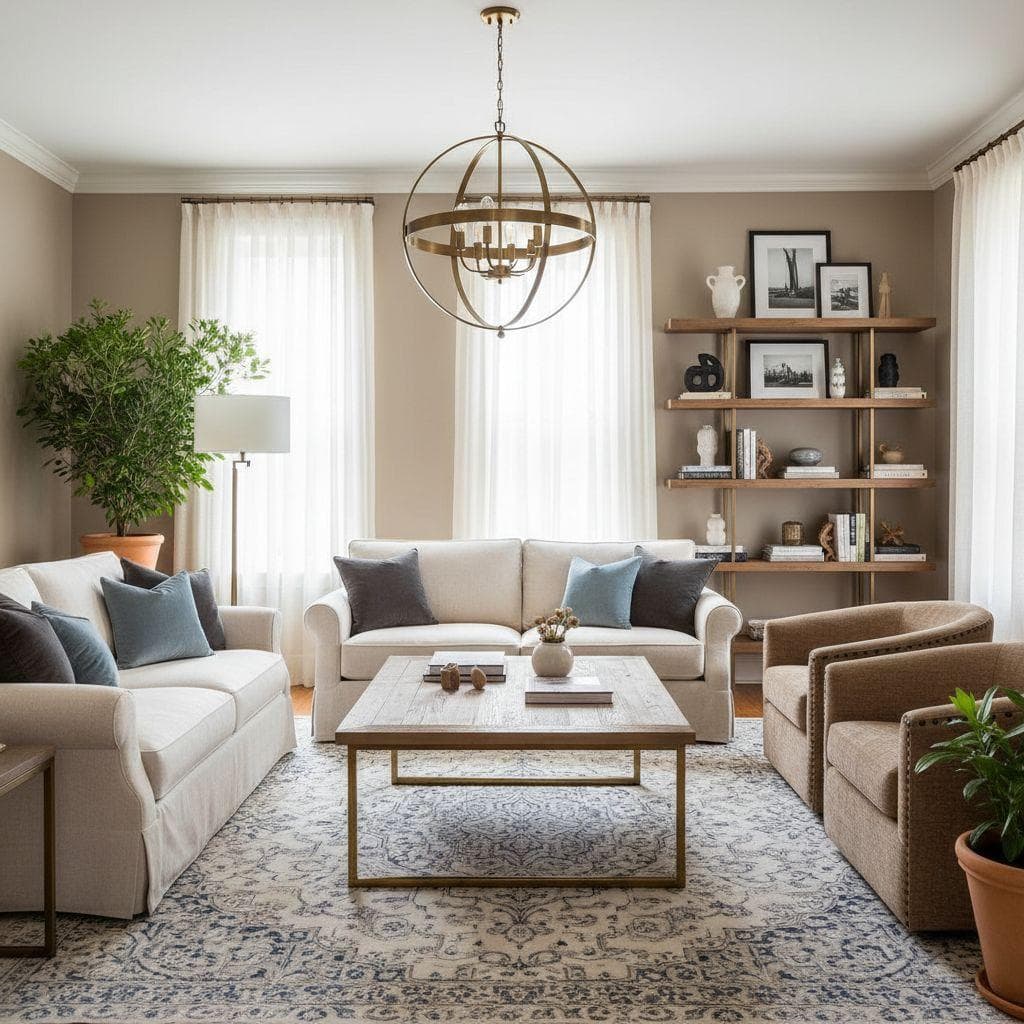
Key Characteristics
Transitional emerged in the late 20th century as homeowners and designers sought to honor traditional craftsmanship while embracing modern simplicity. It became the dominant style for those wanting timeless appeal without the formality of traditional or the starkness of modern.
- Blend of traditional and modern elements
- Neutral, sophisticated palette
- Clean-lined furniture with classic touches
- Quality materials and craftsmanship
- Edited accessories
- Comfortable elegance
- Textural interest
- Balanced symmetry
Color Palette
Accent Colors
Colors to Avoid
Materials & Textures
Key Materials
- Quality woods
- Natural stone
- Linen and cotton
- Leather
- Brushed metals
- Wool textiles
- Glass
Patterns
- Subtle geometrics
- Tonal stripes
- Soft textures
- Minimal pattern
Textures
- Smooth leather
- Soft linens
- Wood grain
- Subtle woven textiles
Furniture & Decor
Signature Furniture
- Track-arm sofa with nailhead trim
- Upholstered dining chairs
- Simple four-poster bed
- Clean-lined console
- Comfortable club chairs
- Elegant ottomans
Decor Elements
- Oversized mirrors
- Ceramic vases
- Fresh greenery
- Curated accessories
- Quality art
- Elegant lighting
Lighting Style
Elegant pendants, clean-lined chandeliers, classic table lamps, layered ambient lighting
Best Rooms for Transitional Style
Explore how Transitional style works in different rooms with tailored tips and AI prompts.
Space & Budget Guidance
Small Spaces
Transitional works beautifully in small spaces—its edited approach prevents overwhelm while quality pieces add character. The neutral palette expands perceived space while maintaining warmth.
Large Spaces
Large transitional spaces use furniture arrangement to create intimate areas. The style's restraint means large rooms feel calm rather than cold. Layer textures and include statement pieces at appropriate scale.
Budget-Friendly Tips
Focus on neutral foundations and quality basics. One well-made piece beats several mediocre ones. West Elm and Target's Threshold line offer transitional pieces at accessible prices.
Luxury Approach
Source custom upholstery, designer furniture, and quality antiques. Work with designers for a cohesive transitional vision. Invest in premium materials and craftsmanship throughout.
Related Styles
If you like Transitional, you might also enjoy these styles.
Frequently Asked Questions
Design Your Transitional Space
Transform any room into Transitional style in seconds with Decor8 AI.