Open Plan Living Design Ideas
Open plan living combines kitchen, dining, and living areas into one large, flowing space without walls. This popular layout encourages family togetherness, social entertaining, and a sense of spaciousness. The challenge lies in defining distinct zones while maintaining visual and functional harmony across the combined space.
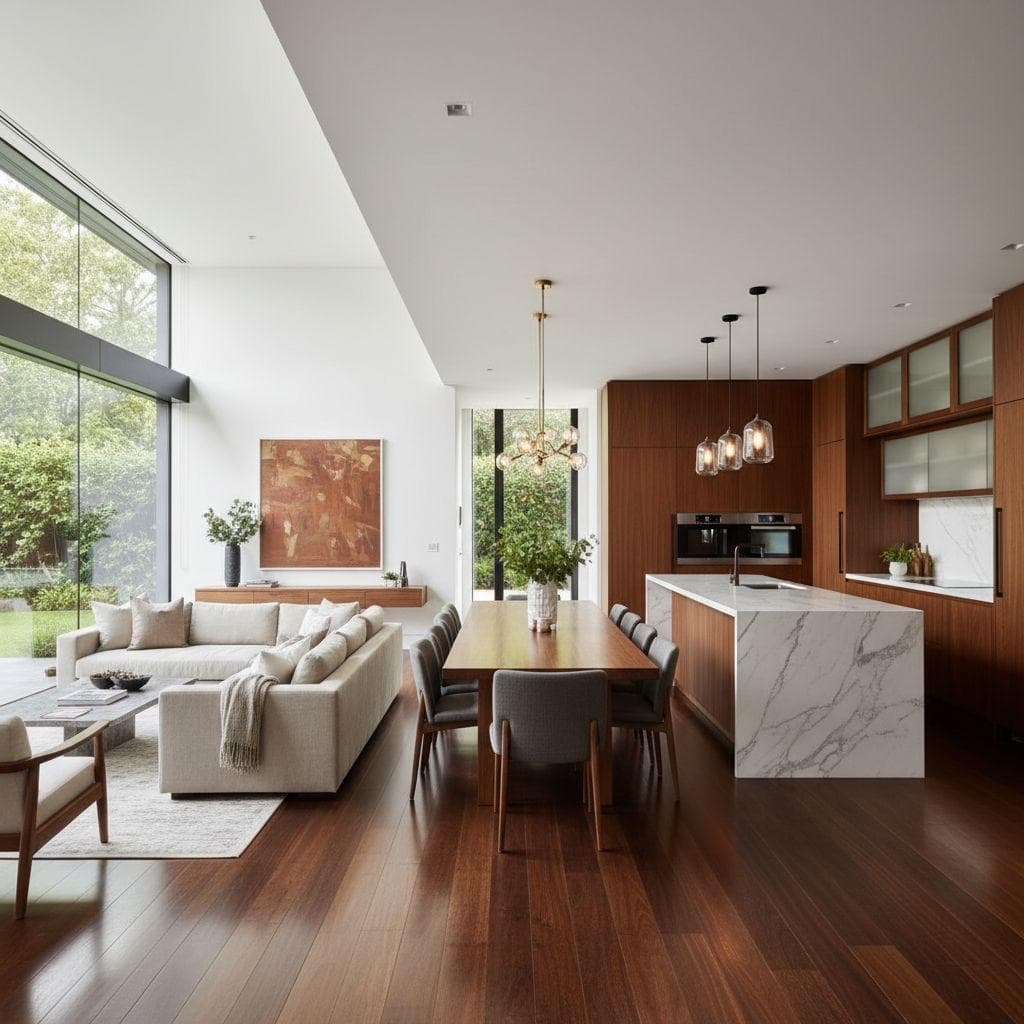
Open Plan Living in Different Styles
See how your open plan living can look in various design styles
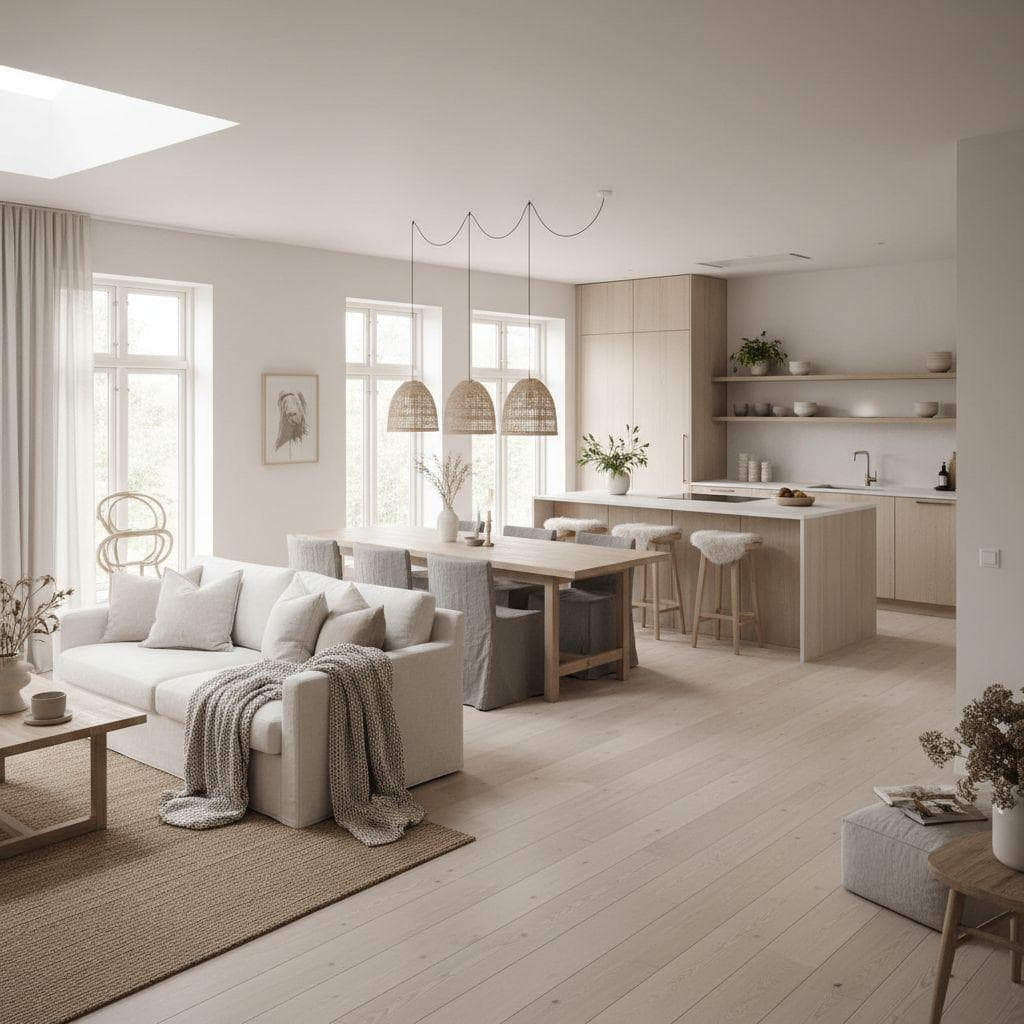
Scandinavian
Scandinavian Open Plan Living combines signature style elements with functional design.
View ideas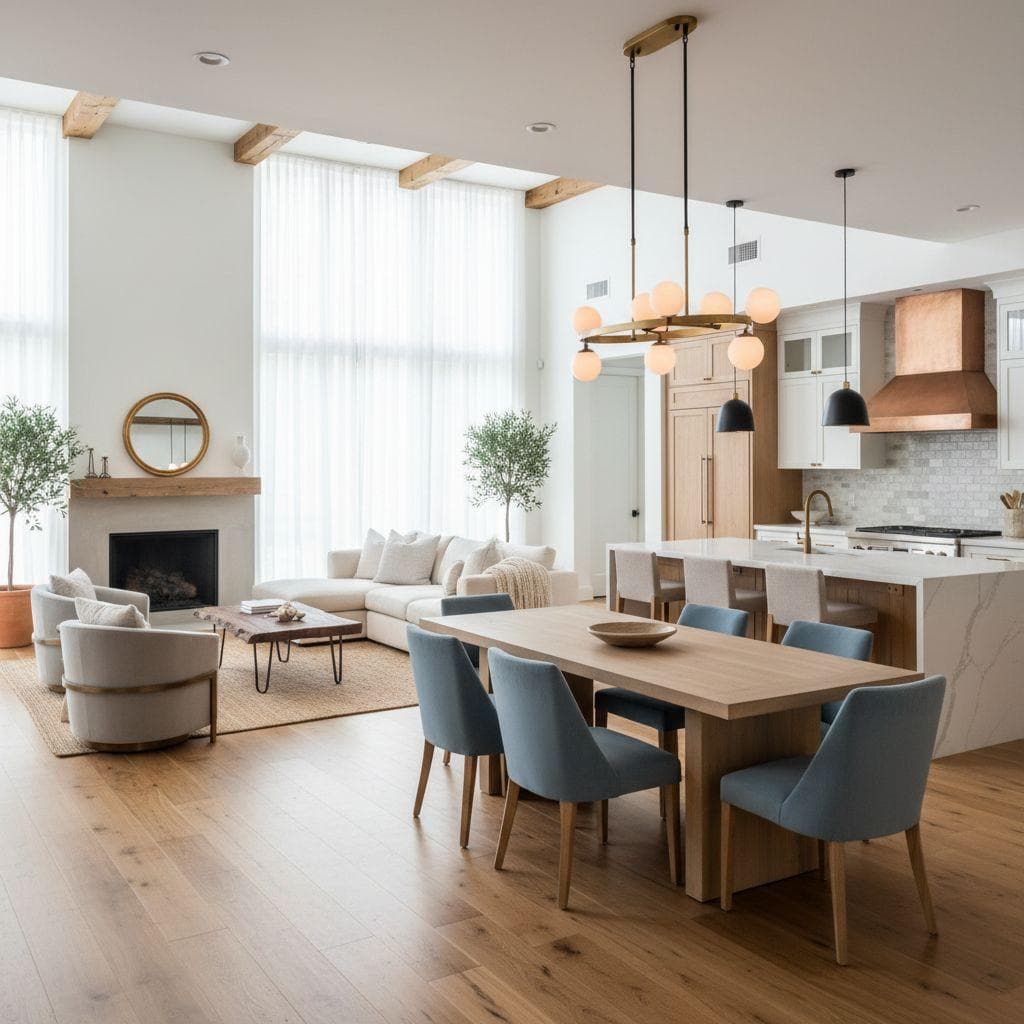
Transitional
Transitional Open Plan Living combines signature style elements with functional design.
View ideas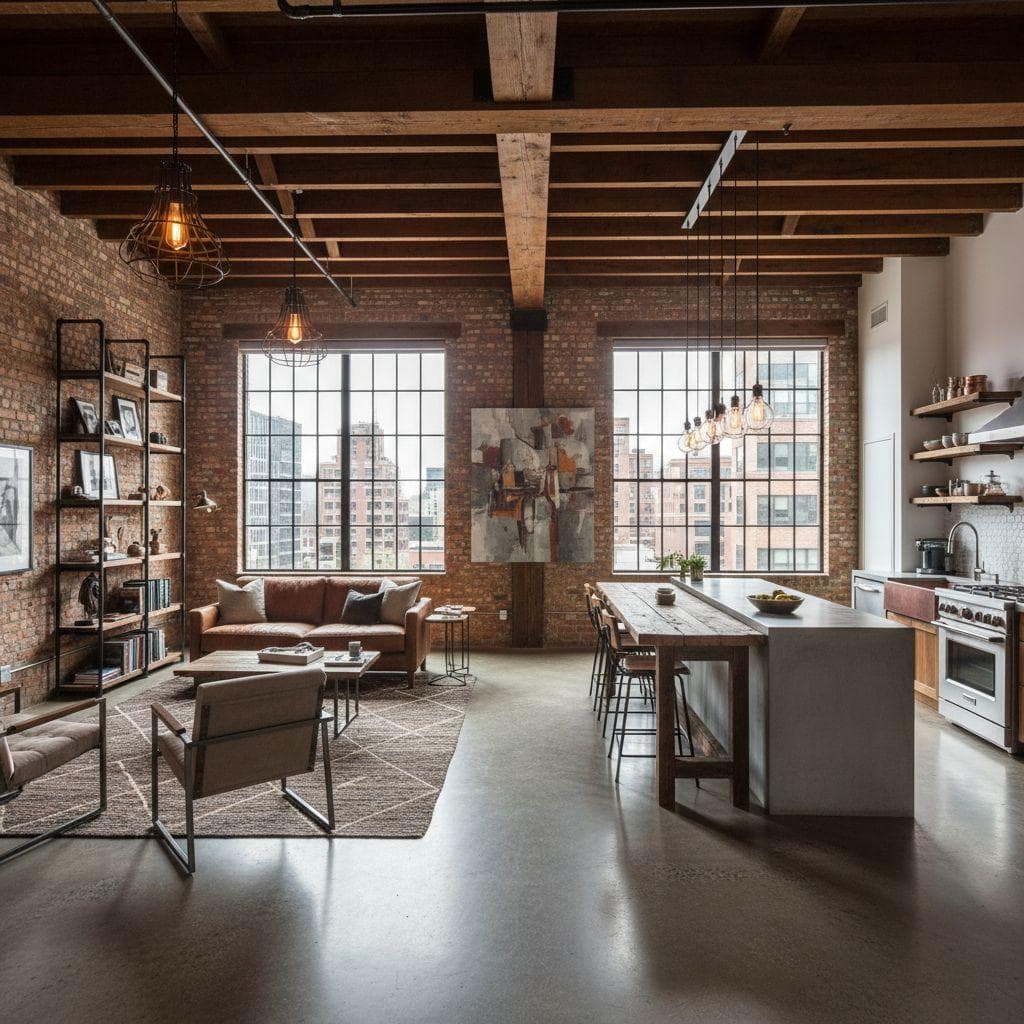
Industrial
Industrial Open Plan Living combines signature style elements with functional design.
View ideasAbout Open Plan Living Design
Open plan spaces serve multiple functions simultaneously—cooking, dining, and living—while keeping family members connected. They're ideal for entertaining, keeping an eye on children, and maximizing the sense of space in a home.
Design Considerations
- Use area rugs to define zones
- Maintain consistent color palette throughout
- Use furniture placement to create separation
- Plan lighting for each activity zone
- Consider kitchen ventilation for odor control
- Include acoustic softening elements
- Create visual connections while allowing zone identity
- Plan for multiple simultaneous activities
Common Challenges
- Defining distinct zones without walls
- Managing noise and cooking smells
- Creating visual cohesion across functions
- Furniture arrangement and flow
- Lighting for different activities
- Storage without clutter visibility
- Balancing different activity needs
- Acoustic management
Layout Tips
- Use the back of the sofa to define living area
- Ensure 3-foot traffic pathways between zones
- Align furniture with the architecture where possible
- Create sightlines between zones for connectivity
- Position dining table to access both kitchen and living
- Consider furniture that works from all angles (no "back" to the room)
Best Styles for Open Plan Living
Explore design styles that work exceptionally well for open plan livings.
Open Plan Living Furniture Guide
Essential Furniture
- Sofa oriented to define living area
- Dining table and chairs
- Kitchen island (if applicable)
- Area rugs for zone definition
- Appropriate lighting for each zone
Optional Additions
- Console or sofa table to divide spaces
- Bar stools at kitchen island
- Bookshelf as room divider
- Accent chairs to anchor living area
- Bench seating
Lighting Needs
- Kitchen task lighting (under-cabinet, pendant)
- Dining chandelier or pendant
- Living room ambient and task lighting
- Cohesive fixture style across zones
- Dimmers for flexibility
Storage Solutions
- Closed kitchen storage to contain clutter
- Media storage in living zone
- Dining storage for linens and serving pieces
- Cohesive storage solution style
Size Considerations
Small Open Plan Living
In smaller open plans, less is more. Choose scaled furniture and avoid blocking sightlines. A compact dining table and apartment-sized seating prevent crowding. Use mirrors to expand the sense of space.
Medium Open Plan Living
Medium open plans can accommodate full-sized furniture with careful arrangement. Define zones clearly with rugs and lighting. Consider a kitchen island as a natural divider.
Large Open Plan Living
Large open plans risk feeling impersonal. Create intimate zones within the larger space. Use substantial furniture and multiple seating groupings. Consider a double-sided fireplace or built-ins to partially divide space.
Related Room Types
Explore other room types with similar design considerations.
Frequently Asked Questions
Design Your Open Plan Living
Transform your open plan living with AI-powered interior design.