Arabic Interior Design
Luxurious Middle Eastern elegance with geometric precision
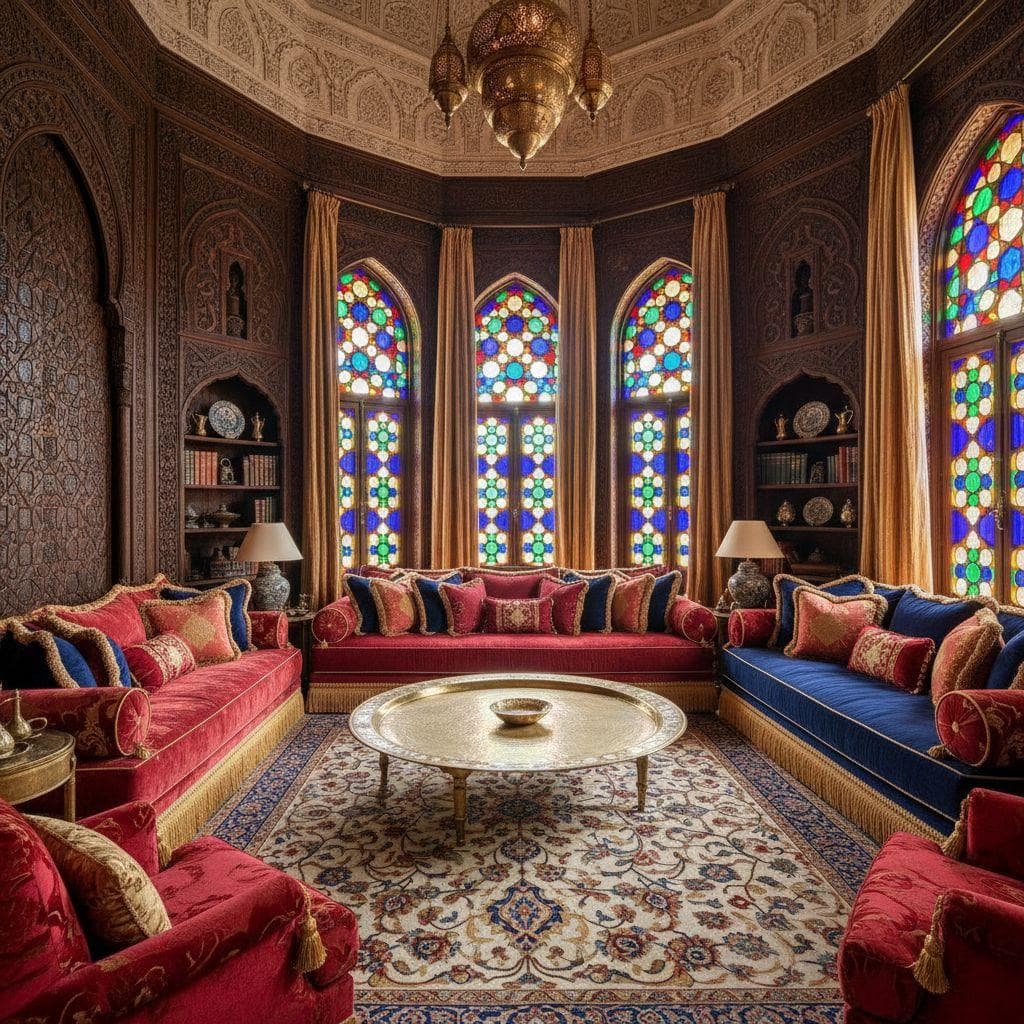
Arabic design embodies the luxury and refinement of Middle Eastern aesthetics, featuring elaborate geometric patterns, rich jewel tones, sumptuous fabrics, and exquisite craftsmanship. From the traditional majlis seating to intricate arabesque details, this style balances opulence with the mathematical precision of Islamic art. It creates spaces that feel both luxurious and spiritually centered.
Key Characteristics
Arabic design traditions span over a millennium, influenced by Islamic art principles that favor geometric abstraction and calligraphy over figurative representation. The style evolved across the Arabian Peninsula, Levant, and beyond, incorporating Persian, Byzantine, and later Ottoman influences. Modern Arabic design balances traditional craftsmanship with contemporary luxury, as seen in the opulent interiors of Dubai and other Gulf states.
- Intricate geometric and arabesque patterns
- Rich jewel-tone colors with gold accents
- Luxurious fabrics (silk, velvet, brocade)
- Majlis-style low seating
- Calligraphic decorations
- Carved wood screens (mashrabiya)
- Ornate metalwork and brass details
- Layered textiles and cushions
Color Palette
Accent Colors
Colors to Avoid
Materials & Textures
Key Materials
- Silk and velvet fabrics
- Brass and copper
- Carved dark wood
- Marble and onyx
- Mother of pearl inlay
- Gold leaf
- Ornate tiles
- Hand-knotted rugs
Patterns
- Islamic geometric stars and polygons
- Arabesque flowing designs
- Arabic calligraphy
- Lattice and screen patterns
- Medallion motifs
Textures
- Embossed metalwork
- Carved wood screens
- Plush velvet
- Smooth marble
- Intricate embroidery
Furniture & Decor
Signature Furniture
- Majlis floor seating
- Low divans and sofas
- Inlaid coffee tables
- Carved wooden chests
- Ornate screens and room dividers
- Brass-topped tables
- Upholstered ottomans
Decor Elements
- Arabic calligraphy artwork
- Ornate brass lanterns
- Decorative plates and trays
- Hand-woven rugs
- Silk cushions with tassels
- Carved screens (mashrabiya)
- Ornate mirrors
- Incense burners
Lighting Style
Elaborate brass lanterns with geometric cutouts cast dramatic shadows. Crystal chandeliers add glamour. Layer with ornate table lamps and candles in brass holders. The lighting should feel warm, dramatic, and luxurious.
Best Rooms for Arabic Style
Explore how Arabic style works in different rooms with tailored tips and AI prompts.
Space & Budget Guidance
Small Spaces
In small spaces, focus on one or two luxurious elements—an ornate mirror, a gorgeous rug, or a brass lantern. The rich colors can actually make small rooms feel cozy and jewel-box-like. Use mirrors to expand space and reflect light. Avoid over-layering textiles in tight quarters.
Large Spaces
Large spaces can embrace full Arabic opulence. Create a majlis seating area with low sofas and abundant cushions. Layer rugs. Use room dividers and screens to create intimate zones within grand spaces. This style was designed for palaces and grand rooms.
Budget-Friendly Tips
Focus on textiles—cushion covers, throws, and affordable rugs can establish the look. Shop World Market, H&M Home, and Etsy for Arabic-inspired accessories. Brass lanterns are widely available at various price points. Geometric stencils can create tile-like effects affordably.
Luxury Approach
Source antique rugs from prestigious dealers. Commission custom carved screens and furniture. Purchase authentic brass work from artisan workshops. Invest in marble and onyx surfaces. Consider architectural elements like custom mashrabiya screens.
Related Styles
If you like Arabic, you might also enjoy these styles.
Frequently Asked Questions
Design Your Arabic Space
Transform any room into Arabic style in seconds with Decor8 AI.