Moroccan Interior Design
Exotic opulence of North African artisanship
Moroccan design is a feast for the senses—rich jewel tones, intricate geometric patterns, and exotic artisan craftsmanship that has been refined over centuries. From the colorful zellige tiles to brass lanterns that cast elaborate shadows, this style transforms spaces into mysterious, opulent retreats. Moroccan design balances Islamic geometric traditions with Berber tribal influences and French colonial touches.
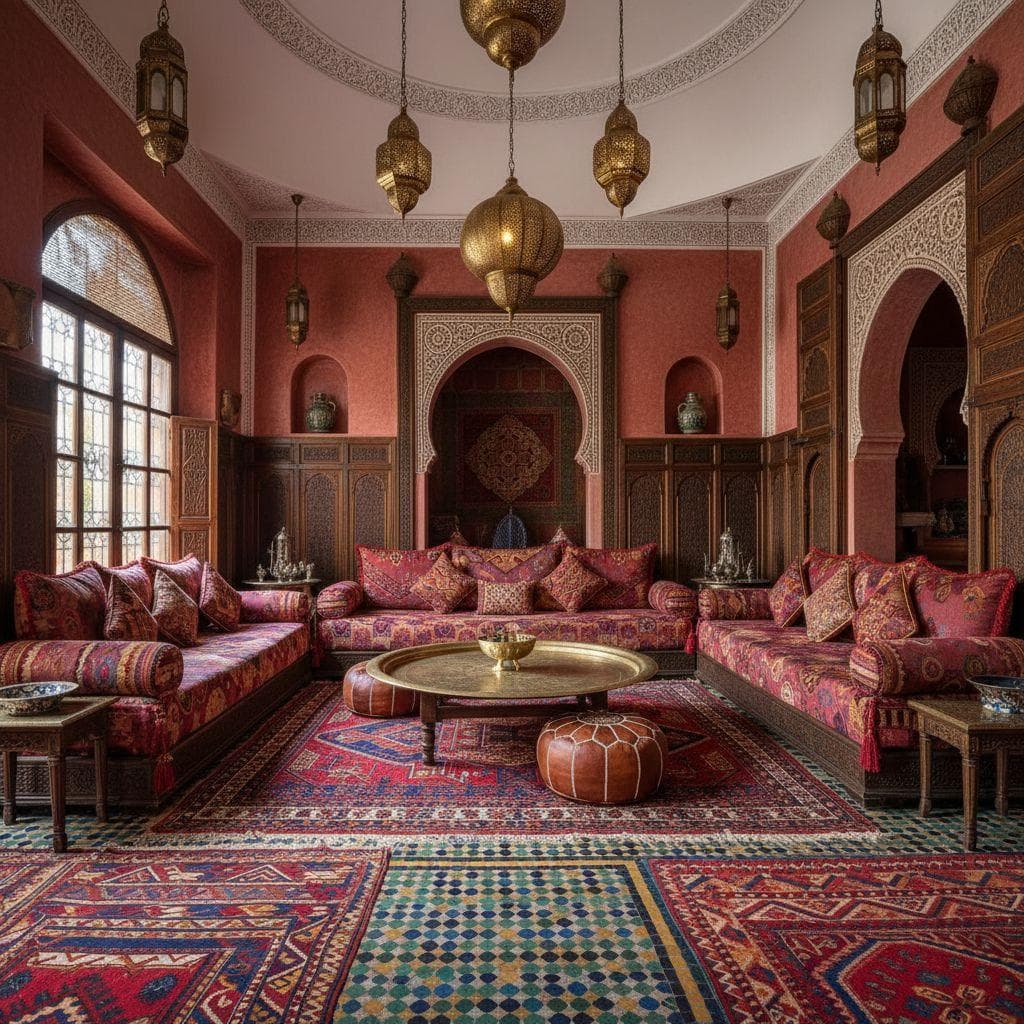
Key Characteristics
Moroccan design reflects the country's position at the crossroads of Arab, Berber, African, and European cultures. Islamic prohibition of figurative art led to highly developed geometric and calligraphic decoration. The medinas and riads of Fes, Marrakech, and other cities showcase centuries-old craftsmanship. In the 20th century, designers like Yves Saint Laurent helped popularize Moroccan aesthetics internationally.
- Jewel-toned color palette
- Intricate geometric patterns
- Zellige (mosaic tile) work
- Carved plaster (stucco) details
- Metal lanterns and lighting
- Low seating and floor cushions
- Lush textiles and rugs
- Arched doorways and alcoves
Color Palette
Accent Colors
Colors to Avoid
Materials & Textures
Key Materials
- Zellige tiles (mosaic)
- Carved plaster
- Brass and copper
- Cedar wood
- Tadelakt (waterproof plaster)
- Wool and silk textiles
- Leather (including pouf)
- Wrought iron
Patterns
- Islamic geometric patterns
- Star and cross motifs
- Arabesque scrollwork
- Berber tribal designs
- Quatrefoil shapes
Textures
- Intricate tile mosaics
- Carved plaster reliefs
- Hammered metal
- Hand-knotted rugs
- Embroidered textiles
Furniture & Decor
Signature Furniture
- Leather poufs
- Low sofas and banquettes
- Floor cushions
- Brass-top tables
- Carved cedar furniture
- Wrought iron beds
- Painted wooden chests
Decor Elements
- Moroccan lanterns
- Brass tea sets
- Hand-painted ceramics
- Beni Ourain rugs
- Embroidered textiles
- Ornate mirrors
- Carved screens
- Colorful pottery
Lighting Style
Moroccan lanterns are essential—pierced metal or colored glass create magical shadow patterns. Layer with brass pendant lights, candles in hurricane holders, and table lamps with ornate bases. The goal is atmospheric, romantic lighting that transforms at night.
Best Rooms for Moroccan Style
Explore how Moroccan style works in different rooms with tailored tips and AI prompts.
Space & Budget Guidance
Small Spaces
Moroccan can work in small spaces with careful editing. Choose one or two statement elements: a gorgeous lantern and a pouf, perhaps. Use mirrors (Moroccan-framed!) to expand the space and reflect lantern light. Stick to a cohesive color palette. A small powder room with zellige tiles becomes a jewel box.
Large Spaces
Large spaces can embrace full Moroccan opulence. Create a proper Moroccan salon with low banquette seating and scattered poufs. Layer rugs. Hang multiple lanterns at varying heights. Use carved screens to create intimate zones. This is where the style's maximalist tendencies shine.
Budget-Friendly Tips
Start with lanterns—even affordable reproductions create atmosphere. Target, World Market, and HomeGoods carry Moroccan-inspired items. Shop for vintage Moroccan rugs on eBay or Facebook Marketplace. DIY stenciled tiles can mimic zellige. Poufs are often affordable from online retailers.
Luxury Approach
Source antique rugs and textiles from specialty dealers. Commission custom zellige tile work from Moroccan artisans. Purchase vintage furniture and lighting from Marrakech dealers. Work with designers who specialize in Moroccan interiors. Consider architectural elements like carved plaster or tadelakt walls.
Related Styles
If you like Moroccan, you might also enjoy these styles.
Frequently Asked Questions
Design Your Moroccan Space
Transform any room into Moroccan style in seconds with Decor8 AI.