Kids Room Design Ideas
A kids room is a multi-functional space that serves as bedroom, playroom, study area, and creative haven. The best kids rooms balance safety, functionality, and fun while being flexible enough to grow with the child. From colorful nursery transitions to teenager-ready rooms, kid's spaces require thoughtful design that sparks imagination while supporting daily needs.
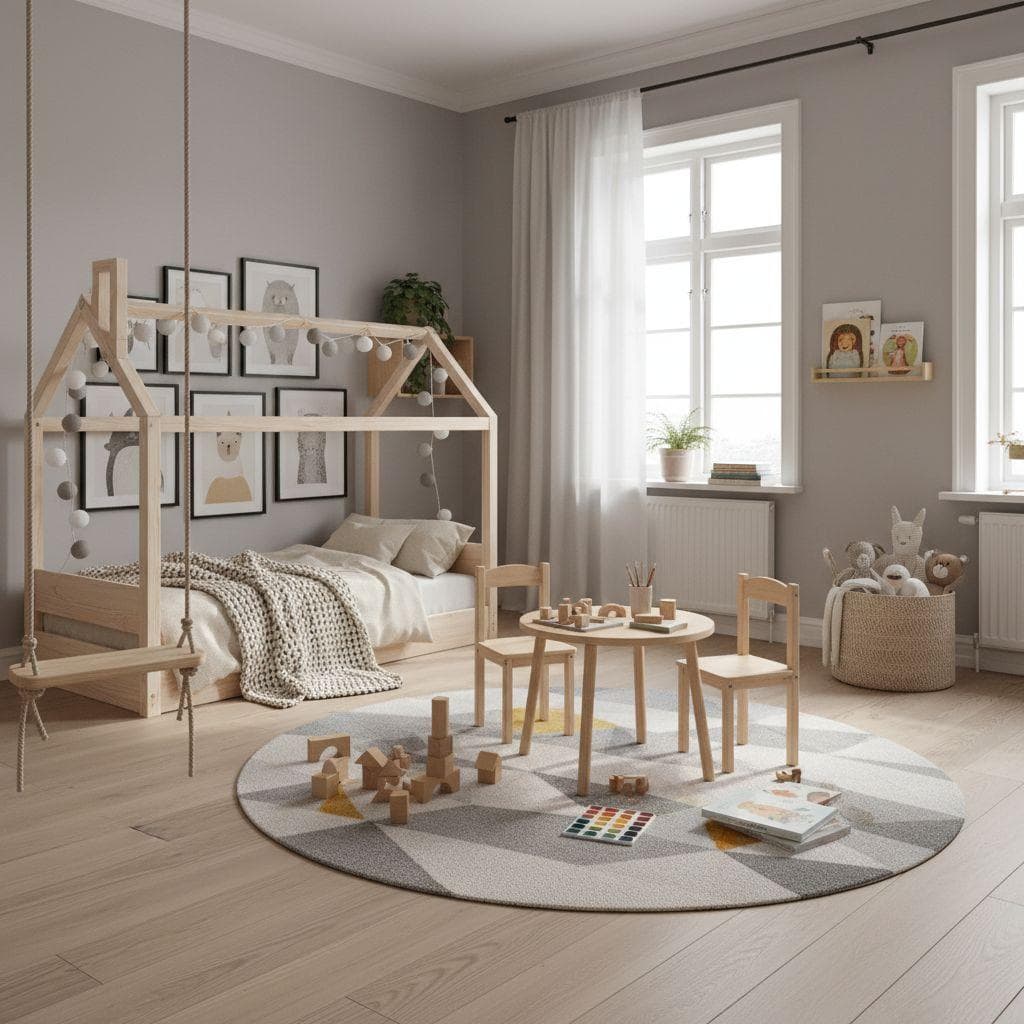
Kids Room in Different Styles
See how your kids room can look in various design styles
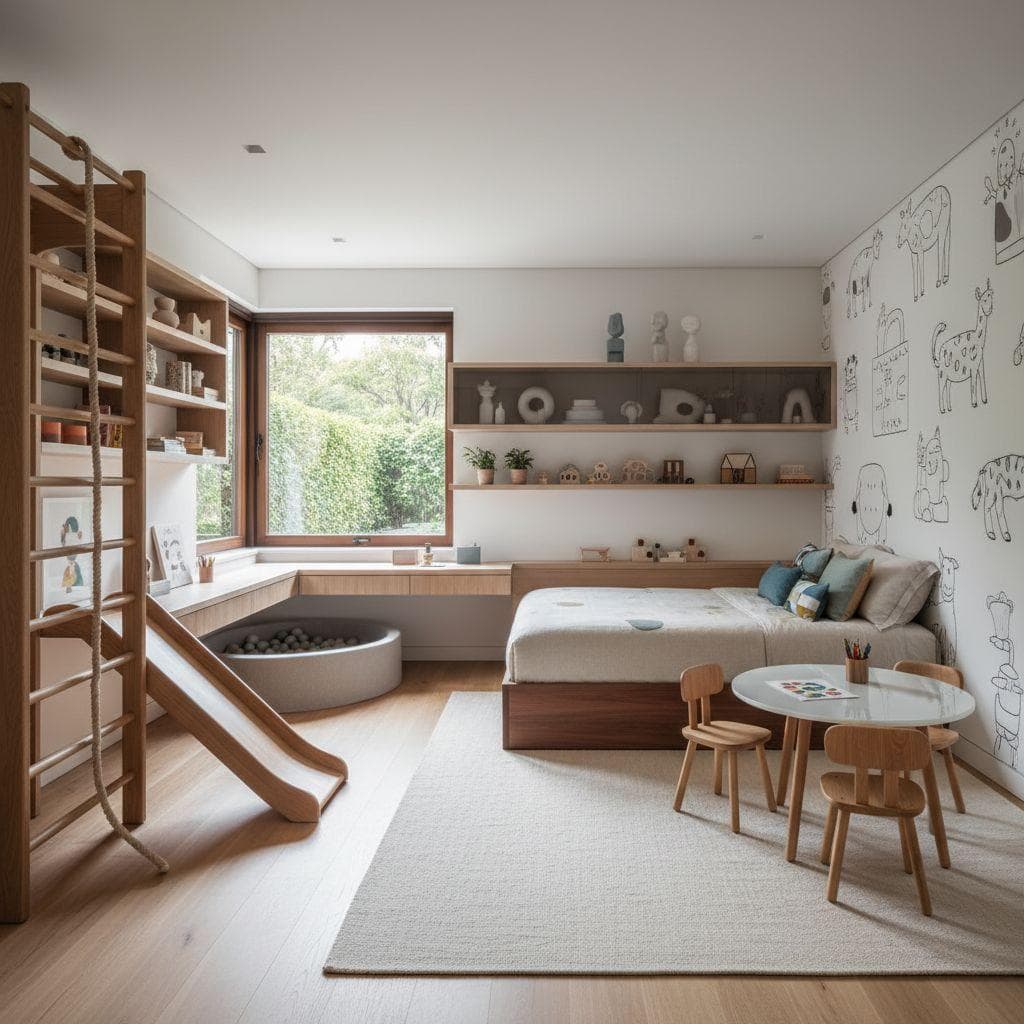
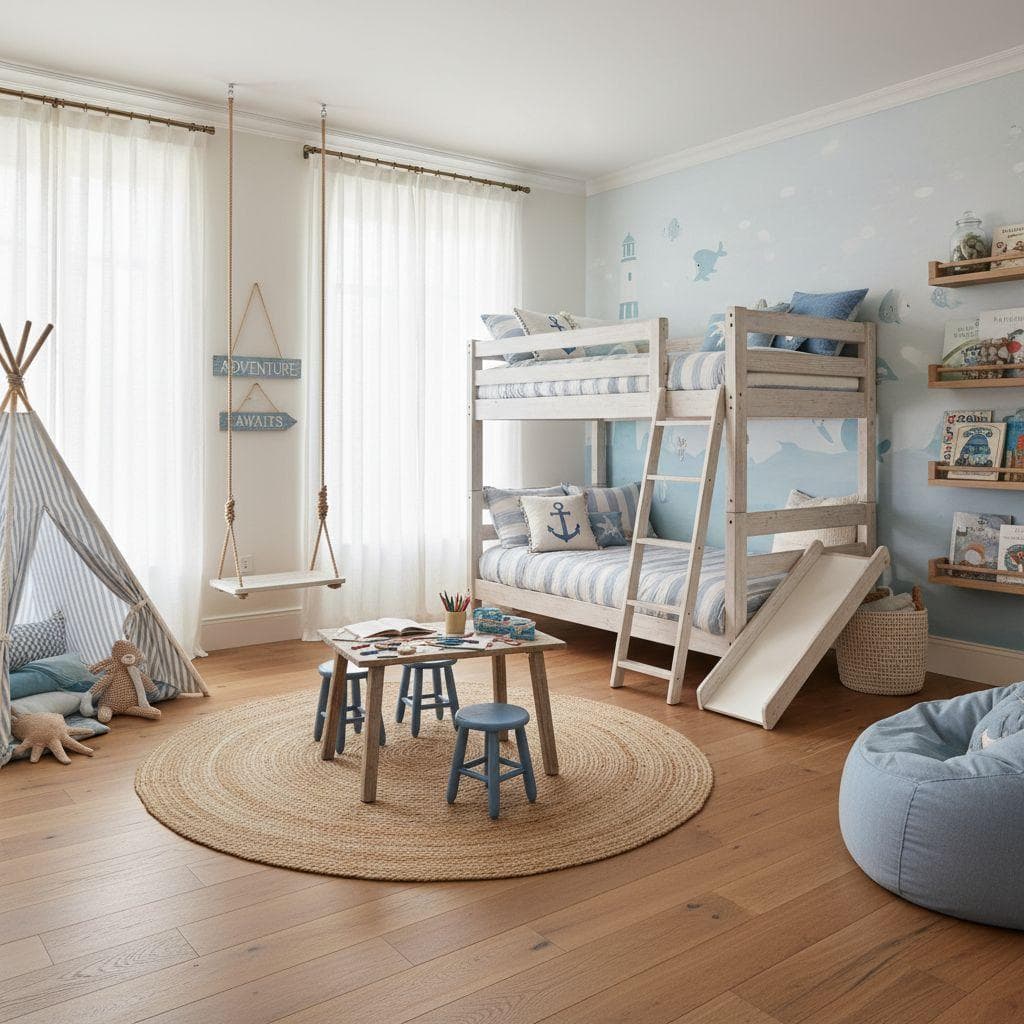
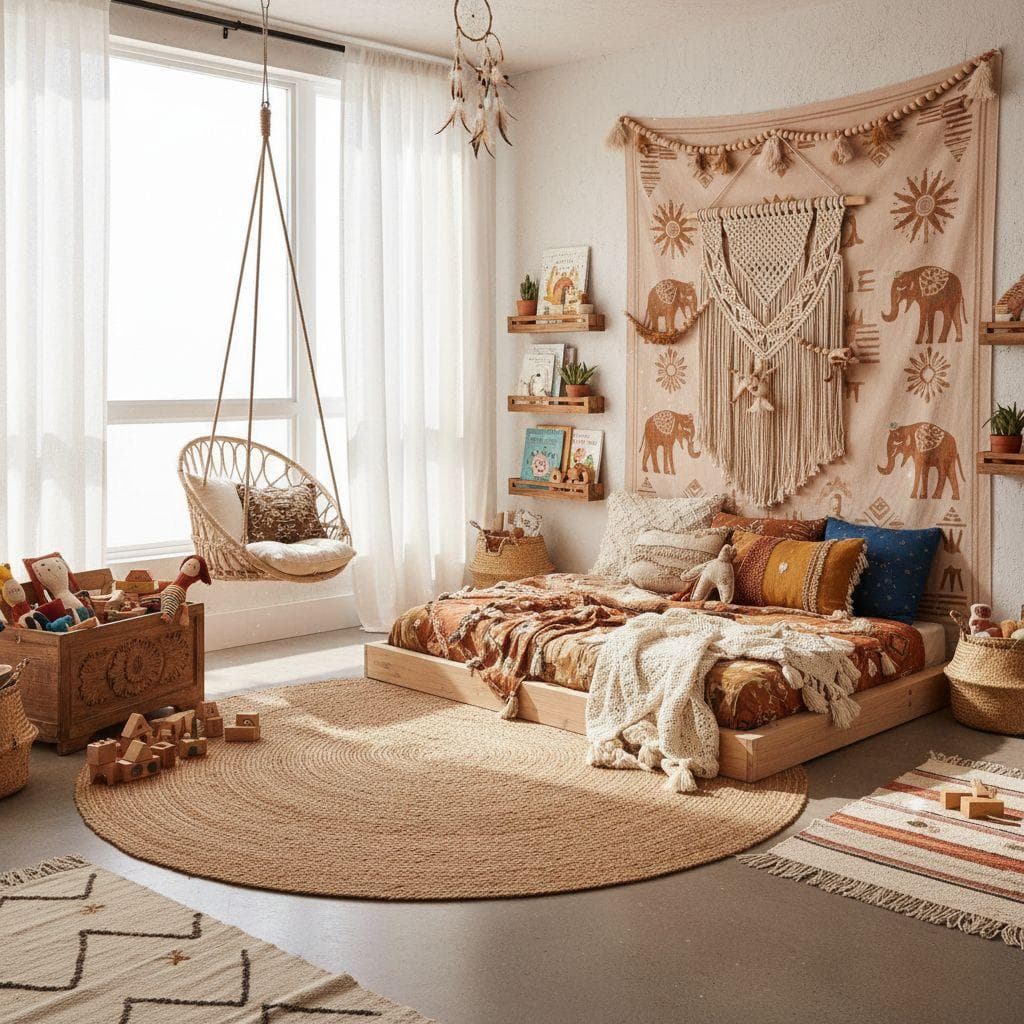
About Kids Room Design
Kids rooms serve multiple functions: sleeping, playing, studying (as they age), storing toys and clothes, and providing a safe, personal space for the child. The design should support development, encourage creativity, and adapt as the child grows.
Design Considerations
- Choose furniture that can adapt or transition
- Plan abundant, accessible storage
- Consider safety (secure furniture, safe finishes)
- Include play space on the floor
- Design for easy cleanup
- Allow for personalization and input from the child
- Create distinct zones (sleep, play, study)
- Use durable, washable materials
Common Challenges
- Managing toy and stuff accumulation
- Creating a room that grows with the child
- Balancing fun with function
- Storage for clothes, toys, and school items
- Making the space safe yet accessible
- Shared room dynamics with siblings
- Budget-friendly updates as tastes change
- Encouraging organization habits
Layout Tips
- Keep floor space clear for play
- Position bed away from windows (safety)
- Create defined zones for different activities
- Store toys at child-accessible heights
- Leave room for future desk as child ages
- Consider bed positioning for monitoring
Best Styles for Kids Room
Explore design styles that work exceptionally well for kids rooms.
Kids Room Furniture Guide
Essential Furniture
- Bed (toddler, twin, or bunk)
- Dresser or wardrobe
- Toy storage (bins, shelves)
- Nightstand or bedside table
- Area rug (durable, washable)
Optional Additions
- Desk and chair (for older kids)
- Bookshelf
- Reading chair or bean bag
- Play table
- Tent or canopy for imaginative play
Lighting Needs
- Bright ambient lighting for play
- Softer bedside lighting for sleep
- Nightlight for comfort
- Task lighting for desk (when applicable)
- Natural light for play areas
Storage Solutions
- Toy storage (bins, baskets, shelves)
- Clothing storage (dresser, closet)
- Book storage
- Art supply storage
- School supply storage (older kids)
Size Considerations
Small Kids Room
Small kids rooms benefit from vertical storage—tall shelves, wall-mounted organizers. Consider a loft bed with play or desk space underneath (for older kids). Use under-bed storage. Keep furniture minimal and multi-functional.
Medium Kids Room
Medium rooms can include a proper bed, dresser, play area, and eventually a desk. Bunk beds work well for shared rooms. Include distinct zones for sleep and play.
Large Kids Room
Large kids rooms can create dedicated zones: sleep area, play zone, study corner, reading nook. Consider built-ins for storage. Larger rooms work well for shared sibling spaces.
Frequently Asked Questions
Design Your Kids Room
Transform your kids room with AI-powered interior design.